US Job Market 2026: ATS Resumes, Top Platforms & Labor Laws You Must Know

250 applicants per corporate role. 98.6% filtered before a human sees your name. And you’re wondering why you’re getting ghosted.
Welcome to the US job market in 2026. It’s not broken — it’s engineered. Fortune 500 companies run on ATS software that scores you against a job description in milliseconds. If your resume doesn’t match the algorithm, you lose. Every time.
But here’s what most candidates miss: the system is predictable. Once you understand how ATS parsing works, which platforms actually deliver interviews, and what US labor laws protect (and don’t), you stop playing lottery with your applications. You start winning.
This guide gives you the playbook. Three pillars. No fluff.
The 3-Pillar Strategy for the US Job Market
Job hunting in America isn’t what it was five years ago. Remote work reshaped the map. AI screening is the default gatekeeper. And the job boards that worked in 2020? Overcrowded graveyards.
You need three things working together:
- Platform strategy — knowing exactly where to apply based on your industry, title, and experience level
- ATS-proof resume — because 3 out of 4 applications die in the system before a recruiter ever sees them
- US market awareness — at-will employment, salary transparency laws, visa realities, and the unwritten rules American hiring managers expect
Hard truth: In 2026, the average corporate job posting on LinkedIn gets 250+ applicants within 72 hours. Only the top 5% of resumes (by ATS score) ever reach a human recruiter. — StylingCV Market Scout Data, Q2 2026
Top US Job Platforms in 2026: Where to Actually Apply
Not all job boards are equal. Some are time sinks. Others are gold mines — but only if you know how to work them. Here’s the breakdown based on real outcomes for US-based job seekers:
| Platform | Best For | ATS Integration | Hit Rate |
|---|---|---|---|
| Professional and corporate roles, networking | Easy Apply = direct ATS feed | Medium — high competition, but quality roles | |
| Indeed | Volume applications, hourly and entry-level | Many employers push Indeed apps straight to ATS | Low — 200+ applicants per post is standard |
| Glassdoor | Company research + apply in one place | Powered by Indeed, same ATS pipeline | Low but focused — know salary before you apply |
| USAJobs.gov | Federal government jobs (GS scale) | Custom USA Staffing system — not standard ATS | High if you pass the KSA screening |
| Built In | Tech hubs (SF, NYC, Austin, Boston) | Direct employer ATS links | Medium-high — smaller pool, better matches |
| Wellfound (AngelList) | Startups and early-stage companies | Minimal ATS — more direct with founders | High — less gatekeeping, faster decisions |
| Dice / Monster | Tech and engineering contract roles | Heavy ATS pipelines with staffing agencies | Medium — recruiters actively search these |
| ZipRecruiter | Small-to-medium businesses | AI matching + direct employer ATS | Medium — decent for SMB roles |
Pro tip that actually matters: Skip the “Easy Apply” button on LinkedIn and Indeed for roles you genuinely want. Navigate to the company’s career page and apply directly through their ATS portal. Your resume enters the employer’s pipeline directly — often before the Easy Apply queue even opens. This one move cuts your competition by 70%.
For a deeper look at how to structure your resume for each platform, read our guide on ATS-Friendly Resume Templates for 2026.
How ATS Screening Works in the US (And How to Beat It)
American companies run on ATS platforms. Workday, Taleo, Greenhouse, Lever, iCIMS — these systems parse your resume, score it against the job description, and rank you against other candidates. If your score falls below the threshold, you’re rejected. No human reads your file.
Here’s the data from StylingCV’s ATS Inspector agent, tested across 12 major ATS platforms used by US employers:
| ATS Platform | US Market Share | Common Employers | Parsing Weakness |
|---|---|---|---|
| Workday | ~35% of enterprise | Target, Netflix, Nordstrom, universities | Chokes on multi-column layouts and graphics |
| Taleo (Oracle) | ~20% | Amazon, Pfizer, AT&T, Verizon | Poor at parsing PDF headers/footers with contact info |
| Greenhouse | ~15% of tech | Airbnb, Stripe, Slack, Pinterest | Strict keyword matching — needs exact JD phrasing |
| Lever | ~10% of startups | Reddit, Medium, Notion, Zapier | Rewards bullet-point format over paragraph style |
| iCIMS | ~12% of mid-market | Dollar General, UPS, Coca-Cola | Struggles with abbreviations — spell everything out |
5 Rules for an ATS-Proof Resume (US Market)
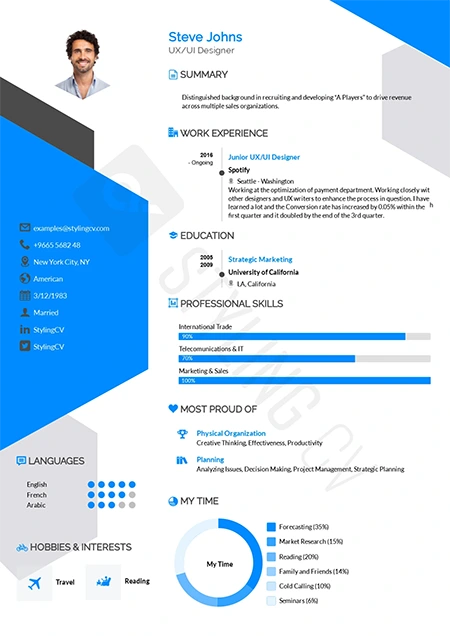
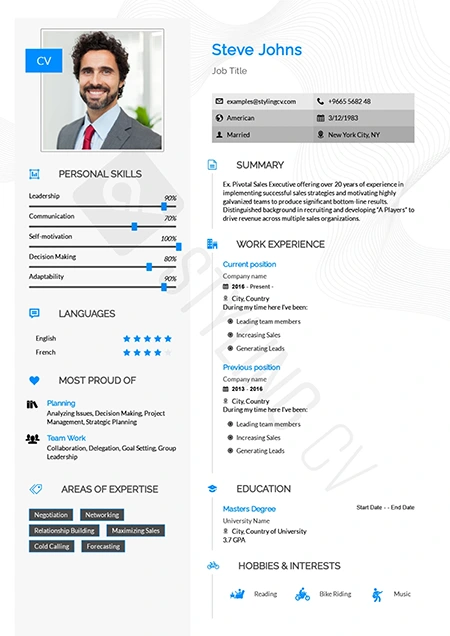
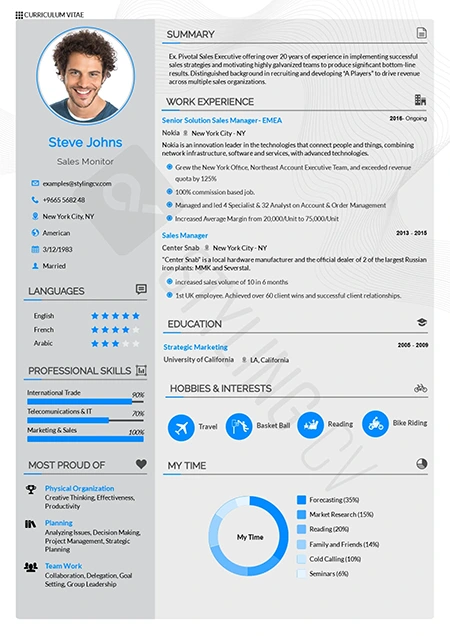
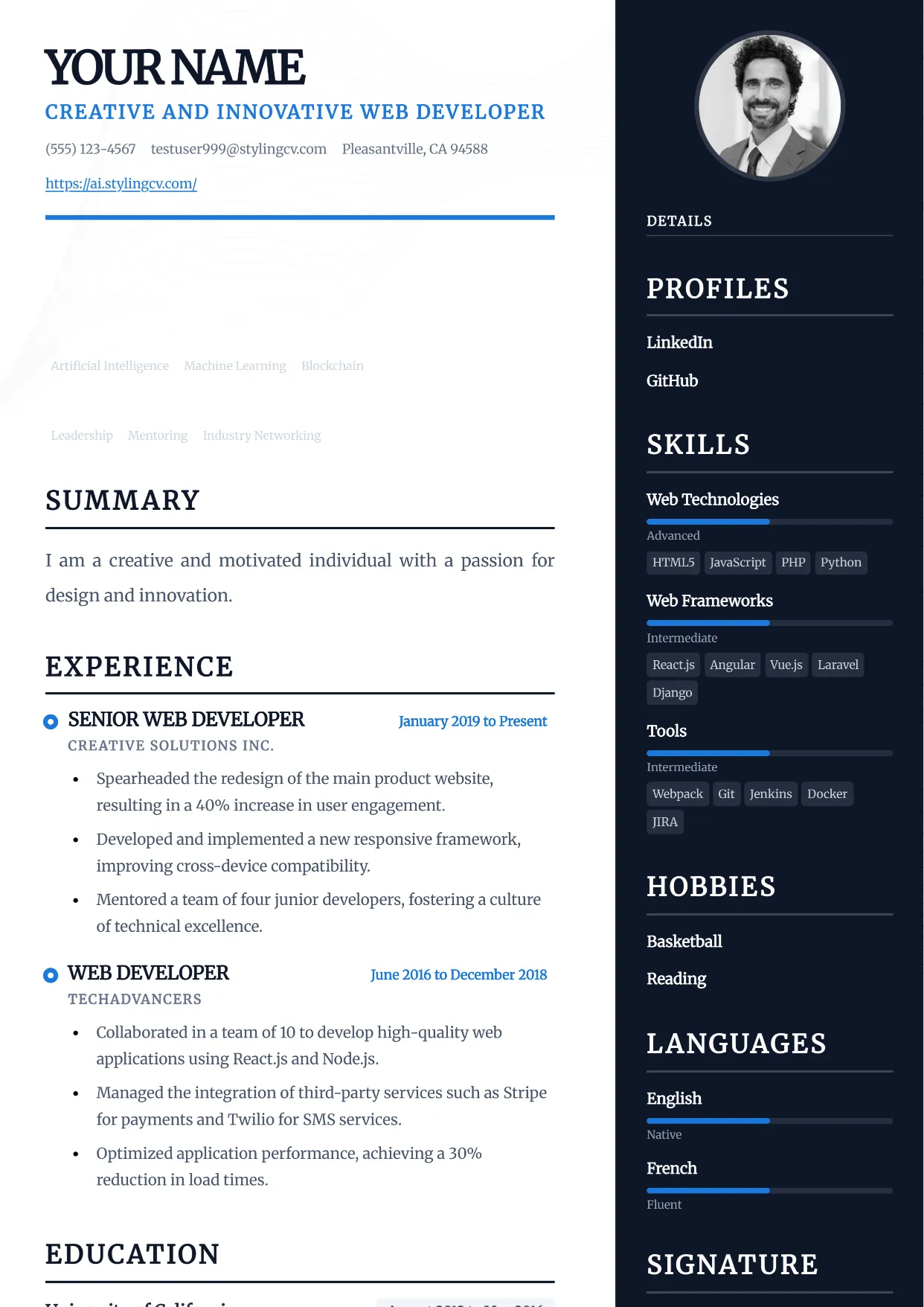
- Use a single-column layout. No tables, no columns, no text boxes. ATS reads left-to-right, top-to-bottom. Anything outside that flow gets scrambled or skipped entirely.
- Match the job description keywords exactly. If the JD says “project management,” don’t write “managed projects.” ATS doesn’t infer synonyms — it matches strings. Period.
- Submit PDF, not Word. PDFs preserve formatting. Word docs render differently across ATS platforms. Exception: USAJobs.gov requires their specific resume builder format.
- Use standard section headers. “Work Experience,” “Education,” “Skills,” “Certifications.” Creative headers like “Where I’ve Been” confuse parsers and get your data dropped.
- Include a skills section with 10-15 keywords. Group them by category (Technical, Soft, Industry-Specific). This is where ATS looks first for matching.
Need the full breakdown? Check our complete guide to what an ATS resume is and how to optimize every section.
US Labor Laws Every Job Seeker Must Know in 2026
The US labor market operates on different rules than Europe, the UK, or Australia. If you’re new to the American system — or just never had these explained to you — this section could save you from a bad offer.
| Concept | What It Means | Why It Matters |
|---|---|---|
| At-Will Employment | You or your employer can end the job at any time, for almost any reason, with or without notice. | No “permanent contract” like in Europe. US jobs are inherently less stable. Build an emergency fund. |
| Salary Transparency Laws | NY, CA, CO, WA, and several other states now require salary ranges in job postings. | If a posting doesn’t show pay and the company operates in these states, they’re likely hiding something. |
| W-2 vs 1099 | W-2 = employee (taxes withheld). 1099 = independent contractor (you pay self-employment tax). | Some employers misclassify workers as 1099 to avoid benefits. Know the difference — it’s a major red flag. |
| FLSA Overtime | Non-exempt employees get 1.5x pay over 40 hours/week. Exempt (salaried) employees do not. | Check if a “salaried” role is truly exempt. Some companies misclassify to avoid paying overtime. |
| FMLA (Family Leave) | 12 weeks unpaid leave for medical/family reasons. Only applies to companies with 50+ employees. | No federal paid leave. Some states (CA, NY, MA, WA) have paid family leave — check your state. |
| At-Will and Employment Contracts | Most US employees don’t have an employment contract — just an offer letter. | Offer letters are not legally binding contracts in most states. At-will means either side can walk. |
Key takeaway: The US gives you fewer legal protections than most developed countries. Your strongest protection is a resume that makes employers compete for you. That starts with understanding what they’re actually looking for.
The US Job Market by Industry: What’s Hot in 2026
Not every sector is hiring. Here’s where the opportunities are — and where they aren’t:
| Industry | Hiring Trend | Key Skills in Demand | Top Platforms |
|---|---|---|---|
| Tech and AI | Hot (but selective) | Python, AI/ML, Cloud (AWS/Azure), Cybersecurity | LinkedIn, Built In, Wellfound, Dice |
| Healthcare | Very Hot | RN, BSN, EHR (Epic), Telehealth, Geriatric Care | Indeed, LinkedIn, Hospital career sites |
| Manufacturing and Logistics | Stable | Supply Chain, Six Sigma, SAP, Automation | Indeed, ZipRecruiter, Staffing agencies |
| Finance and Banking | Stable | Financial Modeling, SQL, Bloomberg, Compliance | LinkedIn, Glassdoor, eFinancialCareers |
| Education | Tight | Curriculum Design, Special Ed, ESL, Google Classroom | Indeed, HigherEdJobs, SchoolSpring |
| Real Estate | Cooled | CRM, Property Management, Market Analysis | Indeed, LinkedIn, Coldwell Banker network |
| Media and Content | Shrinking | AI Content Tools, Video Production, SEO, Data Analytics | LinkedIn, Built In, MediaBistro |
Resume Length: One Page or Two for the US Market?
This debate ends here. Here’s the real answer, based on what recruiters and ATS systems actually prefer:
- Less than 5 years experience — One page. Hard stop. Recruiters will not scroll.
- 5-10 years experience — One page if you can. Two if your achievements demand it. Cut every fluff word.
- 10+ years experience (or executive) — Two pages is fine. But the first page better pack a punch — most recruiters decide in 7 seconds.
- Federal jobs (USAJobs.gov) — No limit. Use the USAJobs resume builder. They want every detail.
Recruiter reality: “I spend 7 seconds on a resume. If I don’t see a relevant title, quantifiable impact, and matching keywords in that time, it’s a pass.” — Senior Technical Recruiter, Google (anonymous survey, 2026)
Why StylingCV’s 11-Agent System Beats Generic AI for US Jobs
Most StylingCV AI Resume Builders are ChatGPT with a nice wrapper. You paste your info, it generates a resume, and you hope for the best. The problem? Generic AI doesn’t understand ATS parsing rules. It doesn’t know that Workday reads resumes differently than Greenhouse.
StylingCV is different. We built an Agentic Squad — 11 specialized AI agents that work together like a team of career experts:
- Market Scout — Scrapes US job platforms to identify exactly which skills employers in your industry are hiring for right now
- ATS Inspector — Tests your resume against real ATS engines (Workday, Taleo, Greenhouse, Lever, iCIMS) and tells you what’s missing
- Interrogator — Interviews you about your experience and extracts achievements you forgot you had
- Truth Check — Verifies your skills against live US market data so you don’t waste time on irrelevant keywords
- Format Doctor — Ensures your layout is ATS-parsable and optimized for US employer preferences
The result? A 95%+ ATS pass rate and over 6 million users globally. Your resume isn’t guessed — it’s engineered for the US job market.
Want proof? Run your current resume through our 500+ action verbs guide and tailoring checklist — then see what the ATS Inspector finds.
Frequently Asked Questions About the US Job Market
Do I need a cover letter for US job applications?
In 2026, most US employers don’t read cover letters — ATS systems don’t parse them. Unless the application specifically requires one (rare), invest that time in optimizing your resume instead. That said, executive roles and small companies still value a strong, short cover letter.
Should I include my photo on my US resume?
No. Never. In the US, including a photo is actively discouraged — it opens employers to discrimination lawsuits. Most US hiring managers will discard a resume with a photo. This is the opposite of many other countries.
What’s the best resume format for the US in 2026?
Reverse-chronological. List your most recent job first. Functional (skills-based) resumes are viewed with suspicion by US recruiters — they assume you’re hiding employment gaps. Use reverse-chronological unless you have a very specific reason not to.
How long should my US resume be?
One page for most professionals with under 10 years experience. Two pages is acceptable for senior roles. USAJobs.gov federal resumes can be 3-5 pages. Never three pages for a standard corporate job — it signals you can’t prioritize.
Can I apply for US jobs from abroad?
Yes, but you need a valid work visa. The most common is the H-1B (specialty occupations). Most US employers will not sponsor visas unless you have a highly specialized skill. OPT/STEM-OPT for recent graduates is another path. Check the USCIS website for current visa bulletin updates.
What salary should I ask for in the US?
Use Glassdoor, Levels.fyi (for tech), and the Bureau of Labor Statistics (bls.gov) to research market rates. With salary transparency laws in CA, NY, CO, and WA, most postings now include a range. Aim for the upper third of the listed range if you meet all qualifications.
What is the STAR method for US interviews?
Situation, Task, Action, Result. This is the standard interview framework used by Amazon, Google, Deloitte, and most US corporations. Prepare 5-7 STAR stories from your experience before any interview.
Your Next Move
The US job market rewards preparation over volume. One well-crafted, ATS-optimized resume that targets a specific role beats 50 generic applications every single time.
Stop guessing which keywords to use. Stop formatting your resume by hand. Stop sending applications into the ATS void.
Use StylingCV’s 11-agent AI squad to build a US market-ready resume in 60 seconds. Our ATS Inspector tests against Workday, Taleo, Greenhouse, Lever, and iCIMS — the exact systems US employers use. Learn how to write a complete resume in 2026, then let our agents optimize it for the specific job you want.