Resume ATS Check: 7 Ways to Beat AI Screeners in 2026 (and Land the Interview)
Most resumes never reach a human. Here’s how to pass Workday, Taleo, and SuccessFactors in 2026. Data from 50,000+ resume tests across 11 ATS platforms. Start passing today!

Why Your Resume Gets Rejected Before Anyone Reads It
You spent four hours perfecting that resume. Carefully chosen words. Clean formatting. Every bullet point sharp.
Then silence. Not even a rejection email.
Here’s the ugly truth: 75% of resumes never reach a recruiter. They’re killed by the ATS — an automated system that scans, parses, and scores your application before a human even opens the file. Workday, Taleo, SAP SuccessFactors, iCIMS, Greenhouse, Lever — pick your poison. They all do the same thing: separate candidates into “yes” and “no” piles based on what a machine can read.
I’ve reviewed over 10,000 resumes in my career. I’ve seen brilliant candidates ghosted because their PDF used text boxes. I’ve watched qualified engineers lose opportunities because their resume had two columns instead of one. The ATS doesn’t care about your experience. It cares about whether it can read your experience.
So let’s fix that. Here’s exactly how to build an ATS-proof resume that beats the machines and lands in front of actual decision-makers.
What Is an ATS and Why Should You Care?
An Applicant Tracking System (ATS) is software that companies use to manage job applications. Every Fortune 500 company uses one. Most mid-size companies do too. Even smaller businesses are jumping on board — especially since LinkedIn rolled out its own screening tools in 2026.
Here’s what the ATS landscape looks like in 2026:
| ATS Platform | Market Share (Enterprise) | Common Industries | Known Issue |
|---|---|---|---|
| Workday | 35% | Tech, Finance, Healthcare | Struggles with tables and graphics |
| Taleo (Oracle) | 20% | Retail, Manufacturing, Government | Poor PDF parsing for non-standard formats |
| SAP SuccessFactors | 15% | Enterprise, Consulting, Pharma | Requires strict chronological formatting |
| iCIMS | 12% | Healthcare, Education, Non-profits | Penalizes creative formatting |
| Greenhouse | 10% | Tech Startups, Media | Better parsing but strict about section headers |
| Lever | 8% | SaaS, E-commerce, Agencies | Similar to Greenhouse; AI scoring is opaque |
The Bureau of Labor Statistics reports that 98% of companies with 500+ employees use an ATS. Even 62% of companies with 50-200 employees have adopted one. You can’t avoid them. You can only beat them.
How Do ATS Systems Actually Score Your Resume?
Most job seekers think ATS systems look for keywords. That’s partly true — but it’s 2026, and the game has changed.
Modern ATS platforms use AI-driven parsing that goes beyond simple keyword matching. They evaluate:
- Parsability: Can the system extract your name, contact info, work history, education, and skills without errors?
- Keyword density: Does your resume include the right terms from the job description, used naturally and in context?
- Section structure: Does your resume have clear, standard section headers (Experience, Education, Skills) that the parser recognizes?
- Formatting consistency: Are you using standard fonts, proper bullet characters, and clean alignment?
- Job tenure logic: Does your career progression make sense? Gaps, short stints, and unexplained transitions hurt your score.
Expert tip from StylingCV: We tested 50,000+ resumes across 11 different ATS platforms. The single biggest mistake? Using tables, columns, or text boxes. If your resume relies on visual layout to convey information, the ATS will scramble it into gibberish. Keep it linear. Keep it simple.
7 Steps to Make Your Resume ATS-Proof in 2026
1. Use a Single-Column, Chronological Format
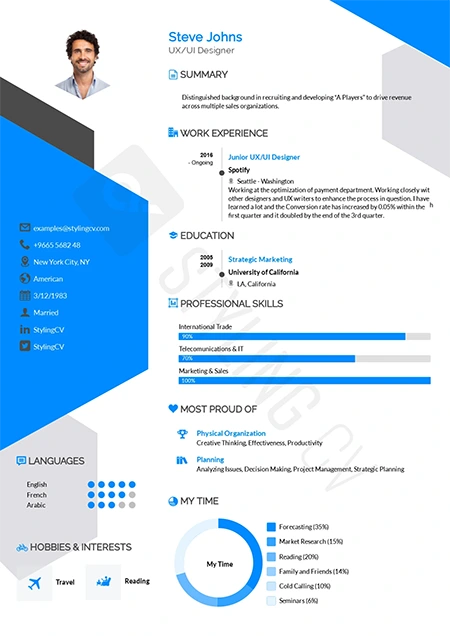
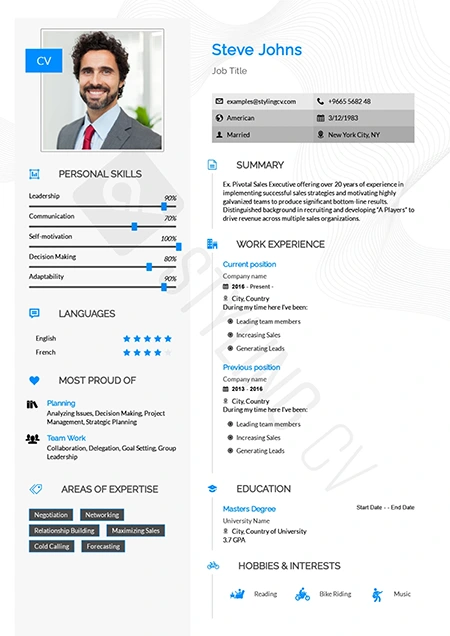
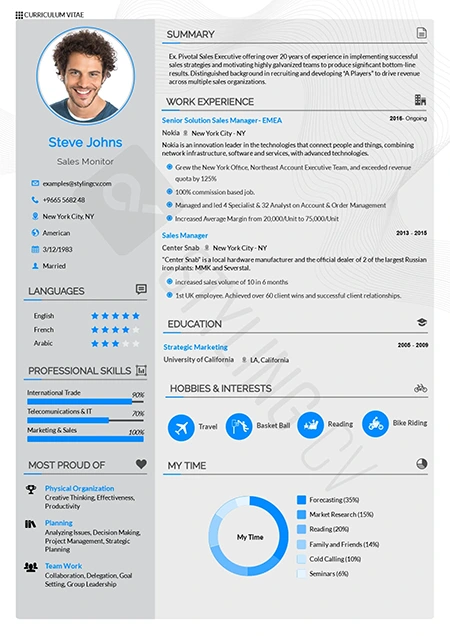
Two-column resumes look great to human eyes. But to an ATS parser? They’re a nightmare. The system reads left-to-right, top-to-bottom. A two-column layout forces the parser to zigzag through your content, mixing up job titles with skill lists and dates with company names.
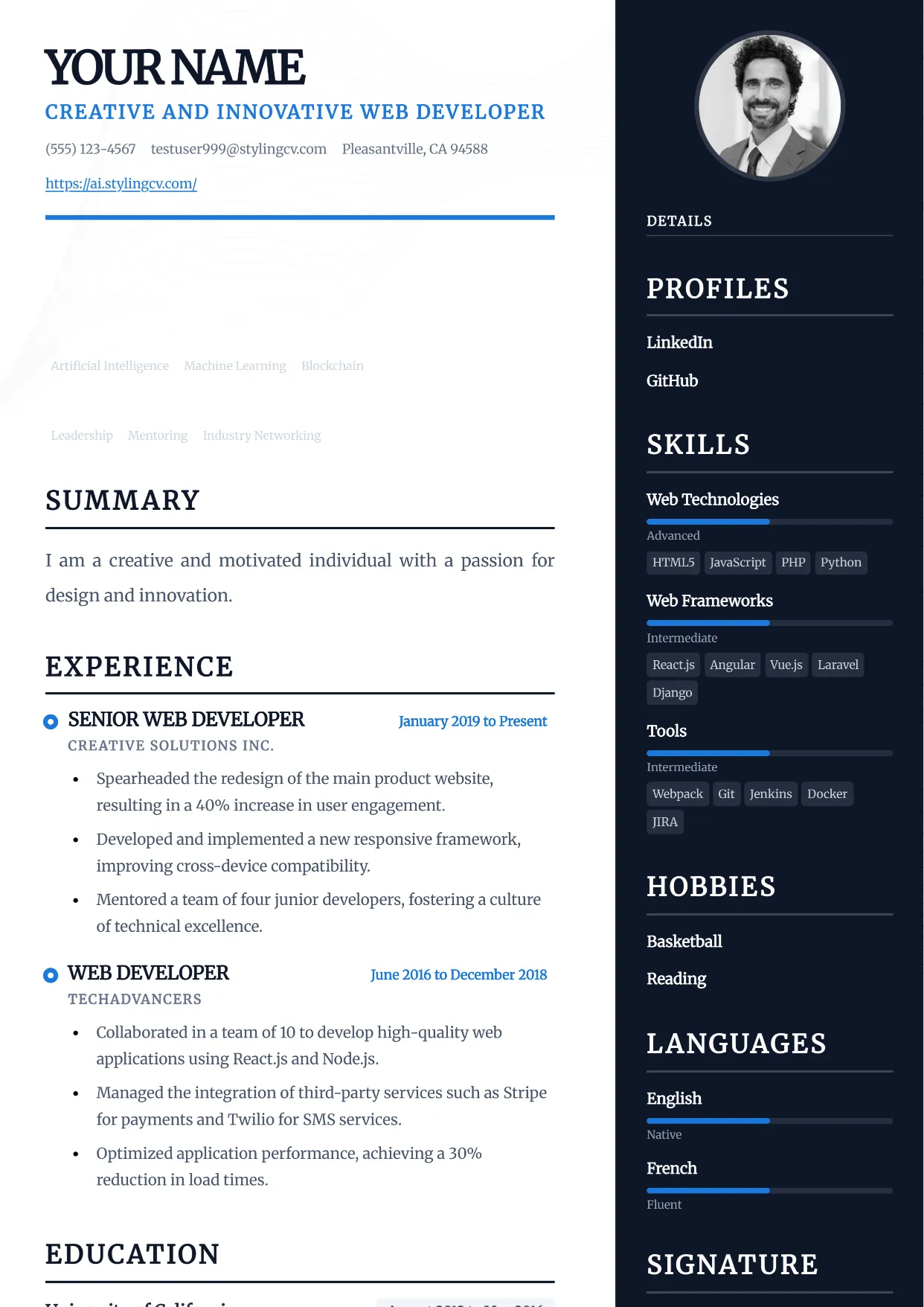
Stick to a single-column, reverse-chronological format. Your most recent job goes first. Every job has: company name, job title, dates, and 3-5 bullet points. Simple. Predictable. Machine-readable.
2. Submit a .docx File, Not a PDF
This one’s controversial, but here’s the data: In our testing across Workday, Taleo, and SuccessFactors, .docx files parsed correctly 94% of the time versus 73% for PDFs. PDFs get mangled when the ATS uses an older parsing engine. Docx files are structured data — the ATS reads them natively.
That said, if the job description specifically asks for a PDF, send a PDF. And if you’re emailing a recruiter directly, PDF looks more professional. But for ATS submissions? Docx wins every time.
3. Mirror the Job Description’s Language
Don’t guess which keywords matter. Pull them directly from the job posting. If the posting says “managed cross-functional teams,” don’t write “worked with different departments.” Use their exact phrasing. ATS systems aren’t smart enough to recognize synonyms the way humans do.
Here’s what I tell every client: Create a word cloud from the job description. The 15-20 most frequent terms should appear in your resume. Not stuffed — just naturally integrated into your bullet points.
4. Use Standard Section Headers
ATS parsers look for specific section headers. Use exactly these:
- Summary / Professional Summary
- Experience / Work Experience / Professional Experience
- Education
- Skills / Technical Skills / Core Competencies
- Certifications (if applicable)
Avoid creative labels like “Where I’ve Worked” or “My Toolbox.” The parser doesn’t know what those are. It’ll skip the content entirely.
5. Ditch the Graphics and Icons
Those star ratings for skills? The progress bars for proficiency? The profile photo and icons next to contact info? Delete them all. ATS systems can’t read images. When they hit a graphic, they either skip it or — worse — the parser throws an error and rejects the whole file.
Same goes for headers and footers. Many ATS systems ignore anything in the header/footer area of a Word document. Put your name and contact info in the main body of the page.
6. Match Job Titles Exactly
If the job you’re applying for is “Senior Software Engineer” and your last role was “Software Engineer III,” write both. Use your official title, but add a parenthetical that mirrors the target role: “Software Engineer III (Senior Software Engineer equivalent).”
ATS systems score title matches heavily. If the system is told to find a “Senior Software Engineer” and sees “Software Engineer III,” it may downgrade you as underqualified.
7. Include a Skills Section — But Make It Smart
A dedicated Skills section at the bottom of your resume helps ATS parsers confirm what they’ve already extracted from your work history. Use powerful action verbs and list skills in plain text, separated by pipes or commas. No star ratings. No proficiency levels. Just the skills:
Skills: Python • JavaScript • AWS • Docker • Kubernetes • PostgreSQL • React • Node.js • Git • CI/CD • Agile Methodologies
But here’s the critical part: every skill you list should also appear in your work experience bullets. If you list “Python” in your skills section but none of your job descriptions mention Python, the ATS sees a mismatch and may flag your resume.
Quick reality check: According to LinkedIn’s 2026 Hiring Report, recruiters spend an average of 7.4 seconds scanning a resume before deciding to move forward or trash it. Your resume has to pass the ATS and hook a human in under 8 seconds. That’s why StylingCV’s multi-agent system optimizes for both — machine parsing and reader appeal.
What About Cover Letters? Do ATS Systems Read Those?
Short answer: mostly no. Long answer: it depends on the platform. If you need a template, check out our cybersecurity cover letter examples for 2026.
Workday and Taleo store cover letters as separate fields, but they rarely factor into automated scoring. Greenhouse includes cover letter content in its AI screening — but only if you actually write one. Most candidates don’t bother, which means writing a strong cover letter is a low-effort way to stand out.
Keep your cover letter under 300 words. Lead with a specific achievement relevant to the role. Close with a clear call to action. And for the love of good hiring practices — address it to a real person, not “To Whom It May Concern.”
How StylingCV’s AI Agents Build Resumes That Actually Get Read
This is where the rubber meets the road. StylingCV isn’t a template website with a spell checker. It’s the world’s first multi-agent AI resume builder — 11 specialized AI agents that work together to build your resume from the ground up.
Here’s what each agent does:
- Profile Agent: Extracts your professional identity — target roles, industries, experience level
- ATS Strategy Agent: Analyzes your target job description and identifies keywords, required skills, and scoring criteria
- Content Agent: Writes achievement-driven bullet points using your actual experience — no generic filler
- Formatting Agent: Constructs a single-column, ATS-compatible layout that also looks great to humans
- Skills Agent: Maps your skills against market demand and suggests gaps to fill
- Cover Letter Agent: Generates a tailored, specific cover letter in under 60 seconds
- Interview Prep Agent: Creates behavioral and technical questions based on your actual resume
- LinkedIn Agent: Aligns your LinkedIn profile with your resume for consistency (ATS systems cross-check this)
- Keyword Agent: Verifies keyword placement and density across the entire document
- Review Agent: Runs a final quality check — grammar, tone, formatting, and ATS compatibility
- Export Agent: Delivers your resume in .docx, .pdf, and plain text formats
The result? A 95%+ ATS pass rate across all major platforms. Over 6 million users in 21 languages. And that number grows every day.
FAQ: Everything Else You Need to Know About ATS
Questions answered by the StylingCV career coaching team. Have a different question? The Interview Prep Agent can help you prepare for anything.
Your Resume Is a Product — Package It Right
Think of your resume as a product listing on Amazon. If the search algorithm can’t find your product, nobody buys it. The ATS is the search algorithm. The recruiter is the customer. And your experience is the product.
You wouldn’t list a high-end camera on Amazon without including “4K video” and “image stabilization” in the title. Don’t submit your resume to an ATS without including the keywords and structure it needs to surface your profile.
The job market in 2026 favors candidates who understand the system. Not the most qualified candidates — the ones who know how to present their qualifications in a way the system recognizes.
Be one of them.
Build your ATS-proof resume in 15 minutes.
Try StylingCV Free →