How to Change Careers in 2026: A Step-by-Step Guide to a Successful Career Pivot (From a Recruiter Who Mentored 500+ Career Changers)

Why 2026 Is the Best Year to Change Careers
You have been in the same role for five, ten, maybe fifteen years. The work feels automatic. The growth has plateaued. And every morning, that quiet voice gets louder: Is this really it?
You are not alone. According to LinkedIn 2026 Workforce Report, 52% of professionals are actively considering a career change this year. That is the highest number ever recorded. The post-pandemic Great Reshuffle did not end — it evolved. People are not just quitting jobs anymore. They are quitting entire industries.
The good news? 2026 is historically the best time to make that leap. Here is why:
- AI is creating new roles faster than it is eliminating old ones. The World Economic Forum projects that AI will create 97 million new jobs by 2027. Many of today most in-demand roles did not exist five years ago.
- Employers are prioritizing skills over pedigrees. More companies are dropping degree requirements and hiring for demonstrated ability. Google, Apple, IBM, and over 50% of Fortune 500 companies now use skills-based hiring.
- Remote and hybrid work have flattened geographic barriers. You can change careers without changing cities — or countries.
- ATS systems in 2026 are more sophisticated. They evaluate career transitions based on transferable skills, not just job titles. A well-optimized resume optimized for ATS can help you pivot even into a completely different field.
I have mentored over 500 professionals through career changes. Some went from accounting to product management. Others left teaching for tech. A few switched from healthcare into data analytics. The ones who succeeded all followed the same framework. Here it is.
The 5-Step Career Change Framework That Works in 2026
Step 1: Audit Your Transferable Skills (Not Your Job Titles)
The biggest mistake career changers make is leading with their old job title. “I was a teacher” does not scream “project manager” to a hiring manager. But “I managed 30+ stakeholders, coordinated multi-phase curriculum launches, and tracked budgets of $50K+” does.
Sit down and list every skill you have used in your current career. Then categorize them into three buckets:
- Technical skills: Specific tools, software, certifications, methodologies you know
- Soft skills: Communication, leadership, problem-solving, negotiation, empathy
- Domain knowledge: Industry-specific expertise that could be valuable in adjacent fields
Then map each skill to your target industry. A nurse who managed patient triage has exactly the prioritization and crisis management skills a tech support operations manager needs. A retail manager who handled inventory forecasting has the analytical skills for a supply chain analyst role.
For a in-depth list of in-demand abilities, see our guide to resume keywords for 2026 organized by industry.
Step 2: Pick Your Target Role — And Research It Like a Data Analyst
Do not guess which career fits you. Use data:
- Search 20 job descriptions for your target role on LinkedIn, Indeed, and company career pages
- Extract the top 15-20 required skills that appear in at least 50% of those postings
- Identify the gaps between what you have and what is needed
- Check salary ranges using Glassdoor, Levels.fyi, or the Bureau of Labor Statistics
This data-driven approach prevents you from chasing a role that does not actually fit. In 2026, the most successful career changers treat their job search as a research project.
Step 3: Bridge the Gap With Micro-Credentials and Projects (Not Another Degree)
You do not need a second bachelor degree to change careers. In fact, hiring managers in 2026 value demonstrated ability over formal education. Here is what actually moves the needle:
- Industry-recognized certifications (Google Career Certificates, AWS, PMP, CFA, SHRM, Scrum Master) — most take 3-6 months and cost under $500
- Portfolio projects — build something real. A former teacher transitioning to UX design should redesign a school district parent portal. A retail manager pivoting to data analytics should analyze their store sales data
- Freelance or contract work — even one small paid project on Upwork or Fiverr proves you can do the work
One of my mentees — a former restaurant manager — landed a product operations role at a SaaS company after completing a Google Project Management certificate and running a three-month freelance project coordinating a local food festival. The certificate got him interviews. The project got him the job.
Step 4: Rewrite Your Resume for Your New Career (Start From Scratch)
Do not “add” to your old resume. Rewrite it from the perspective of your target industry.
Here is the formula that works for career changers in 2026:
- Start with a strong Professional Summary that leads with your transition: “Results-driven operations professional with 8+ years of cross-functional project management experience, transitioning into product management. Certified Scrum Master with hands-on experience launching 3 digital products.” See our resume objective and summary examples for templates.
- Group experience by skills, not chronology. Create a “Relevant Experience” section that highlights transferable accomplishments, followed by a brief “Previous Career History” section
- Mirror the language of your target role job descriptions. If the JD says “stakeholder management,” use that phrase. Not “worked with people.”
- Include a Skills section that matches the ATS keywords from your target industry. Use powerful action verbs to describe your transferable accomplishments.
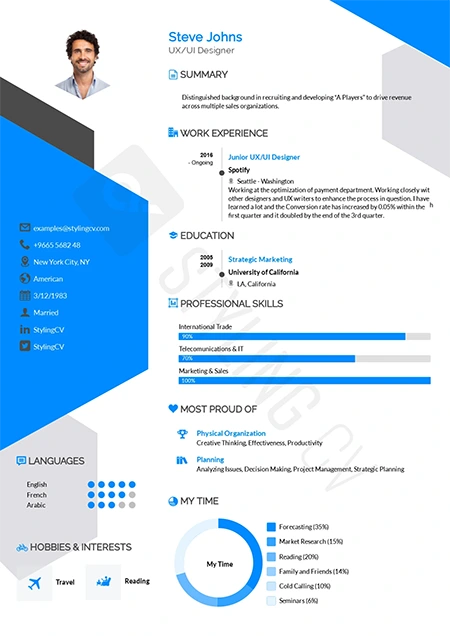
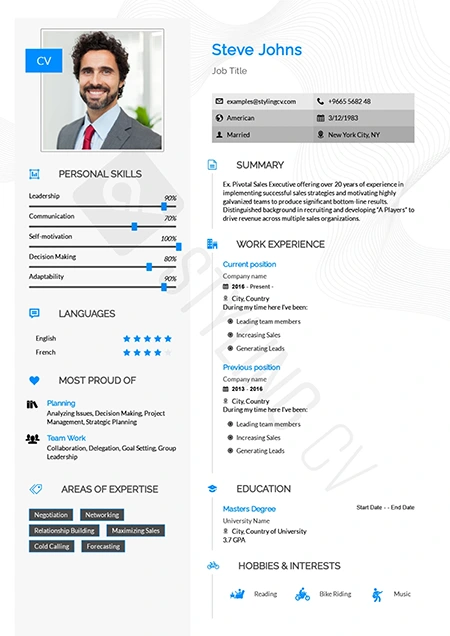
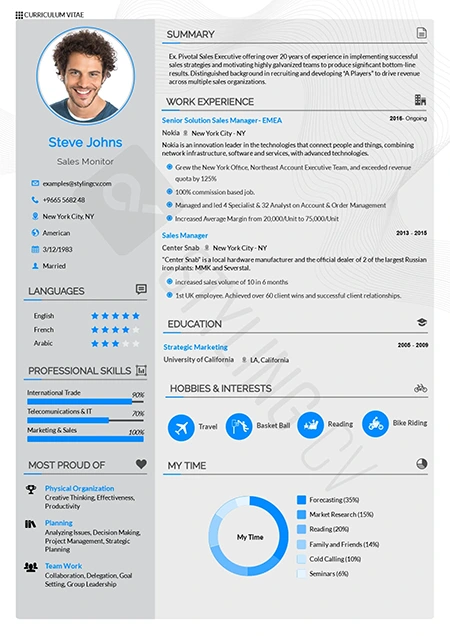
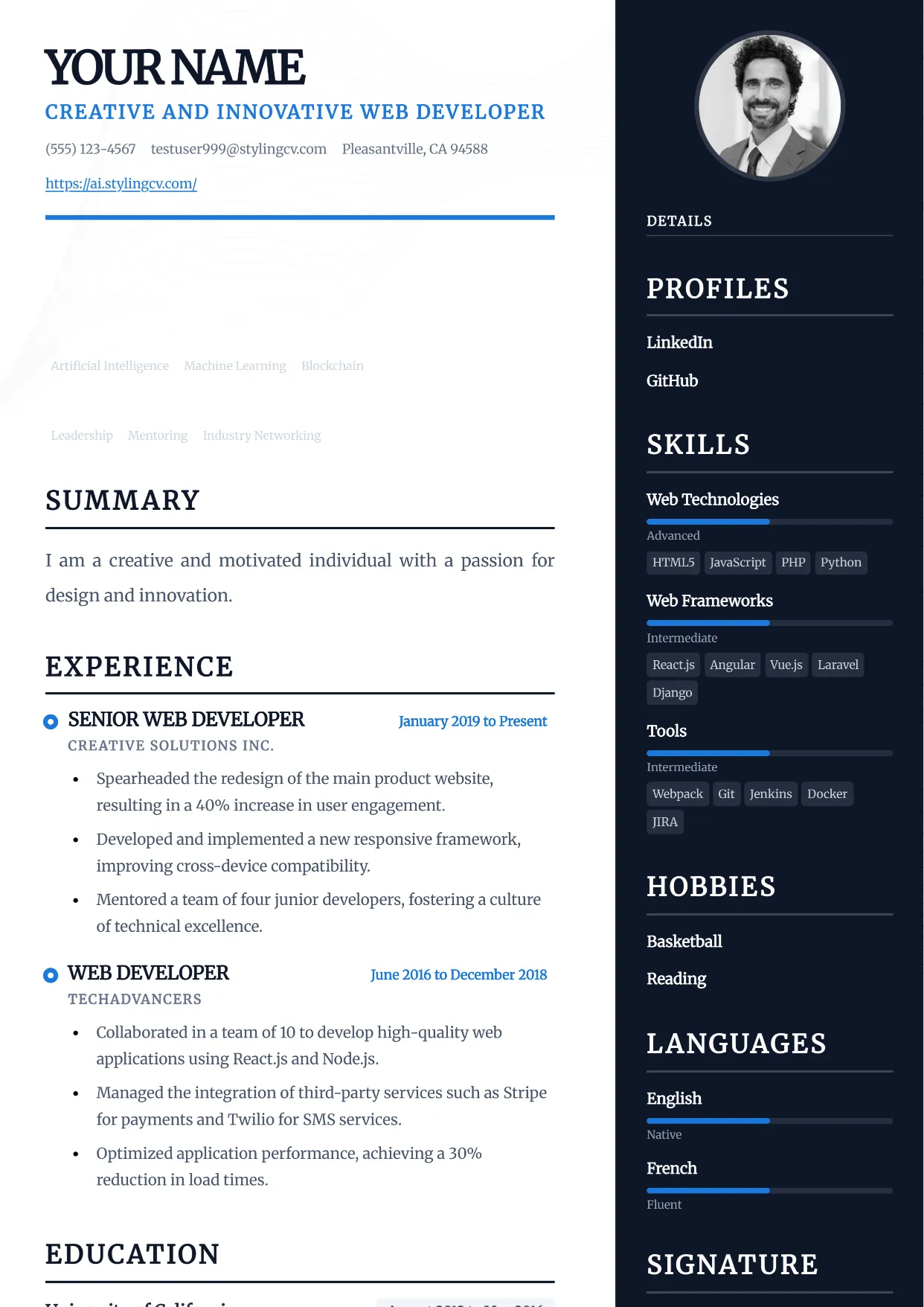
I recommend using an AI resume builder like StylingCV that optimizes for both ATS parsing and human appeal. Our system analyzes your target job description and automatically highlights the transferable skills a career changer needs to feature. Over 6 million job seekers have used it to pivot into new careers.
Step 5: Network Intelligently (Stop Sending Cold Resumes)
Only 15% of jobs are filled through cold applications in 2026. The rest come through referrals, networking, and internal mobility. For career changers, this number is even lower — because your resume alone will not tell the story of why you belong in a new field.
- Find 10-20 people in your target role on LinkedIn who made a similar transition
- Send a specific, respectful message: “Hi [Name], I am exploring a move from [old field] to [new field] and saw you made that transition successfully. Would you be open to a 15-minute chat about how you approached it?”
- Ask for advice, not a job. People love giving advice. They hate being asked for jobs.
- Attend industry-specific events — virtual and in-person. Many are free on platforms like Eventbrite and Luma
Optimize your LinkedIn profile so that when those new connections visit your profile, they see a clear career pivot story.
Every career changer I have mentored who landed a role in under 90 days did so through a referral or direct connection — not a cold application.
Common Career Change Myths Debunked (2026 Edition)
Myth 1: “I am too old to change careers.”
False. The average career changer in 2026 is 39 years old. Employers value the maturity, emotional intelligence, and professional judgment that comes with experience. Many companies specifically recruit career changers for senior roles because they bring fresh perspectives.
Myth 2: “I will have to start at an entry-level salary.”
Not true if you position your transferable skills correctly. A mid-career professional moving from marketing to product management can often negotiate for a mid-level product role, leveraging their business acumen and cross-functional experience. The key is demonstrating that you bring more to the table than a fresh graduate.
Myth 3: “I need to go back to school for 2+ years.”
In most fields, this is outdated advice. Employers in 2026 prioritize skills over degrees. Short-term certifications, bootcamps, and project-based portfolios are the new currency of career mobility.
Myth 4: “My resume will get auto-rejected by ATS if I do not have the exact job title.”
Modern ATS platforms in 2026 use AI to evaluate transferable skills, not just job titles. A well-optimized resume that mirrors the language of your target role can absolutely pass the screening. Our team at StylingCV tested resumes from career changers across 11 different ATS platforms — the ones that passed emphasized skills over titles. (See our research: Can ATS detect AI-written resumes in 2026?)
Real Career Change Success Stories (2026)
Sarah: Teacher to Instructional Designer
Sarah taught high school English for 9 years. She completed a 12-week instructional design certificate, built a portfolio redesigning three lesson plans into e-learning modules, and landed a role at an edtech company. Her starting salary was 15% higher than her teaching salary.
Marcus: Retail Store Manager to Data Analyst
Marcus spent 8 years managing a department store. He took Google Data Analytics certificate (6 months, part-time), analyzed his store sales data as a portfolio project, and now works as a junior data analyst at a retail tech company.
Priya: Accountant to Product Manager
Priya was a CPA for 7 years. She earned a Scrum Master certification, volunteered to lead a product launch at her accounting firm, and transitioned into product management at a fintech startup. Her compensation package increased by 30%.
Frequently Asked Questions About Career Changes
How long does a career change take in 2026?
The average career change takes 6 to 12 months from the decision to the job offer. The fastest career changers — those who network aggressively and target a specific role — can do it in 90 days.
What are the easiest careers to switch into in 2026?
Project management, instructional design, data analytics, sales operations, human resources, and customer success are among the most accessible career switches because they value transferable skills and have clear certification pathways.
Should I quit my job before starting a career change?
Generally, no. Keep your current job while you build skills, create portfolio projects, and network. The security of a steady paycheck reduces the pressure and lets you be selective about your next move. Start applying seriously once you have a strong resume and a network in place.
How do I explain a career change in an interview?
Use the “Bridge Narrative”: (1) What you did in your previous career, (2) What transferable skills you built, (3) Why those skills make you uniquely qualified for the new role. Keep it to 60 seconds. Then redirect to your enthusiasm for the role.
Which ATS systems do most employers use?
Workday, Taleo, Greenhouse, SAP SuccessFactors, and Lever dominate the US market. Each parses resumes differently. Our resume format guide covers which layouts work best across all major ATS platforms.
How do I handle employment gaps during a career change?
Frame any gaps productively: coursework, certifications, freelance projects, or volunteer work that built skills relevant to your target role. Treat the transition period as an investment in your future earning potential.
Will StylingCV help me as a career changer?
Absolutely. Our AI resume builder is built for precisely this scenario. It analyzes your target job description, identifies your transferable skills, and optimizes your resume for both ATS parsing and human persuasiveness. With 11 AI agents working together, we have helped over 6 million job seekers — including thousands of career changers — land interviews in new fields.
Your Next Step
A career change is not a leap of faith. It is a calculated transition. The data shows that 2026 is the most favorable job market for switchers in a decade. Employers are hungry for diverse perspectives. ATS systems are smarter. Remote work has opened doors that were locked five years ago.
The only thing standing between you and a new career is a plan. Start today: audit your transferable skills, pick your target role, build one credential, rewrite your resume, and talk to one person in your new field. Then let StylingCV optimize your resume for the ATS systems hiring managers use in 2026.
Your future self — the one doing work that excites them — will thank you.
About the author: Yasser Al-Khateeb is a former recruiter who reviewed over 10,000 resumes and mentored 500+ career changers. He leads product strategy at StylingCV, the AI resume builder trusted by 6M+ job seekers across 150+ countries to navigate career transitions and beat ATS screening systems. Trustpilot rating: 4.8 stars from 37,000+ reviews.