Data Scientist Resume 2026: How to Write a Resume That Lands Jobs at Top Tech Companies
Step-by-step guide to writing a data scientist resume in 2026. Includes ATS keywords, resume format tips, bullet point examples by experience level, and salary data. Free template inside.

Why Data Scientist Resumes Fail in 2026 (And What Recruiters Actually Want)
Here’s a number that should scare you: the average data scientist role at a Fortune 500 company receives 250+ applications. Of those, roughly 12 make it past the ATS. And only 3 to 5 get a phone screen.
Build Your Resume in 60 Seconds with AI
StylingCV creates ATS-optimized resumes and cover letters tailored to your target role. Trusted by 50,000+ job seekers.
The difference between the resumes that get tossed and the ones that land interviews isn’t years of experience or a fancy degree. It’s how you present your technical work in a way that both the ATS and a hiring manager can understand in under 10 seconds.
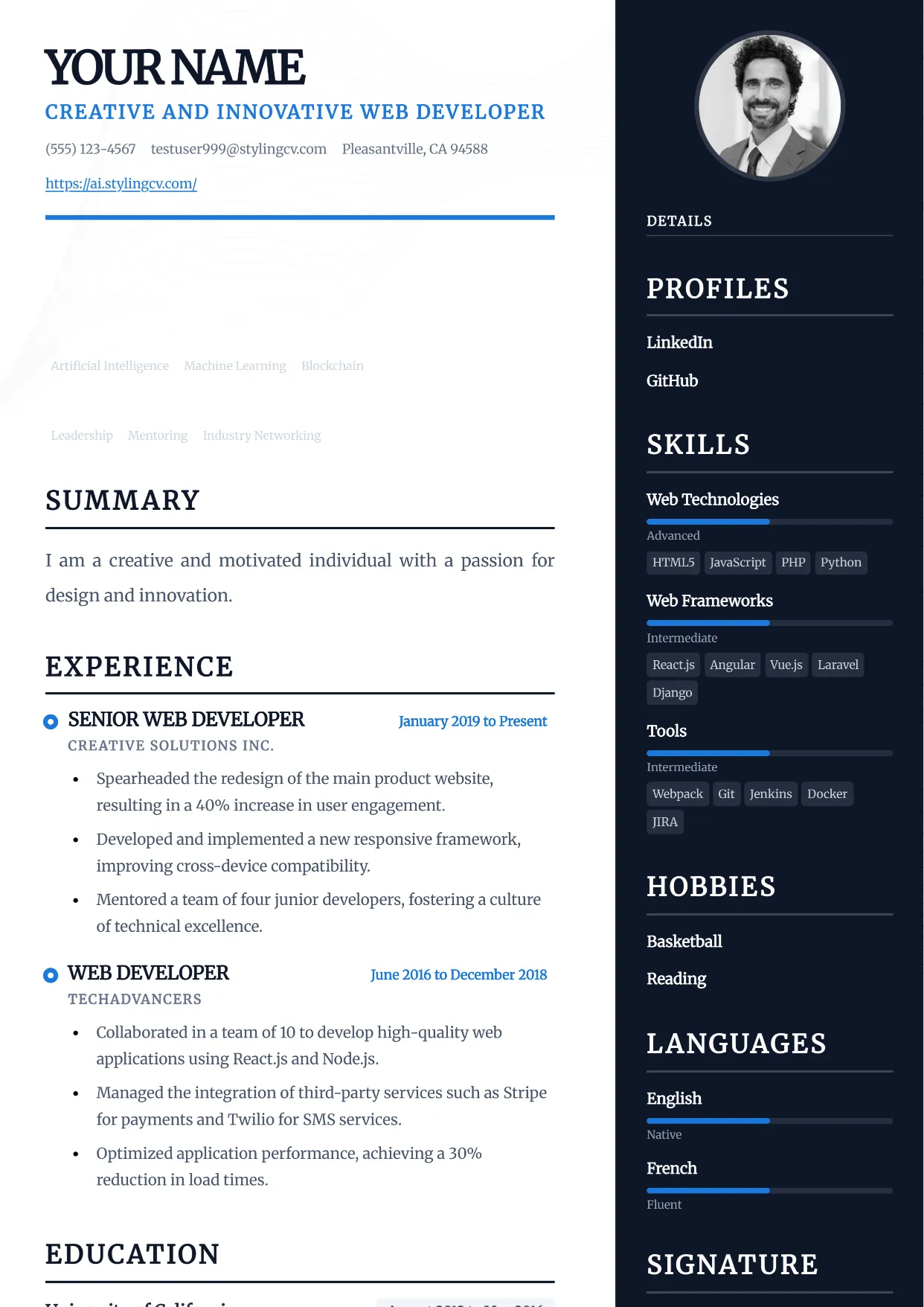
This guide breaks down exactly how to write a data scientist How Data Scientist Hiring Has Changed in 2026 The data science job market in 2026 looks nothing like it did two years ago. Here’s what shifted: Before you write a single bullet point, you need to get the structure right. The wrong format will get your resume killed by an ATS before anyone reads your skills. For data science roles, the reverse-chronological format works best. It puts your most recent (and usually most relevant) experience at the top, which is exactly what both ATS systems and hiring managers scan for first. A hybrid or functional format might seem tempting if you’re changing careers, but most ATS platforms score these formats lower. Stick with reverse-chronological unless you’ve a very specific reason not to. If you’ve less than 8 years of experience, keep it to one page. If you’re a senior data scientist or manager with significant publications and projects, two pages is acceptable. But never go beyond two pages. Save your resume as a PDF unless the job posting specifically requests a Word document. PDFs preserve your formatting across all devices and ATS platforms. Name the file professionally: Every strong data scientist resume in 2026 contains these sections in this order: Keep it clean. Include your full name, phone number, professional email, LinkedIn URL, and GitHub profile. If you’ve a portfolio website or Kaggle profile, add those too. Skip your home address — it’s outdated and unnecessary. This is your elevator pitch. Don’t waste it with generic statements like “results-driven data scientist.” Instead, lead with your specialization, years of experience, and one standout achievement. Example: “Data scientist with 5+ years of experience building machine learning models for e-commerce recommendation systems. Reduced customer churn by 23% at [Company] through a real-time prediction pipeline built with Python, Spark, and AWS SageMaker. Published 3 peer-reviewed papers on NLP techniques for sentiment analysis.” This section is where ATS systems do most of their keyword matching. Organize your skills into clear categories: Programming Languages: Python, R, SQL, Scala, Julia ML/DL Frameworks: TensorFlow, PyTorch, Scikit-learn, XGBoost, Hugging Face Transformers Data Tools: Pandas, NumPy, Apache Spark, Dask, dbt Cloud Platforms: AWS (SageMaker, S3, EC2, Lambda), GCP (BigQuery, Vertex AI), Azure ML Databases: PostgreSQL, MongoDB, Snowflake, Redshift, Elasticsearch MLOps & Deployment: Docker, Kubernetes, MLflow, Airflow, CI/CD pipelines Visualization: Tableau, Power BI, Matplotlib, Plotly, Looker Pro tip: mirror the exact language from the job posting. If they say “PyTorch,” don’t write “Pytorch.” If they list “BigQuery,” don’t substitute “Google BigQuery.” ATS systems match exact strings. Each role needs 4 to 6 bullet points. Each bullet point must follow this formula: Action Verb + What You Built/Did + Tools Used + Measurable Result Weak bullet: “Worked on machine learning models for customer segmentation.” Strong bullet: “Built a K-means clustering pipeline in Python and Scikit-learn that segmented 2.3M customers into 8 behavioral cohorts, enabling targeted marketing campaigns that increased email conversion rates by 31%.” Here are more examples of strong data scientist bullet points: Keep this section brief. List your degree, institution, and graduation year. If you’ve a Master’s or PhD in a quantitative field (statistics, computer science, mathematics, physics), it’s a strong signal. If not, don’t panic — bootcamp certificates, online courses, and proven project work carry increasing weight. This section separates good resumes from great ones. Include 2 to 3 of your strongest projects with: If you’ve peer-reviewed publications, list them in a separate subsection. Even 1 or 2 published papers give you a significant edge over other candidates. Certifications that carry real weight in data science hiring: ATS platforms scan for specific keywords. Missing even a few critical ones can tank your resume’s ranking. Here’s a table of the highest-impact keywords for data scientist roles: If you’re just starting out, lead with your strongest projects, internships, and education. Include a “Projects” section before “Work Experience” if your projects are more impressive than your job history. Highlight Kaggle competitions, bootcamp capstone projects, and any research you contributed to during your degree. Key focus areas for entry-level: At this level, you need to show business impact, not just technical skills. Hiring managers want to see that your models generated revenue, reduced costs, or solved real problems. Quantify everything. Senior roles demand evidence of technical leadership, strategy influence, and team building. Your resume should read less like a list of models you built and more like a record of how you shaped the data science function at your organization. Here’s a quick ATS optimization checklist you can apply right now: Knowing the salary range helps you position yourself during negotiations. Here’s what data scientists earn in 2026 across experience levels in the US: Remote roles and FAANG-adjacent companies often pay above these ranges. Startups may offer lower base salaries but compensate with equity. Writing a data scientist resume from scratch takes hours of formatting, keyword research, and iteration. StylingCV cuts that time down to minutes. With StylingCV, you get: Create your data scientist resume on StylingCV — free to start → A strong data scientist resume in 2026 should include a professional summary highlighting your specialization and top achievement, a detailed technical skills section organized by category (programming, ML frameworks, cloud platforms, databases), work experience bullet points that quantify business impact, 2 to 3 portfolio projects with links, relevant certifications, and education. Focus on showing what you built, what tools you used, and what measurable results you achieved. You might also like: No. While a PhD in a quantitative field can help for research-heavy roles, most data scientist positions in 2026 prioritize practical experience and demonstrable skills over academic credentials. A strong portfolio of real projects, relevant certifications (AWS ML, Google Data Engineer), and hands-on experience with production ML systems can substitute for an advanced degree at most companies. One page for professionals with less than 8 years of experience. Two pages for senior data scientists with significant publications, projects, and leadership experience. Never exceed two pages. Every line on your resume should earn its place by demonstrating skills or achievements relevant to the role you’re targeting. Python and SQL are non-negotiable — list them first. R is valuable for statistical roles. Scala is important for big data and Spark-based work. Julia is emerging for high-performance computing. List only languages you’re genuinely comfortable using in a technical interview. If you put a language on your resume, expect to be tested on it. Yes, especially if you placed in the top 10% or earned a medal. Kaggle competitions demonstrate practical problem-solving skills and familiarity with real-world datasets. Include them in your Projects section with your ranking, the problem you solved, and the approach you used. For entry-level candidates, Kaggle experience can be the difference between getting an interview and getting filtered out. Read the job description carefully and identify the top 5 skills or requirements mentioned. Adjust your professional summary to reflect those priorities. Reorder your skills section so the most relevant ones appear first. Modify your bullet points to emphasize the work that aligns with the role. This takes 15 to 20 minutes per application, but it dramatically increases your callback rate compared to sending the same generic resume everywhere. A data scientist resume emphasizes machine learning model development, deep learning frameworks, MLOps, and production deployment. A data analyst resume focuses on SQL queries, dashboard creation, business intelligence tools, and descriptive analytics. Data scientist roles require stronger programming skills and more emphasis on statistical modeling and algorithm design. Make sure your resume targets the right role — confusing the two is one of the most common mistakes candidates make. Last updated: August 2026 Looking for more? Check out our cover letter builder and professional resume templates to complete your job application toolkit.The Ideal Data Scientist Resume Format for 2026
Choose the Reverse-Chronological Format
One Page or Two?
File Format: PDF Always
FirstName_LastName_Data_Scientist_Resume.pdfSections Your Data Scientist Resume Must Include
1. Header with Contact Information
2. Professional Summary (3 to 4 Lines Max)
3. Technical Skills Section
4. Work Experience (This Is Where You Win or Lose)
5. Education
6. Projects and Publications
7. Certifications
Data Scientist Resume Keywords ATS Systems Look For in 2026
Category Top Keywords Core Skills Machine Learning, Deep Learning, Statistical Modeling, Predictive Analytics, A/B Testing Languages Python, R, SQL, Scala, Java, Julia Frameworks TensorFlow, PyTorch, Scikit-learn, Keras, XGBoost, LightGBM Big Data Apache Spark, Hadoop, Kafka, Airflow, ETL Pipelines Cloud/Infra AWS SageMaker, GCP Vertex AI, Azure ML, Docker, Kubernetes Data SQL, NoSQL, Data Wrangling, Feature Engineering, Data Pipeline Business Stakeholder Communication, Cross-Functional Collaboration, Business Intelligence Data Scientist Resume Examples by Experience Level
Entry-Level Data Scientist Resume (0 to 2 Years)
Mid-Level Data Scientist Resume (3 to 6 Years)
Senior Data Scientist Resume (7+ Years)
7 Mistakes That Kill Data Scientist Resumes in 2026
How to Optimize Your Data Scientist Resume for ATS in 2026
Data Scientist Salary Expectations in 2026
Experience Level US Salary Range (Annual) Key Skills Expected Entry-Level (0-2 years) $95,000 — $130,000 Python, SQL, basic ML, data wrangling Mid-Level (3-6 years) $130,000 — $175,000 Production ML, A/B testing, cloud platforms Senior (7+ years) $175,000 — $250,000+ MLOps, team leadership, strategic impact Staff/Principal $250,000 — $400,000+ Architecture, cross-org influence, publications Build Your Data Scientist Resume with StylingCV
Frequently Asked Questions
What should a data scientist put on a resume in 2026?
Do I need a PhD to get a data scientist job in 2026?
How long should a data scientist resume be?
What programming languages should I list on a data scientist resume?
Should I include Kaggle competitions on my resume?
How do I tailor my data scientist resume for different companies?
What’s the difference between a data scientist and a data analyst resume?