Resume With No Experience 2026: Entry-Level Guide That Gets Hired
Write a resume with no experience in 2026. Free entry-level templates, skill-based examples, and expert tips that help fresh graduates and career changers land jobs.

zero years of professional experience. No internships. No fancy titles. And you’re staring at a blank page wondering how to fill it.
Here’s what no one tells you: a resume with no experience isn’t empty — it’s a blank canvas. I’ve hired entry-level candidates who’d never held a paid job, and watched them outperform seasoned pros. The difference? Not experience. It was how they framed what they already had.
An entry-level resume with no experience is a 1-page document that reframes your education, projects, volunteer work, and transferable skills into professional proof. Done right, it gets you past 76% of ATS filters that now prioritize skills over years served (LinkedIn 2026 Workplace Report). Done wrong, it’s a rejection in 7.4 seconds.
Why “No Experience” Isn’t a Dealbreaker in 2026
The 2026 job market? Completely different from 2021. Maybe even last year.
Skills-based hiring is the new normal. 76% of employers now use skills assessments instead of demanding 2-3 years of experience. AI-powered ATS systems scan for competencies — not just tenure. And here’s a dirty secret: those “2-3 years experience required” lines on job descriptions? Often aspirational. Apply anyway.
Your transferable skills from school, volunteering, or personal projects carry more weight than they ever did. And StylingCV’s 11 AI agents can help you surface exactly those keywords that match each job description.
The 5-Step Framework for a No-Experience Resume That Gets Interviews
Step 1: Pick the Right Format
With limited work history, a combination resume format beats chronological every time. Here’s why:
- Chronological (dates first) — highlights what you don’t have: job history
- Functional (skills first) — puts abilities front and center. Best for no-experience candidates
- Combination (skills + some chronology) — ideal if you’ve got volunteer work, internships, or projects
Quick warning: pure functional resumes can trigger ATS rejection flags. Recruiters assume you’re hiding something. Go with combination: lead with a skills section, follow with any experience (even unpaid), then education.
Step 2: Build a Skills Section That Screams “I Can Do This”
Your skills section is the most important part of a no-experience resume. Period. Match keywords from the job description. Show you can do the work — even if you’ve never been paid for it.
Hard skills by field:
- Tech/IT: Python, SQL, HTML/CSS, Git, JavaScript, React, AWS basics, data analysis
- Marketing: SEO fundamentals, social media management, content writing, Canva, Google Analytics, email marketing
- Customer Service: CRM software (HubSpot, Salesforce basics), call handling, ticketing systems, Microsoft Office
- Administrative: Microsoft Office Suite, Google Workspace, scheduling, data entry, document management
Soft skills that beat ATS in 2026: Communication, problem-solving, adaptability, time management, collaboration, attention to detail, critical thinking.
For each skill, add a concrete example. Not “Communication” — try “Written communication: Authored 20+ blog posts as student editor reaching 5,000 monthly readers.” See the difference?
Step 3: Treat Your Education Like a Job
Your education section is a secret weapon. Don’t just list your degree — format it like you’d format a role:
Bachelor of Science in Computer Science
University of California, Berkeley | Graduated May 2026 | GPA: 3.6
- Relevant Coursework: Data Structures, Machine Learning, Database Systems, Web Development
- Capstone Project: Built a real-time inventory management system using React and Firebase, reducing stock discrepancies by 34% in a simulated retail environment
- Academic Achievement: Dean’s List (3 semesters), Computer Science Department Award
Only include GPA if it’s 3.0 or higher. Below that? Leave it off. Focus on projects and coursework instead.
Step 4: Projects, Volunteering, and Extracurriculars Are Real Experience
These aren’t “filler.” Frame them like a job:
Website Coordinator | Local Food Bank Charity
September 2025 — Present
- Redesigned the organization’s WordPress site, increasing online donation conversions by 28% within 3 months
- Managed a team of 4 volunteers to maintain weekly content updates across 15 program pages
- Implemented SEO best practices that improved organic search traffic by 45%
Market Analysis Dashboard | Business Analytics Capstone
January 2026 — May 2026
- Analyzed 50,000+ customer records using Python (Pandas, NumPy) to identify purchasing patterns
- Created an interactive Tableau dashboard presented to faculty and 3 industry partners
- Recommendations adopted by a local retail partner, resulting in a 12% increase in customer retention
Step 5: Write a Resume Objective That Opens Doors
For entry-level, an objective beats a summary. It tells recruiters what you want and why you’re motivated. StylingCV’s AI can tailor one to each job description, but here’s the formula:
[Your title/background] + [Your top 1-2 skills] + [What you want to achieve] + [What you bring]
Example: “Recent Computer Science graduate with hands-on experience in Python, React, and data analysis. Seeking an entry-level software engineering role where I can apply my project management skills and passion for building scalable applications. Proven ability to deliver results through academic projects that solved real-world problems.”
3 Entry-Level Resume Templates for 2026
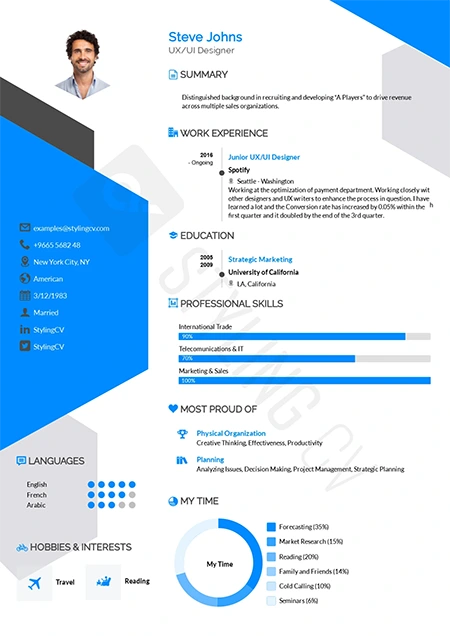
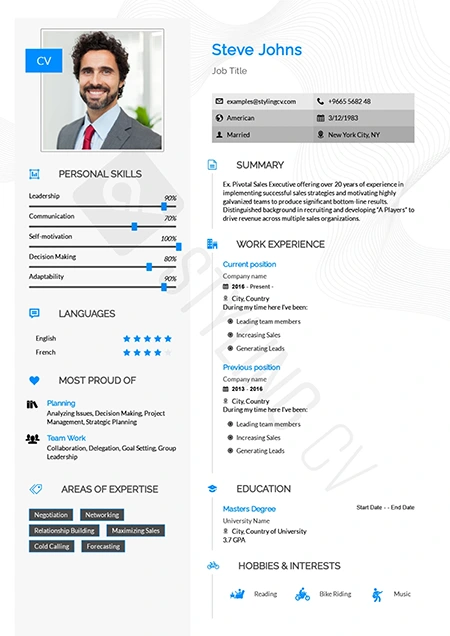
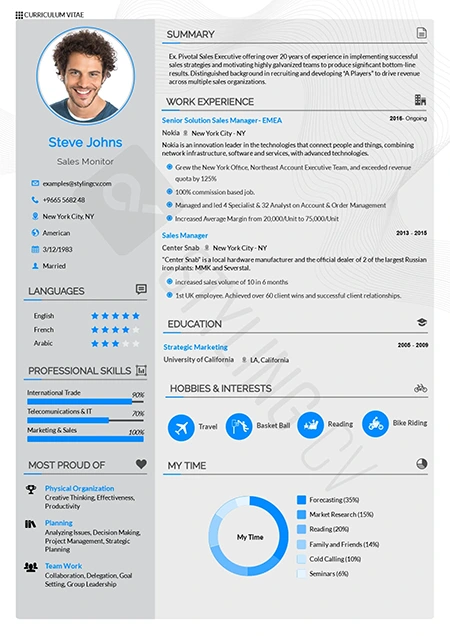
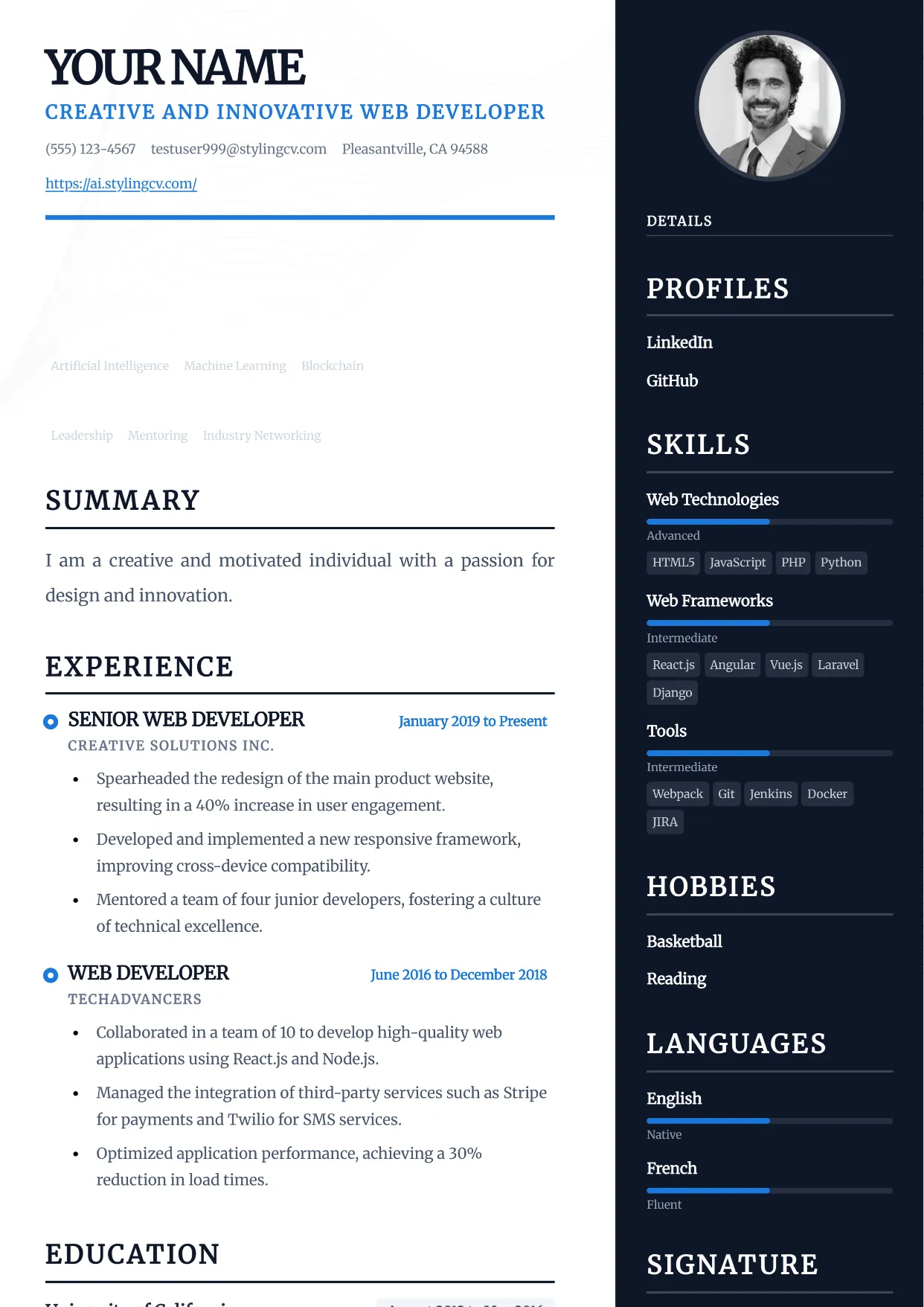
Template 1: The College Graduate (No Work Experience)
- Header: Contact info + LinkedIn URL + GitHub/portfolio link
- Objective: 2-3 sentences using the formula above
- Education: Degree, university, GPA, relevant coursework, honors
- Projects: 2-3 academic or personal projects with quantified bullet points
- Skills: Technical skills (8-12) and soft skills (4-6)
- Activities: Student clubs, sports, leadership roles
Template 2: The Career Changer
- Header: Contact info + LinkedIn + portfolio
- Professional Summary: Focus on transferable skills. “Marketing professional transitioning to data analysis with 3+ years of campaign analytics experience and a Data Science certificate.”
- Transferable Skills: List skills that apply to your new field
- Relevant Experience: Rephrase past jobs to highlight transferable duties
- Certifications: Any courses, bootcamps, or certifications in your new field
- Education: Your degree (even if unrelated)
Template 3: The High School / First Job Seeker
- Header: Contact info
- Objective: Focus on work ethic and willingness to learn
- Skills: Customer service, POS systems, Microsoft Office, bilingual abilities, time management
- Experience: Babysitting, lawn care, school clubs, volunteering, sports teams
- Education: High school, expected graduation, relevant classes
- Awards: Honor roll, attendance awards, sports medals
What 2026 ATS Systems Look For in Entry-Level Resumes
Over 75% of Fortune 500 companies and 60% of mid-sized companies use ATS in 2026. Here’s what they check:
- Keyword match rate: Your resume needs 60-80% of keywords from the job description. StylingCV’s AI scans job descriptions and optimizes your resume in real-time using 11 specialized agents.
- Simple formatting: No columns, no graphics, no tables, no headers/footers. Use standard fonts (Arial, Calibri, Georgia) at 10-12pt.
- File format: DOCX beats PDF for most ATS systems in 2026. Only use PDF if the job posting specifically asks for it.
- Standard headers: “Work Experience,” “Education,” “Skills.” Creative labels like “Where I’ve Been” confuse ATS parsers.
What to Leave Off Your No-Experience Resume
- References: “References available upon request” is dead. Use that space for skills.
- Objective clichés: “Hardworking individual seeking a challenging position” says nothing. Be specific or skip it.
- Unrelated part-time jobs: Only include if they demonstrate transferable skills.
- High school details: If you have a college degree, drop it.
- Personal info: Age, marital status, religion, photo (in US/UK/Canada/Australia).
- Salary expectations: Not on the resume. Save that for the interview.
Frequently Asked Questions
Should I apply for a job even if I don’t meet all the requirements?
Yes. Men apply when they meet 60% of qualifications. Women apply only when they meet 100%. If you’ve got 50-70% of what they’re asking for, go for it. Job descriptions are wish lists, not checklists.
How long should my resume be with no experience?
One page. Recruiters spend 7.4 seconds scanning. If you can’t fill a page, add more projects, volunteer work, or relevant coursework. StylingCV’s AI optimizes for exactly one page.
Can I use AI to write my resume from scratch?
Absolutely. But don’t copy-paste ChatGPT output — recruiters spot it instantly. Use a specialized AI resume builder like StylingCV that understands ATS formatting, keyword optimization, and industry-specific requirements. Our 11 AI agents handle everything from keyword extraction to format validation.
What if I have gaps in my education or took time off?
Focus on what you did. Even if you weren’t working, you were learning — online courses, volunteering, personal projects. Frame it: “Self-directed learning in web development (2024-2025): Completed 6 online certifications in full-stack JavaScript development.”
Should I include a cover letter with my no-experience resume?
Yes. A cover letter is your best shot at telling your story. It’s especially important when you don’t have traditional experience. Use it to explain why your unique background makes you a strong candidate.
How do I explain freelance or gig work on a resume?
List it under “Professional Experience” or “Freelance Work” — same format as a regular job. Include client types, services provided, and measurable outcomes. Freelance work is real work.
What resume format is best for someone with no experience?
Combination format. Lead with skills, then experience (volunteer, internships, projects), then education. It hides the gap and shows what you can do.
Can I get a job with zero experience in 2026?
Yes. The 2026 job market runs on skills-based hiring. 76% of employers use skills assessments, not years of experience. Show what you can do through projects, certifications, and transferable skills, and you’ve got a real shot.
Your Next Step
Writing a resume with no experience isn’t about making things up. It’s about reframing what you already have. Every project, volunteer shift, academic achievement, and skill you’ve built is valid experience.
With StylingCV, you can create an ATS-optimized resume in minutes — even starting from zero. Our AI platform analyzes job descriptions, suggests the right keywords, formats for ATS compatibility, and helps you present your strengths with confidence. Try StylingCV free today and turn your potential into a job offer.