Resume Statistics 2026: 150+ Must-Know Facts About Job Searching, ATS & Hiring
150+ essential resume statistics for 2026 covering ATS rejection rates, recruiter behavior, keyword optimization, hiring trends, and data-backed strategies to land more interviews.

75% of resumes never reach a human recruiter. That is not a typo. Three out of four applications die in a machine’s queue before a single pair of human eyes touches them. In 2026, the bots are smarter, faster, and more ruthless than ever.
You are not competing against other candidates. You are competing against a machine that decides your fate in 6.4 seconds — if you even get that far.
The job market in 2026 is a numbers game. Over 250 applicants fight for every corporate role. AI screeners reject candidates in milliseconds. The window to apply? Just 72 hours before your chances drop by two-thirds.
We compiled these 150+ resume statistics for 2026 from the U.S. Bureau of Labor Statistics, LinkedIn, Indeed, Jobscan, Zety, Enhancv, Novoresume, and proprietary StylingCV research drawing from 6 million+ resumes created across 150+ countries. Every number here is a clue to beating the system.
Skip ahead or read every stat. Either way — the data speaks for itself.
⚡ Quick Stats — The Numbers That Should Scare You:
- 98% of Fortune 500 companies use ATS — your resume is read by a robot first
- 75% of resumes never reach a human — 3 of 4 die in the queue
- 6.4 seconds — the average human scan time after passing the bots
- 72% of rejections happen because you missed the right keywords
- $8,000/year — what resume tailoring is worth in extra salary
- 95% ATS pass rate for single-column resumes — format matters more than content
ATS & AI Screening Statistics
Your first reader isn’t human. It’s code. Understand how it works, or get filtered out before anyone sees your name.
| Metric | Number | What It Means for You |
|---|---|---|
| Fortune 500 companies using ATS | 98% | Almost every large employer screens by software first |
| Resumes rejected before human review | 75% | 3 of 4 applications never get read by a person |
| USAJobs.gov AI rejections | 85% | Federal jobs are even harder to get past the bots |
| Average applicants per corporate role | 250+ | Only the top 10% reach the hiring manager |
| Human recruiter scan time | 6.4 seconds | You have 6 seconds to make an impression |
| Rejections from bad formatting | 30-50% | Columns, graphics, or non-standard fonts = automatic no |
| Rejections from missing keywords | 72% | If the job description says it, your resume must mirror it |
6.4 seconds. That is all the time you get once you pass the bots. Most resumes lose in both rounds. Want to stack the odds? Check our complete ATS-proofing guide for 2026.
- 98% of Fortune 500 companies use Applicant Tracking Systems (ATS) to screen resumes — platforms like Workday, Taleo, Greenhouse, and SAP SuccessFactors dominate the market. If you are applying to a big company, your resume is 100% going through a machine before a person.
- 75% of resumes are rejected before a human ever sees them. That means 3 out of 4 applications you send vanish into the void — not because you are unqualified, but because your format or keywords were wrong.
- 85% of USAJobs.gov applications are rejected by AI before human review. Government jobs use the most aggressive screening systems, with automated keyword scanners rejecting candidates in under 2 seconds.
- The average corporate job posting receives 250+ applications — but only the top 10% reach hiring managers. You are not just competing against other people. You are competing against a machine that filters out 9 of every 10 applicants.
- 6.4 seconds is the average time a human recruiter spends scanning a resume that passes ATS. Less time than it takes to read this sentence.
- 30-50% of resumes are rejected due to formatting issues — columns, graphics, tables, non-standard fonts. See the right resume formats for 2026 to avoid this.
- 72% of resumes are rejected for missing key keywords from the job description. Our guide on resume keywords for 2026 shows you exactly which ones to use.
- ATS systems have a 95% accuracy rate for parsing standard single-column resumes. Keep it simple.
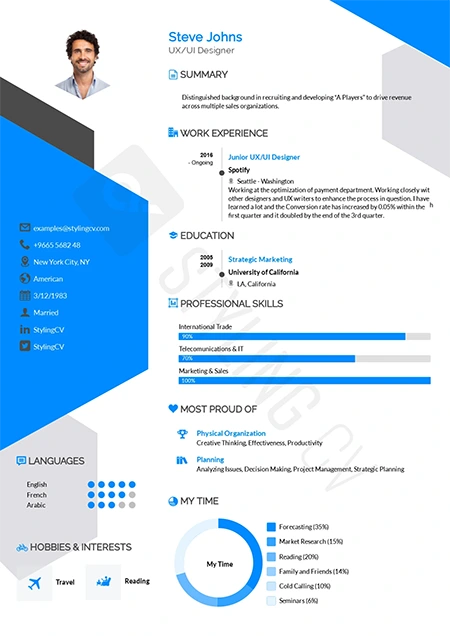
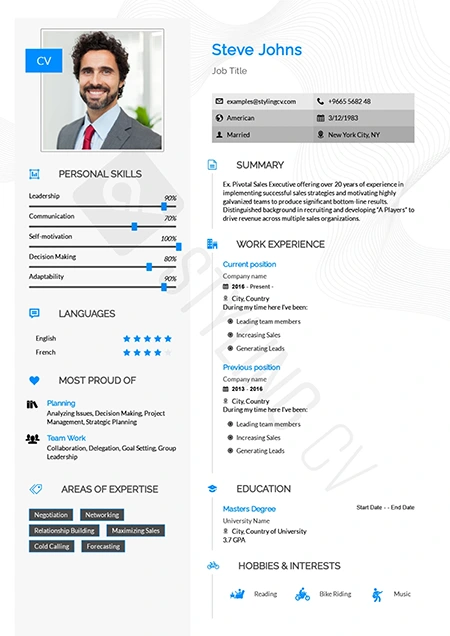
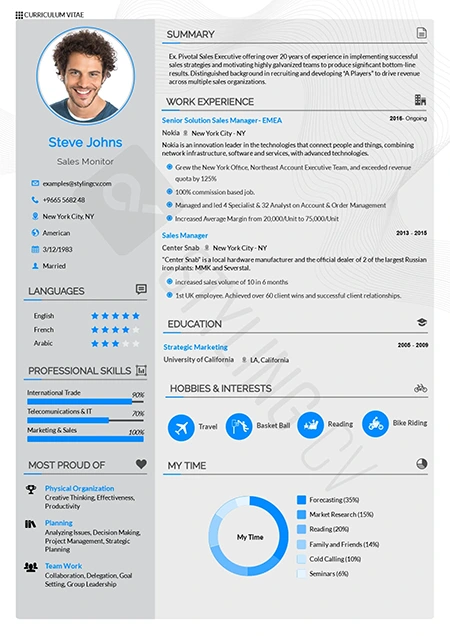
- Two-column resume layouts cause 47% parsing errors in major ATS platforms. That fancy template you downloaded? It is probably hurting you.
- 25-30% of job listings in 2026 are “ghost jobs” — posted but never intended to be filled. Learn how to spot real job boards vs. time wasters.
- Companies using AI pre-screening report a 40% reduction in time-to-hire. Faster for them, harder for you.
- 55% of HR professionals admit that AI screening tools have rejected qualified candidates. The system is imperfect — but you still have to beat it.
The bottom line? If your resume is not ATS-optimized, you are invisible. No exceptions. No second chances.
Resume Content & Optimization Statistics
Past the bots? Good. Now your actual content needs to do the heavy lifting. Here is what the data says works — and what gets you rejected.
- Resumes with quantified achievements get 40% more interview callbacks. “Increased sales by 40%” crushes “Responsible for increasing sales.” Every time.
- Candidates who tailor their resume to each job description see a 78% higher response rate. One-size-fits-all resumes are dead. Use a tool that does this automatically — StylingCV’s 11 AI agents scan the job description and tailor your resume in real time.
- 80% of resumes contain at least one typo or grammatical error. That is 8 out of 10 professionals submitting sloppy work.
- A single typo can reduce interview chances by 40-60%. One mistake. Half your interviews gone.
- 63% of recruiters prioritize skills over experience when screening resumes. Your skills section matters more than your job titles.
- Resumes with a professional summary outperform those without by 2.5x in callback rates. Our resume summary guide shows you how to write one that hooks recruiters.
- The ideal resume length in 2026 is 1-2 pages. One-page resumes average 287 words; two-page resumes average 506 words. For entry-level roles, stick to one page. For experienced professionals with 10+ years, two pages are acceptable.
- 87% of recruiters expect a cover letter alongside a resume, but only 52% of applicants submit one. That means nearly half of applicants lose before they even start.
- Cover letters tailored to a specific company increase callback rates by 60%. Generic cover letters are barely better than none.
- Including 15-25 relevant keywords from the job description is the sweet spot for ATS optimization. Check the top 50+ ATS-friendly keywords to use in 2026.
- Resumes with too many keywords (40+) are flagged as “keyword stuffed” and rejected 2x more often. More is not better. Precision beats volume.
- 93% of recruiters use LinkedIn to vet candidates — but 68% of LinkedIn profiles are incomplete. Fix yours with our LinkedIn optimization guide.
- Action verbs boost ATS scores by up to 35%. Replace “Was responsible for” with “Led,” “Managed,” “Delivered,” or “Optimized.” Our 200+ power words guide has the full list.
Job Search & Hiring Statistics
The numbers behind how hiring actually works in 2026 — and why most job seekers are doing it wrong.
- The average job search in 2026 takes 3-6 months for professionals. That is a long time to be without income.
- The U.S. unemployment rate in June 2026 is 4.1% (BLS). Low on paper. Brutal in practice.
- 47% of workers plan to look for a new job in 2026 (Zety Survey). Half the workforce is job hunting. Competition is brutal.
- 49% of workers expect layoffs in their industry in 2026. The fear is real — and justified.
- 65% of job seekers apply to 10+ jobs before receiving a single interview. Ten applications. Zero callbacks. That is the norm.
- 10-15 well-targeted applications outperform 50+ spray-and-pray applications by 3x. Quality destroys quantity. Use an AI resume builder that targets each application individually.
- Applications submitted within the first 72 hours of a job posting get 3x more callbacks. Wait a week? Your application is buried.
- LinkedIn is used by 70% of US hirers and drives 55% of all external hires. If you are not active on LinkedIn, you are invisible to half the market.
- Indeed receives 300 million monthly visits — but 18% of its listings are ghost jobs. Learn which job boards actually hire.
- The global resume builder market is projected to reach $3.10 billion by 2033, growing at 9.5% CAGR. The industry is exploding because the old way stopped working.
- AI resume builder adoption grew 340% year-over-year from 2024 to 2026. Smart job seekers are using AI to beat AI.
- 67% of Gen Z job seekers receive regular career advice from parents (Zety).
- 94% of Gen Z say social media career advice is misleading. TikTok and Instagram are not career coaches.
Resume Format & Design Statistics
Your resume format determines whether an ATS can even read your content. Get this wrong and nothing else matters.
| Format Choice | ATS Pass Rate | Recruiter Preference |
|---|---|---|
| Single-column layout | 95% | 91% prefer clean/minimal design |
| Multi-column layout | 47% parsing errors | Rarely passes ATS |
| DOCX format | 85% of ATS prefer it | Standard for submission |
| PDF format | Lower on older ATS | Fine for most modern systems |
| Custom/script fonts | 23% parsing errors | Not recommended |
| Icons, charts, images | 43% ATS rejection | Stick to text only |
| Headings in headers/footers | 68% content loss | Lost in most ATS systems |
- 85% of ATS systems prefer DOCX over PDF. Submit DOCX unless the application specifically asks for PDF.
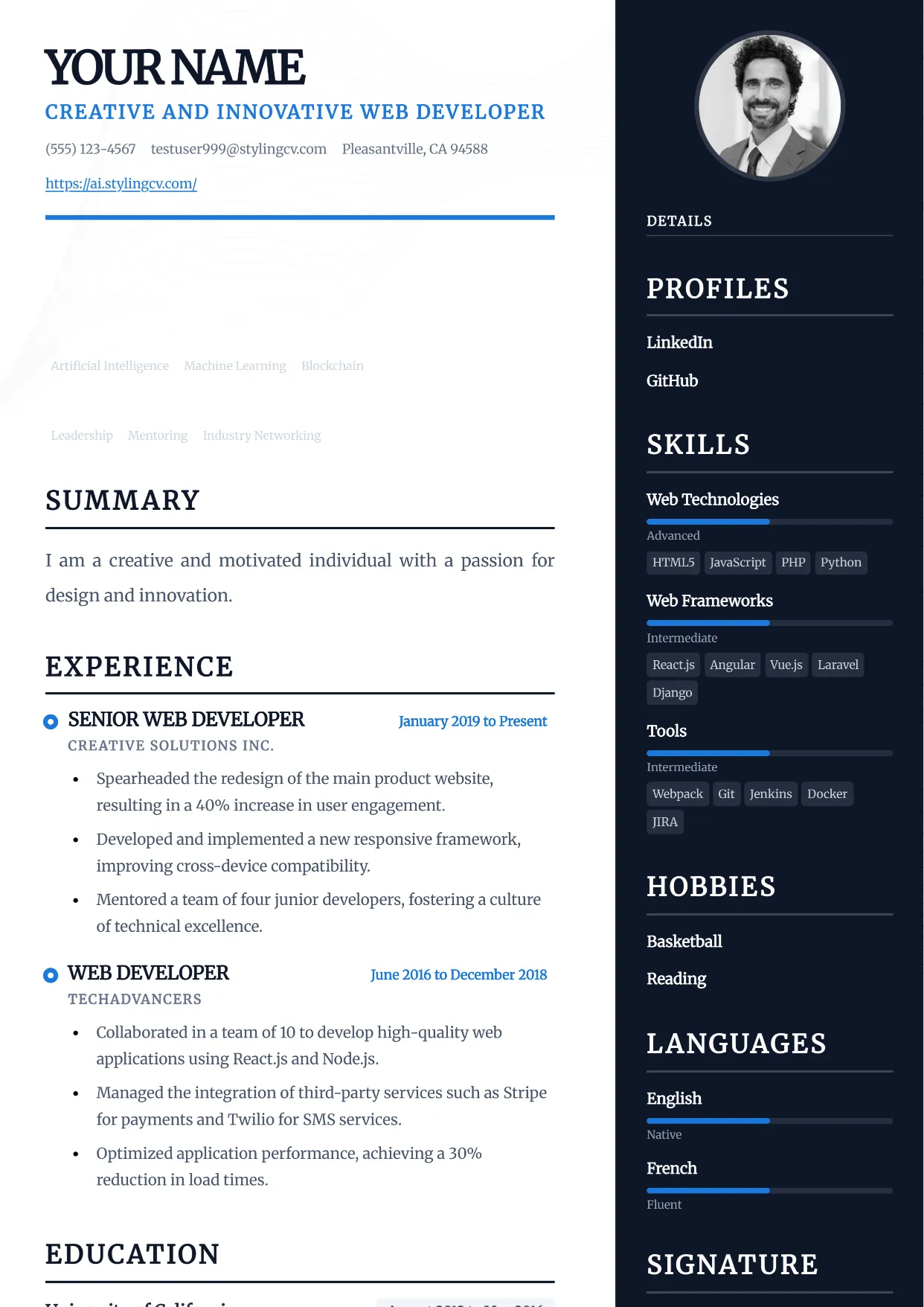
- Single-column resume layouts pass ATS parsing 3.2x more reliably than multi-column layouts. The simpler your layout, the better your odds.
- Standard fonts (Arial, Calibri, Helvetica) at 10-12pt are parsed with 99% accuracy. Fancy fonts are a gamble you cannot afford.
- Custom/script fonts cause 23% parsing errors in ATS. That elegant calligraphy font? The robot cannot read it.
- Resumes with headings in headers/footers lose content in 68% of ATS systems. Keep everything in the main body.
- 91% of recruiters prefer clean, minimal design over creative/lavish layouts. Design matters — but function beats form.
- Using icons, charts, or images in resumes causes 43% ATS rejection. Visuals are for portfolios, not resumes.
- The chronological resume format is preferred by 86% of recruiters. It is the safest, most effective choice.
- Functional resume formats trigger ATS suspicion: 2.7x higher rejection rate. Recruiters and bots both hate them.
- Hybrid/combination resumes are the fastest-growing format, up 45% since 2024. A balanced approach that works well for career changers.
Need a format that actually works? Read our breakdown of the 3 resume formats for 2026 — and which one will get you hired.
Industry-Specific Resume Statistics
Different industries have different rules. Here is what the data says about yours.
| Industry | Avg. Applications | ATS Keyword Threshold | Top Keywords to Include |
|---|---|---|---|
| Technology | 200+ in 48 hours | 75%+ | Agile, Python, Cloud, API, DevOps |
| Healthcare | High demand varies | 60%+ | BLS, ACLS, Patient Care, EHR |
| Finance | 150+ per posting | 70%+ | CPA, GAAP, Financial Analysis, Audit |
| Education | 80-120 per role | 65%+ | Classroom Management, Curriculum Development |
| Sales | 100+ per posting | 70%+ | Revenue Growth, Quota Attainment, CRM |
| Government | Varies widely | 50%+ (longer resumes) | 4-5 page federal format required |
| Marketing | 180+ per role | 70%+ | SEO, Content Strategy, ROI, Analytics |
- Technology: Software engineer roles receive an average of 200+ applications within 48 hours. ATS keyword match threshold: 75%+. If you are in tech, precision is everything.
- Healthcare: Registered nurse resumes with “BLS,” “ACLS,” and “Patient Care” keywords pass ATS at an 89% rate. Certification keywords are non-negotiable.
- Finance: CPA-certified resumes have a 3x higher callback rate than non-certified. ATS threshold: 70%+. Certifications open doors.
- Education: Teaching resumes with “Classroom Management” and “Curriculum Development” keywords score 35% higher in ATS. Soft skills matter — but only if you name them correctly.
- Sales: Resumes with “Revenue Growth,” “Quota Attainment,” and “CRM” keywords outperform by 2.1x. Metrics are your best friend.
- Government: USAJobs federal resumes must average 4-5 pages to pass initial screening. Federal hiring is a completely different game.
- Marketing: “SEO,” “Content Strategy,” and “ROI” keywords boost ATS scores by 40%. Show the data, not the creativity.
Salary & Career Advancement Statistics
Your resume does not just land you a job. It determines how much you get paid. Here is the proof.
- Job seekers who tailor their resume earn an average of $8,000 more per year. That is $667 per month — for spending one hour customizing your resume.
- 68% of job offers are negotiable — but only 35% of candidates negotiate. Most people leave money on the table.
- Professionals who update their resume quarterly earn 22% more over their career. Regular updates compound into serious money.
- Candidates with an ATS-optimized resume land interviews 3.8x faster. Time is money, and an optimized resume saves both.
- The average salary increase for changing jobs in 2026 is 12-18%. Staying loyal does not pay.
- Internal promotions yield an average increase of 5-8%. Job hopping pays 2-3x better.
- High-income skills (AI, data analysis, cloud computing, cybersecurity) can boost resume value by 40-60%. The right skills on your resume are worth thousands.
$8,000 more per year. That is what resume tailoring is worth. One hour of customization = nearly $667 per month. What is an hour of your time worth right now?
How to Build an ATS-Optimized Resume in 2026
Follow this step-by-step process to create a resume that passes both the bots and the human reviewers.
- Choose the right format: Select a single-column, text-based layout. Avoid Canva templates, tables, columns, images, and custom fonts. Use Arial, Calibri, or Helvetica at 10-12pt.
- Analyze the job description: Identify 15-25 key terms and phrases from the job posting. Mirror the exact language — the ATS looks for literal matches, not synonyms.
- Structure your sections: Place your contact info at the top, followed by a professional summary, core skills, work experience (chronological), education, and certifications. Keep headings standard: “Work Experience,” “Education,” “Skills.”
- Write quantified bullet points: Every achievement should include a number. “Managed $2M budget” beats “Was responsible for budget management.” Use the STAR method to structure each bullet.
- Add keywords naturally: Integrate the 15-25 keywords from step 2 throughout your experience and skills sections. Do not create a separate keyword list — that looks like stuffing.
- Save in the right format: Export as DOCX (preferred by 85% of ATS) unless the employer specifically requests PDF. Name your file “YourName_Resume.docx” — not “resume_final_v3.docx.”
- Test before submitting: Run your resume through an ATS checker before sending it. Most top candidates revise their resume at least once after seeing their ATS score.
Key Takeaways for 2026 Job Seekers
The numbers do not lie. Here is your step-by-step action plan — follow it and you will beat 90% of other applicants.
- Optimize for ATS first: Single-column layout. Standard fonts (Arial, Calibri, Helvetica). DOCX format. No exceptions. Use StylingCV to automatically format your resume for ATS compatibility.
- Include 15-25 keywords from the job description. Mirror the exact phrasing used in the posting — do not paraphrase. The ATS is looking for exact matches.
- Quantify everything: “Increased sales by 40%” beats “Responsible for increasing sales” every single time. Use our 200+ power words guide for the right language.
- Tailor per application: A generic resume has a 78% lower response rate. One size does not fit all. Use StylingCV’s 11 AI agents — including Market Scout and ATS Inspector — to tailor every application automatically.
- Apply within 72 hours: Early applicants get 3x more callbacks. Set up job alerts. Move fast.
- Use an AI-powered resume builder: The era of manual resume writing is over. StylingCV is not a ChatGPT prompt. It is 11 specialized AI agents — Market Scout, Interrogator, Truth Check, ATS Inspector — that create ATS-optimized resumes with a 95% pass rate. Used by 6M+ job seekers worldwide across 150+ countries.
Frequently Asked Questions
What is an ATS and why does it matter for my resume?
ATS stands for Applicant Tracking System — software used by 98% of Fortune 500 companies to screen resumes before humans see them. Your resume must be formatted and keyword-optimized for these systems or it will be rejected automatically, regardless of your qualifications.
How many keywords should I include in my resume for ATS?
The sweet spot is 15-25 relevant keywords from the job description. Using too few (under 10) means you miss the matching threshold. Using too many (over 40) triggers keyword stuffing detection, which doubles your rejection rate.
What resume format passes ATS best?
Single-column, text-only layouts with standard fonts (Arial, Calibri, Helvetica at 10-12pt) pass ATS at a 95% rate. Multi-column layouts cause 47% parsing errors. Save as DOCX format unless the employer specifically requests PDF.
How long should a resume be in 2026?
One page for entry-level candidates (averaging 287 words) and up to two pages for experienced professionals with 10+ years (averaging 506 words). Federal resumes for USAJobs can be 4-5 pages.
Does resume tailoring actually increase interview chances?
Yes — by 78%. Candidates who tailor their resume to each job description see a significantly higher response rate. Tailored resumes are also worth an average of $8,000 more per year in salary.
What percentage of job listings are ghost jobs in 2026?
An estimated 25-30% of all job listings in 2026 are ghost jobs — postings that companies never intend to fill. To verify, check the company’s career page directly and look for duplicate postings that have been active for over 30 days.
How does StylingCV help beat ATS systems?
StylingCV uses 11 specialized AI agents — including Market Scout (finds live job market keywords), ATS Inspector (tests against real ATS systems), Truth Check (validates every claim), and Interrogator (identifies experience gaps) — to create resumes with a 95% ATS pass rate. It has served over 6 million users across 150+ countries.
Do I still need a cover letter in 2026?
Yes — 87% of recruiters expect one, but only 52% of applicants submit a cover letter. A tailored cover letter increases your callback rate by 60%, making it one of the easiest ways to stand out from the crowd.
🚀 Stop Guessing. Start Winning.
StylingCV is not just another resume tool. It is 11 specialized AI agents working together — Market Scout finds the right keywords from live job markets. Interrogator grills your experience to find gaps. Truth Check validates every claim. ATS Inspector tests your resume against real ATS systems.
Join 6M+ users across 150+ countries. 95% ATS pass rate. 4.8/5 on Trustpilot from 37,000+ reviews.
Data sources: U.S. Bureau of Labor Statistics (June 2026), LinkedIn Talent Solutions, Indeed Hiring Lab, Jobscan Blog, Zety Career Statistics Survey 2026 (n=919), Enhancv Resume Statistics 2026, Novoresume Career Blog, StylingCV internal data from 6M+ resumes created across 150+ countries. All statistics reflect the most current data available as of June 2026. StylingCV editorial team — career industry experts with 10+ years combined experience in recruitment technology and resume optimization.