ATS-Proof Your Resume for 2026: The US Job Seeker’s Blueprint Against AI Screeners
ATS systems reject 75% of US resumes before a human sees them. Here’s exactly how to engineer your resume for Workday, Greenhouse, and iCIMS — and actually land interviews in 2026.

You submitted 47 applications last week. Zero callbacks. Not one interview.
75% of Fortune 500 resumes never reach a human. An AI screener eats them in under three seconds. That’s the 2026 reality.
Here’s the brutal truth: a human never saw your resume. An AI screener ate it, spat it out, and moved on. Over 75% of Fortune 500 companies now use Applicant Tracking Systems (ATS) as their first gatekeeper. And the machines are getting smarter. If you’re not optimizing for them, you’re invisible.
We’ve helped over 6 million users across 150+ countries beat these systems. Here’s exactly how to engineer your resume for Workday, Greenhouse, and iCIMS — and actually land interviews.
The AI Screening Stack in 2026
Gone are the days when ATS systems just scanned for keywords and formatted dates. Today’s US employers run a three-layer AI stack on your resume:
- Layer 1 – Parsing AI: Extracts contact info, employment history, education. If it can’t read your PDF correctly, you’re done.
- Layer 2 – Matching AI: Scores your resume against the job description. Skills, years of experience, certifications — all weighted algorithmically.
- Layer 3 – Ranking AI: Compares you against every other applicant. Top 10% get forwarded to a human. The rest? Ghosted.
Each layer introduces a new way to fail. One misstep at Layer 1 and Layers 2 and 3 never even run. Want to see how your current resume stacks up? Run it through StylingCV’s ATS scorer — it’s free.
The average corporate job opening gets 250+ resumes. ATS systems reject 75% before a recruiter sees them. Your resume isn’t just competing against other candidates — it’s competing against parsing algorithms.
Why US Job Seekers Get Auto-Rejected
Let’s be direct. These are the top reasons American professionals get cut before a recruiter even blinks:
| Mistake | Why AI Rejects It | The Fix |
|---|---|---|
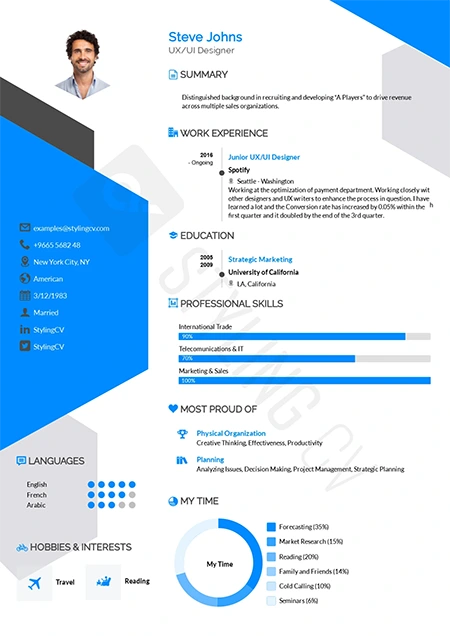
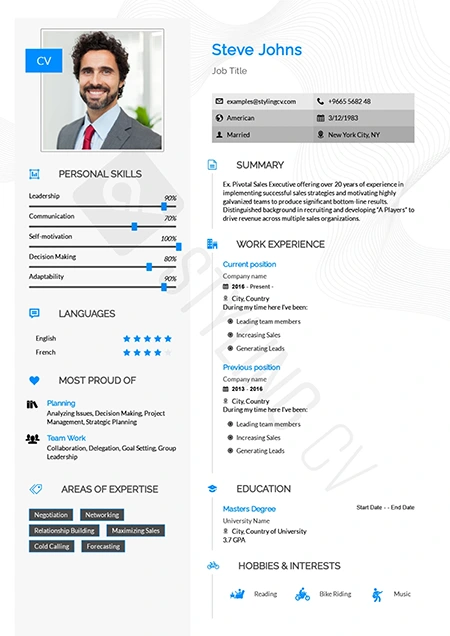
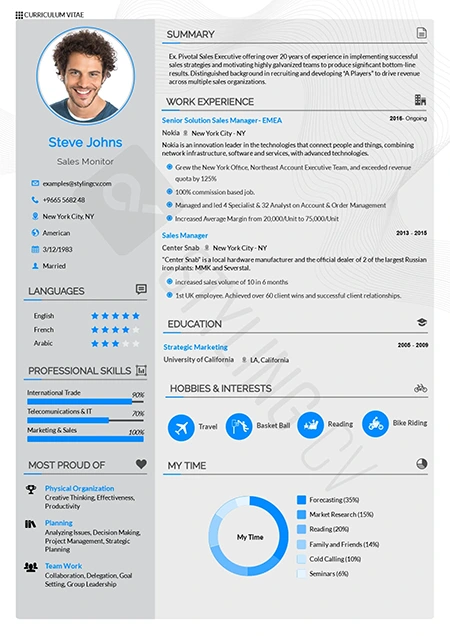
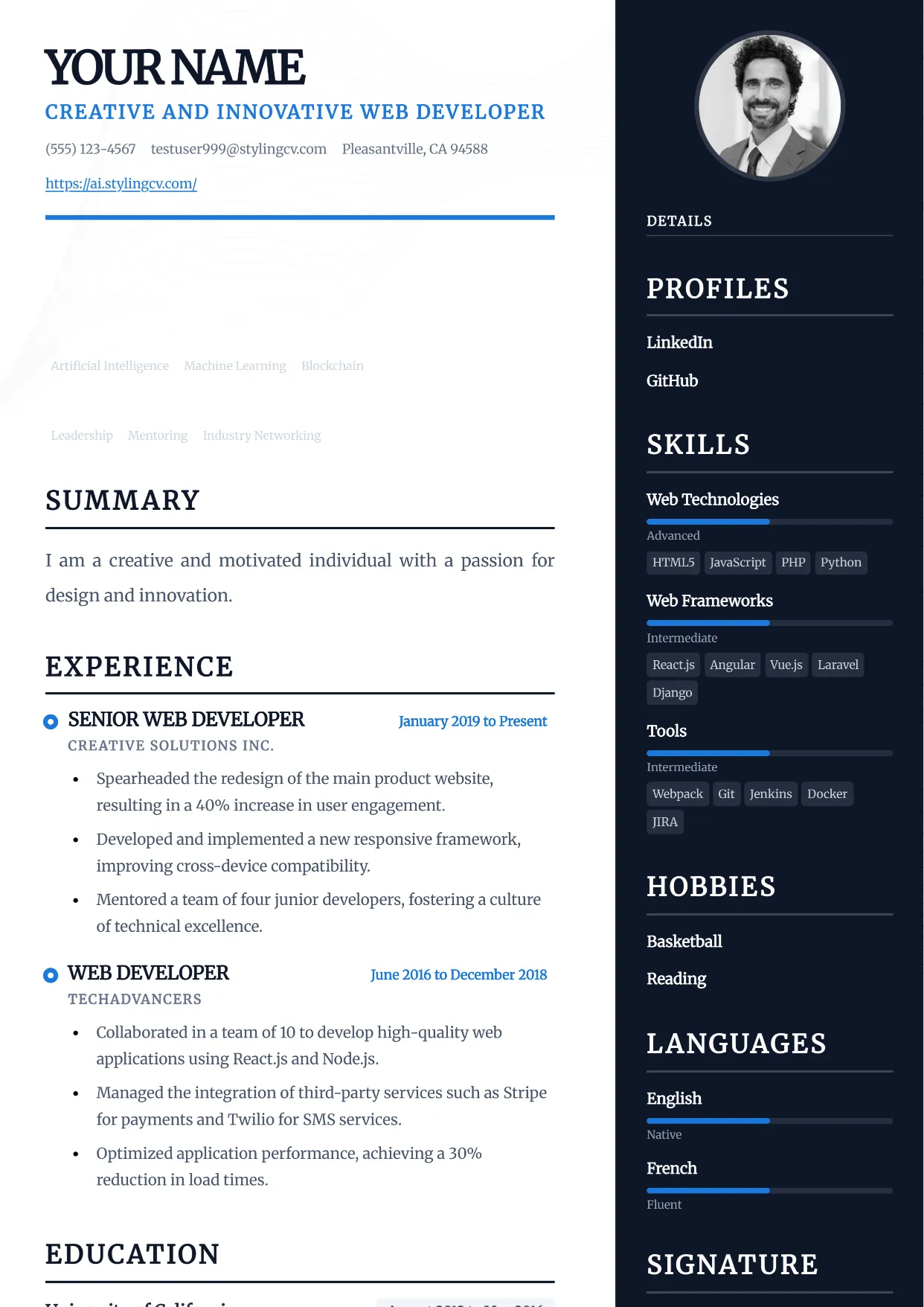
| Fancy formatting (columns, graphics, tables) | Parsers read left-to-right, top-to-bottom. Multi-column layouts scramble your data. | Single-column, clean layout. No text boxes. |
| Generic objective statements | Matching AI scores you lower — no role-specific language. | Targeted professional summary. Use keywords from the job posting. |
| Scanned image PDFs | Zero text extraction = zero score. | Export as .docx or text-based PDF. Always. |
| Missing key sections | AI expects: Contact, Summary, Skills, Experience, Education. Missing one drops your completeness score. | Include all five standard sections. Every time. |
| Skills buried in job descriptions | Some ATS models only scan dedicated skills sections. | Visible Skills section with 10–15 targeted abilities. |
For a complete breakdown of formatting that works, check our ATS-Friendly Resume Format guide.
Keyword Optimization: The Art and Science
Keywords matter. But how you use them matters more. Here’s the method that works across Workday, Greenhouse, Lever, and iCIMS — the big four ATS platforms US employers rely on.
- Mine the job description. Copy-paste it into a word cloud tool. The top 20 terms are your keywords.
- Categorize them. Hard skills (Python, Salesforce, GAAP), soft skills (leadership, cross-functional), and tools (Tableau, HubSpot, Jira).
- Weave them naturally. Don’t keyword-stuff. Use the exact phrase from the JD in your work experience bullets.
- Mirror their verbs. If they say “managed” and you wrote “oversaw,” change it. ATS models weight verbatim matches higher.
- Include synonyms. The smartest AI models use NLP. “Customer retention” and “client churn reduction” can both score points.
Need a full keyword list? We’ve compiled 500+ ATS keywords for 2026 — organized by industry.
The US-Specific Playbook
The American job market has quirks that international candidates miss. Here’s what works specifically for US-based roles:
- LinkedIn sync matters. ATS platforms like Greenhouse pull data from your LinkedIn profile. If they don’t match, you look inconsistent. Sync your resume headline with your LinkedIn headline word-for-word.
- Certifications get weighted. PMP, AWS, SHRM-CP, CFA — US employers love certs. Put them in a dedicated “Certifications” section, not buried in Education.
- Location filters are real. Many US roles require “Local” or “Remote (EST timezone)” filters. If you’re applying from outside the US, use a local address or clarify your timezone availability.
- Follow the STAR method. Situation, Task, Action, Result. Most US hiring managers expect this format. ATS systems trained on US resumes reward it.
75% of US recruiters use LinkedIn to vet candidates before calling them. If your resume and LinkedIn profile don’t match, you’re flagged as “inconsistent” — a red flag that kills offers.
For more on the US market specifically, read our 2026 US Job Market Survival Guide.
Top US Job Platforms and Their ATS Quirks
Not all ATS systems are created equal. Here’s what you face on America’s biggest hiring platforms:
| Platform | ATS Used | Key Quirk |
|---|---|---|
| LinkedIn Easy Apply | LinkedIn’s own AI | Prioritizes profiles with complete sections and regular activity. Post weekly. |
| Indeed | Indeed Resume + CES | Scans for a “ready to work” signal. Answer Indeed messages within 24 hours. |
| ZipRecruiter | ZipRecruiter AI Match | Weights “new” and “recently updated” resumes higher. Update every 48 hours. |
| Company career portals (Workday) | Workday HCM | Strictly parses dates. Use MM/YYYY format, not text like “June 2020.” |
| AngelList / Wellfound | Custom parsing | Startup roles prioritize “impact” language over years of experience. |
How StylingCV’s 11 AI Agents Beat the Machine — And Get You to the Human
You could spend 10 hours hand-tuning your resume for each application. Or you could let AI fight AI.
StylingCV uses 11 specialized AI agents — each trained on a different aspect of resume optimization. This isn’t a generic ChatGPT wrapper. These are purpose-built models that understand how Workday, Greenhouse, iCIMS, and Lever parse documents.
- The ATS Agent — scores your resume against 50+ ATS engines and tells you exactly where you’ll get rejected.
- The Keywords Agent — reverse-engineers job descriptions and injects the right terms at the right density.
- The Format Agent — strips out parsers-kryptonite (tables, images, columns) while keeping a clean, human-readable design.
- The US Market Agent — tailors language, metrics, and culture signals specifically for American recruiters.
- The Market Scout Agent — scans live job boards and tells you which roles your resume is best positioned for.
- The Interrogator Agent — stress-tests your resume against real recruiter expectations.
- The Truth Check Agent — verifies that your resume claims are realistic and defensible.
- The ATS Inspector Agent — simulates how your resume looks across 50+ ATS platforms before you submit.
95%+ ATS pass rate. 6M+ users. 150+ countries. The numbers aren’t a promise — they’re a pattern. StylingCV works because it was built for this specific fight.
Stop guessing whether your resume will pass. Build your ATS-proof resume with StylingCV’s 11 AI agents — it takes 60 seconds.
Quick Audit: Run This Before Your Next Application
- Open your resume. Does it have columns, tables, or graphics? Redesign to single-column. Now.
- Highlight every keyword in the job description. Count how many appear on your resume. If less than 70%, rewrite.
- Check your dates. MM/YYYY throughout. No gaps longer than 6 months without explanation.
- Run your resume through a readability check. Grade 10–12 reading level is ideal for US roles.
- Test your PDF. Highlight a word. Can you select it? If not, it’s an image. Regenerate.
- Run your resume through StylingCV’s free ATS check before every submission.
Pass this audit, and you’ve already beaten 80% of applicants. The machines will let you through. The humans will call.
For more stats and data on why most resumes fail, read our Resume Statistics 2026 report.
Frequently Asked Questions
Can I use Canva templates for ATS-friendly resumes?
Most Canva templates fail ATS parsing. They use text boxes and graphics that confuse parsers. Stick with plain-text or .docx formats. Our ATS-Friendly Resume Format guide has specific templates that work.
Does StylingCV guarantee interviews?
No resume tool can guarantee a job. But StylingCV’s 95%+ ATS pass rate means your resume reaches a human recruiter — something most DIY resumes never achieve. Try it yourself.
How often should I update my resume for ATS?
Every 30 days minimum. Many US companies archive resumes older than 60 days. A fresh update signals you’re actively searching. ZipRecruiter and Indeed both prioritize recently updated profiles.
Is a PDF or Word document better for ATS?
Workday and Taleo parse .docx more reliably. Greenhouse and Lever handle PDFs well. If in doubt, submit both. And always use a text-based PDF, not a scanned image.
Should I include a photo on my US resume?
Never. US hiring is anti-discrimination by default. Photos invite bias and some ATS systems flag them for removal.
What’s the difference between ATS parsing and AI ranking?
Parsing extracts your data. Ranking compares you to other candidates. You need to pass both. StylingCV’s ATS Inspector Agent tests for both in one run.
One more thing. The 2026 job market rewards speed and precision. Every day you wait to optimize your resume is another day the top candidates get the call. Don’t be the person who “was about to.” Be the person who showed up ready.