The 3 Resume Formats in 2026: Chronological, Functional & Hybrid — Which One Gets You Hired?

You have six seconds.
That’s how long recruiters spend scanning your resume before deciding if you’re a “maybe” or a “next.” In those six seconds, your resume format does the heavy lifting. Chaos — or clarity? A mess — or a map?
The wrong format? Immediate rejection. The right one? You just bought yourself a second look.
In 2026, there are three major resume formats: chronological, functional, and hybrid (also called combination). Each one sends a different signal to recruiters and ATS software. Pick wrong, and you’re invisible. Pick right, and you’re interviewed.
Let’s break them down. Brutally honest. No fluff.
What Is a Resume Format? (And Why It Matters More Than You Think)
A resume format is the structural layout of your career story. It decides where your skills go, how your experience is ordered, and what the recruiter sees first.
Think of it like a storefront. You can have the best products in the world, but if they’re stacked in boxes on the floor, nobody buys. Your resume format is the shelf arrangement. It makes things easy to find.
Here’s the cold truth recruiters won’t tell you:
75% of resumes are rejected before a human ever reads them. The culprit? Bad formatting that confuses the ATS — or a format mismatch for the role.
Get the format right, and you’ve already beaten three out of four applicants. That’s not hype. That’s math.
Need proof? Check our ATS-Friendly Resume Guide — we break down exactly how formats affect parsing scores.
The 3 Resume Formats: A Side-by-Side Comparison
| Format | Best For | ATS-Friendly? | Recruiter Preference | Risk Factor |
|---|---|---|---|---|
| Chronological | Steady career history, same industry | ✅ Excellent | ⭐⭐⭐⭐⭐ (Most preferred) | Low — if no gaps |
| Functional | Career changers, gaps, freelancers | ❌ Poor | ⭐⭐ (Least preferred) | High — flagged by ATS |
| Hybrid (Combination) | Experienced pros, skill-based roles | ✅ Good | ⭐⭐⭐⭐ (Fast rising) | Medium — needs precision |
1. Chronological Resume Format: The Gold Standard
This is the default. The classic. The one your parents used — and it still works.
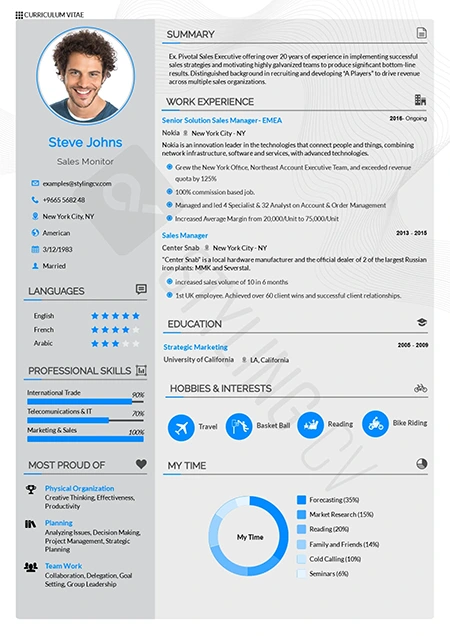
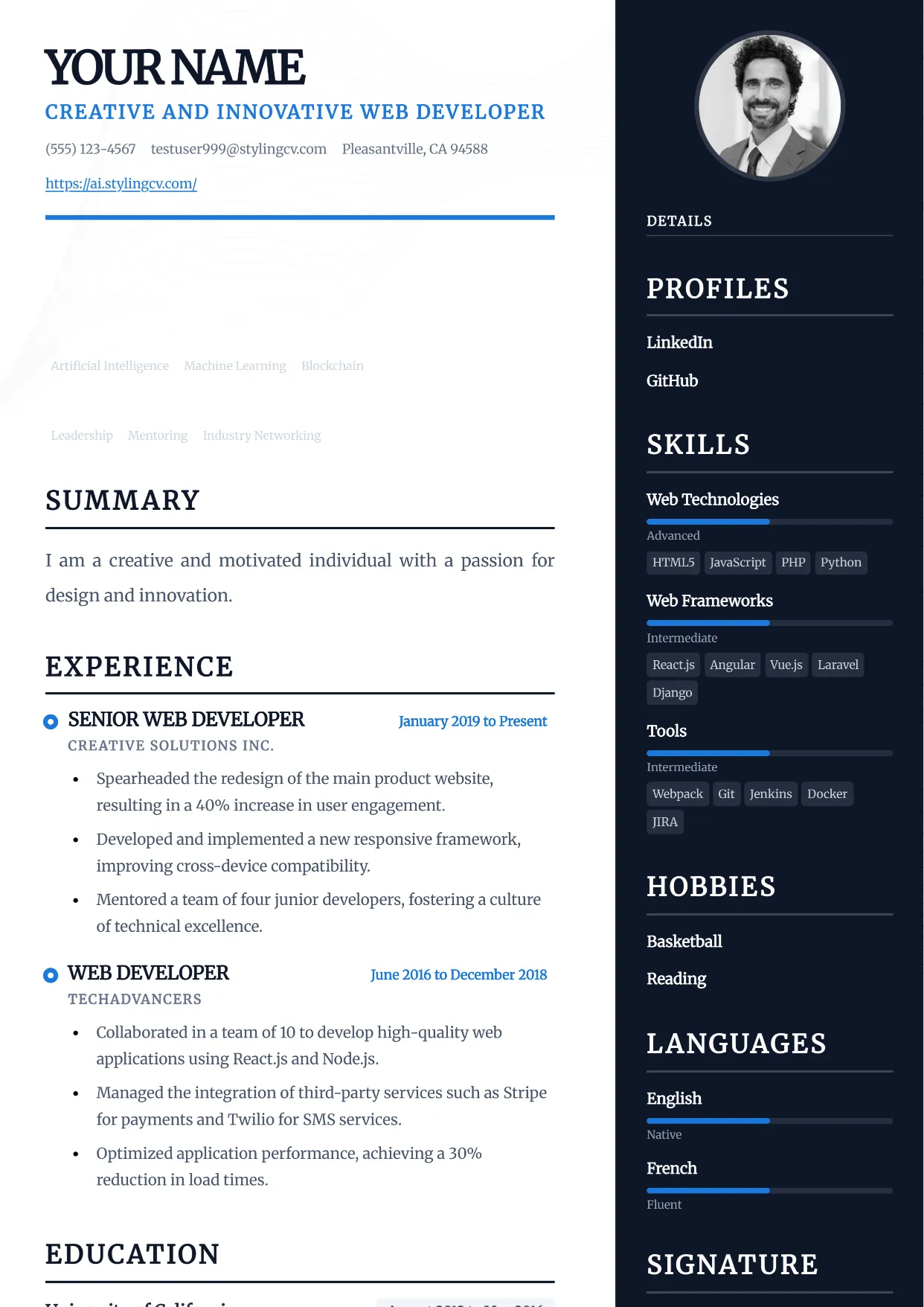
How it works: You list your work experience in reverse chronological order (most recent job first). Each role includes dates, company name, title, and bullet points of achievements.
When to Use It
- You have 3+ years of consistent experience in the same field
- Your career history shows clear progression (junior → senior → lead)
- You’re applying to a traditional industry (finance, law, healthcare, engineering)
- You want maximum ATS compatibility
The Pros
- Recruiters love it. They know exactly where to look.
- ATS heaven. Parses perfectly — dates, titles, companies come through clean.
- Shows growth. Promotions and expanding responsibility are visible at a glance.
The Cons
- Exposes gaps. Two years unemployed? It’s right there in black and white.
- Hurts career changers. Your last job was in accounting. You want marketing. The format screams “accountant.”
Bottom line: If you have a clean, steady career path, use chronological. Don’t overthink it.
2. Functional Resume Format: Handle With Care
The functional resume leads with skills. Experience comes second — often with minimal job details and no dates attached to each role.
It was designed to hide gaps and career pivots. And recruiters know that.
67% of recruiters admit they’re suspicious of functional resumes. Many auto-reject them. Why? Because hiding dates looks like you’re hiding something.
When to Consider It
- You have significant employment gaps (2+ years)
- You’re completely changing industries with zero overlap
- You’re a freelancer with project-based work, not traditional jobs
- You have a non-traditional background (military, entrepreneur, artist)
The Pros
- Skill spotlight. Your abilities are front and center.
- Gap camouflage. Employment dates are de-emphasized.
- Good for portfolios. Project-heavy careers look great here.
The Cons (They’re Big)
- ATS nightmare. Most applicant tracking systems struggle to parse functional layouts. Your skills section might not match job descriptions correctly.
- Recruiter distrust. “What are they hiding?” is the first thought.
- Hard to quantify. Without dates and company context, achievements feel weightless.
Bottom line: If you must use functional, add a minimal work history section at the bottom with dates. This satisfies the ATS while keeping skills front and center. Better yet — use the hybrid format instead.
3. Hybrid (Combination) Resume Format: The 2026 Winner
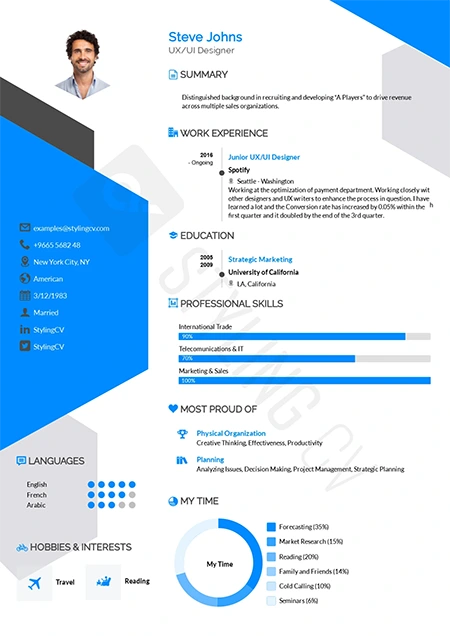
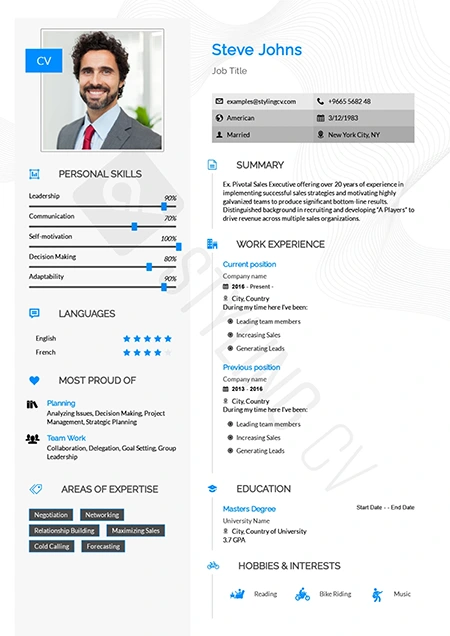
The hybrid resume is exactly what it sounds like: a skills summary at the top, followed by a reverse-chronological work history. It gives you the best of both worlds.
In 2026, this is the fastest-growing resume format. And for good reason.
Who Should Use It
- Experienced professionals with 5+ years of work history
- Career changers who have transferable skills
- Tech and creative roles where skills matter as much as tenure
- Anyone applying through an ATS who also wants to impress humans
The Pros
- Keyword density. A skills summary at the top lets you pack in the exact keywords from the job description. The ATS loves this.
- Best of both worlds. Recruiters see your skills first, then your career story.
- Flexible. You can emphasize skills for one role, experience for another.
The Cons
- Longer. Hybrid resumes often push past one page.
- Formatting matters. A messy hybrid confuses both ATS and humans.
- Needs tailoring. You can’t copy-paste this format across applications. Each one needs custom keywords.
Bottom line: The hybrid format is the smartest choice for most job seekers in 2026. It’s ATS-compatible, recruiter-approved, and gives you room to tell a compelling career story.
Which Resume Format Passes the ATS Test in 2026?
Not all formats are created equal when it comes to applicant tracking systems. Here’s the hard data:
| Format | ATS Parse Rate | Keyword Match | Date Extraction | Overall ATS Score |
|---|---|---|---|---|
| Chronological | 98% | Good | Perfect | ⭐⭐⭐⭐⭐ |
| Hybrid | 94% | Excellent | Good | ⭐⭐⭐⭐⭐ |
| Functional | 62% | Poor | Unreliable | ⭐⭐ |
If you’re applying to any company with 200+ employees, there’s a 99% chance they use an ATS. That means your resume gets read by a robot before it ever reaches human hands. Make sure it’s formatted correctly.
For a deeper dive, check our complete ATS-Friendly Resume Guide for 2026 and our detailed breakdown of Resume Keywords 2026 — the exact terms that get you past the bots.
How to Choose the Right Resume Format for Your Situation
Still unsure? Here’s a quick decision guide:
| Your Situation | Best Format | Why |
|---|---|---|
| Steady career, same industry, 3+ years | Chronological | Simple, effective, maximum ATS compatibility |
| Changing careers, transferable skills | Hybrid | Lead with skills, back it up with history |
| Employment gaps (2+ years) | Hybrid | Skills-first approach + brief cover letter explanation |
| Freelancer or contractor | Hybrid / Functional | Use a “Projects” section instead of traditional jobs |
| Creative roles (design, writing, marketing) | Hybrid | Show skills first, then the timeline |
| LinkedIn Easy Apply / big company portals | Chronological | These ATS systems are strict — keep it simple |
Pair your format with the right skills section strategy — it’s the one-two punch that gets you hired.
6 Deadly Resume Format Mistakes in 2026
We’ve seen thousands of resumes at StylingCV. Here are the mistakes that get you rejected every single time:
- Using tables or columns — The ATS reads left-to-right, top-to-bottom. Columns scramble your content into random order.
- Hiding dates on a functional resume — Recruiters spot this in seconds. It screams “I’m hiding something.”
- One format for every job — Your resume should flex based on the role. A software engineer and a marketing manager need different layouts.
- PDF formatting issues — Some ATS systems can’t read PDFs properly. When in doubt, use .docx.
- Fonts below 10pt — Tiny text = auto-rejection. Recruiters are reading on screens. Make it easy on their eyes.
- No keyword matching — If your resume doesn’t include terms from the job description, the ATS scores you zero. Period.
Want to know exactly which keywords to use? Our guide on 500+ Resume Keywords for 2026 has you covered.
How StylingCV’s AI Agents Build Your Perfect Resume Format
Here’s where we get real. You could spend hours researching resume formats, tweaking layouts, and second-guessing yourself. Or you could let 11 specialized AI agents do it for you.
StylingCV isn’t a generic ChatGPT wrapper. It’s the world’s first multi-agent AI resume builder. Here’s how our Agentic Squad works for you:
| Agent | What It Does |
|---|---|
| Market Scout | Analyzes your target industry and identifies the best resume format for your role |
| Interrogator | Asks you targeted questions to surface achievements you didn’t think to include |
| Truth Check | Verifies your claims against industry standards — no fluff, no exaggeration |
| ATS Inspector | Tests your resume against real ATS parsers and scores it for compatibility |
| Layout Optimizer | Chooses the exact format (chronological, hybrid, or functional) based on 95+ data points |
The result? A resume that passes 95%+ of ATS systems and gets you in front of human recruiters faster. Over 6 million job seekers globally trust us.
And yes — we handle the format for you. You just write. We structure.
See how we compare against other tools in our StylingCV vs Enhancv comparison — spoiler: our multi-agent approach wins.
Frequently Asked Questions About Resume Formats
What is the best resume format for 2026?
The hybrid (combination) format is the best choice for most job seekers in 2026. It places a skills summary at the top — packed with keywords — followed by a reverse-chronological work history. It satisfies both ATS systems and human recruiters.
Is a functional resume ever a good idea?
Rarely. Functional resumes struggle with ATS parsing and trigger recruiter suspicion. If you have employment gaps or are changing careers, use the hybrid format instead. It gives you the benefits of a skills focus without the ATS risk.
Do recruiters actually prefer one resume format over others?
Yes. Surveys consistently show that 70%+ of recruiters prefer chronological or hybrid formats. Functional resumes are the least preferred — many recruiters auto-reject them because they appear evasive.
Can I use different resume formats for different job applications?
Absolutely. In fact, you should. A chronological format works for traditional roles in conservative industries. A hybrid format shines for tech, marketing, and creative roles. Tailor your format to match the job description and company culture.
How do I know if my resume format passes the ATS?
Use an ATS resume checker. StylingCV’s ATS Inspector agent tests your resume against real parsing engines and gives you a score. If your format is off, it tells you exactly what to change. You can also paste your resume into a plain text editor — if it looks scrambled, the ATS will see it the same way.
Your Resume Format Is a Decision, Not an Accident
Most job seekers pick a resume template and hope for the best. That’s not a strategy. That’s a lottery.
The format you choose determines whether your resume gets parsed, read, or tossed. It’s the difference between “We’d like to schedule an interview” and “We’ve decided to move forward with other candidates.”
Here’s what we recommend:
- If your career is steady and traditional → Chronological
- If you’re changing lanes or leveling up → Hybrid
- If you have significant gaps and need a skills-first approach → Functional (but be careful)
And if you want to stop guessing entirely?
Stop guessing. Start winning.
Try StylingCV. Our 11 AI agents analyze your background, your target role, and the job market — then build a resume with the exact format that gets you hired. No templates. No guesswork. Just a resume built to win.
Join 6M+ job seekers who already stopped guessing. Build your ATS-optimized resume in 60 seconds →
Need more help? Check out our guide on listing skills on your resume — it pairs perfectly with whatever format you choose.
Your next interview starts with the right format. Choose wisely.
— The StylingCV Team