What Is an ATS Resume? The Complete Guide to ATS-Friendly Resumes in 2026

You submitted 50 job applications this month. You heard back from exactly zero companies.
Here’s the brutal truth most career coaches won’t tell you: 75% of resumes never reach a human recruiter. They die in the digital void of an Applicant Tracking System (ATS).
75% of resumes are rejected by ATS software before a person ever reads a single word. Your resume? A robot scanned it in 0.3 seconds. Decided it didn’t match. Filed it in the rejection bin.
That’s not a career problem. That’s an ATS resume problem. And the fix? Simpler than you think.
This guide covers exactly what an ATS resume is, how ATS software actually works, and — most importantly — how to build a resume that passes automated screening every single time.
What Is an ATS Resume?
An ATS resume is a resume specifically formatted and optimized to be read and parsed correctly by Applicant Tracking System software. Unlike a traditional resume — designed to impress human eyes with fancy graphics and creative layouts — an ATS resume is built for machine readability first, human appeal second.
ATS software scans your resume, extracts key information (work history, education, skills, certifications), and scores it against the job description. If your resume doesn’t parse correctly — meaning the ATS can’t identify your job titles, dates, or skills — you’re eliminated before a person ever sees your name.
Think of it this way: an ATS resume is the password that gets you past the digital gatekeeper. Without it, you don’t even make it to the interview queue.
How Do ATS Systems Actually Work? (The Short, Honest Version)
Most job seekers think ATS software is some kind of AI magic. It’s not. Here’s what actually happens when you hit “Submit”:
| Step | What the ATS Does | Time |
|---|---|---|
| 1. Parsing | Scans your resume file and extracts text. Looks for name, contact info, job titles, dates, education, skills. | 0.3–1 second |
| 2. Keyword Matching | Compares extracted keywords against the job description. Counts matches and gaps. | < 0.5 seconds |
| 3. Scoring | Assigns a match score (usually 0–100%). Resumes below a threshold (often 60–70%) are auto-rejected. | Instant |
| 4. Ranking | Ranks all passing candidates by score. Recruiters only see the top 10–20. | Batch process |
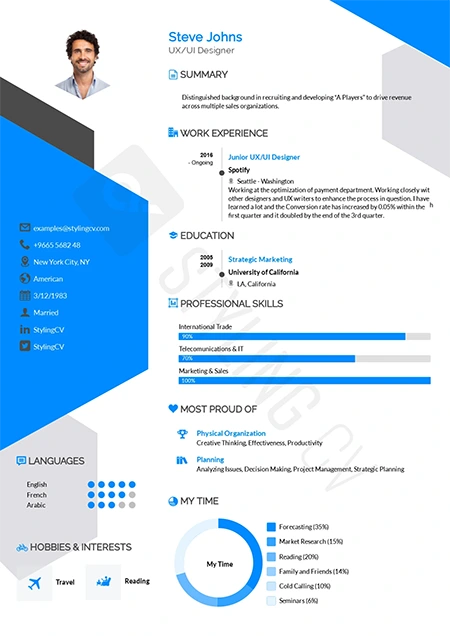
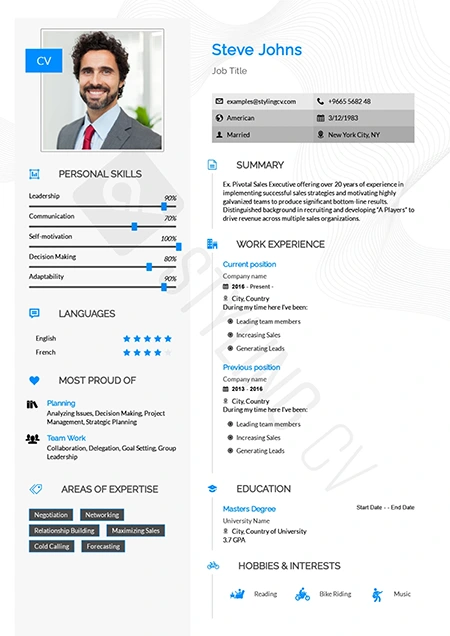
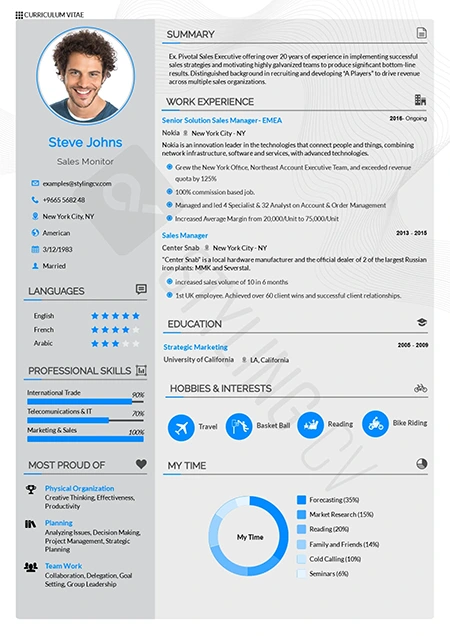
Here’s the scary part: If your resume uses columns, tables, images, or fancy fonts, the parser will scramble everything. Your “Project Manager” title becomes “Project anagerM.” Your skills section becomes unreadable garbage. Your score drops to zero.
The ATS doesn’t hate you. It just can’t read your resume.
ATS Resume vs. Traditional Resume: What’s the Difference?
| Feature | Traditional Resume | ATS Resume |
|---|---|---|
| Format | Creative, multi-column, graphics | Single-column, clean, text-based |
| Fonts | Fancy, decorative, script | Standard (Arial, Calibri, Times New Roman) |
| Headers/Footers | Used for contact info | Avoided — ATS often misses text there |
| Tables | Common for skills/experience | Minimal or avoided |
| Images/Logos | Profile photos, company logos | Never — ATS can’t read them |
| File Format | PDF, JPG, InDesign | .docx preferred (sometimes PDF works) |
| Keyword Strategy | Optional | Critical — matching the JD is everything |
| Human Appeal | High priority | Secondary to machine readability |
The best ATS resume does both. It passes the machine check AND impresses the recruiter who eventually reads it.
10 ATS Resume Rules You Must Follow in 2026
1. Use a Single-Column Layout
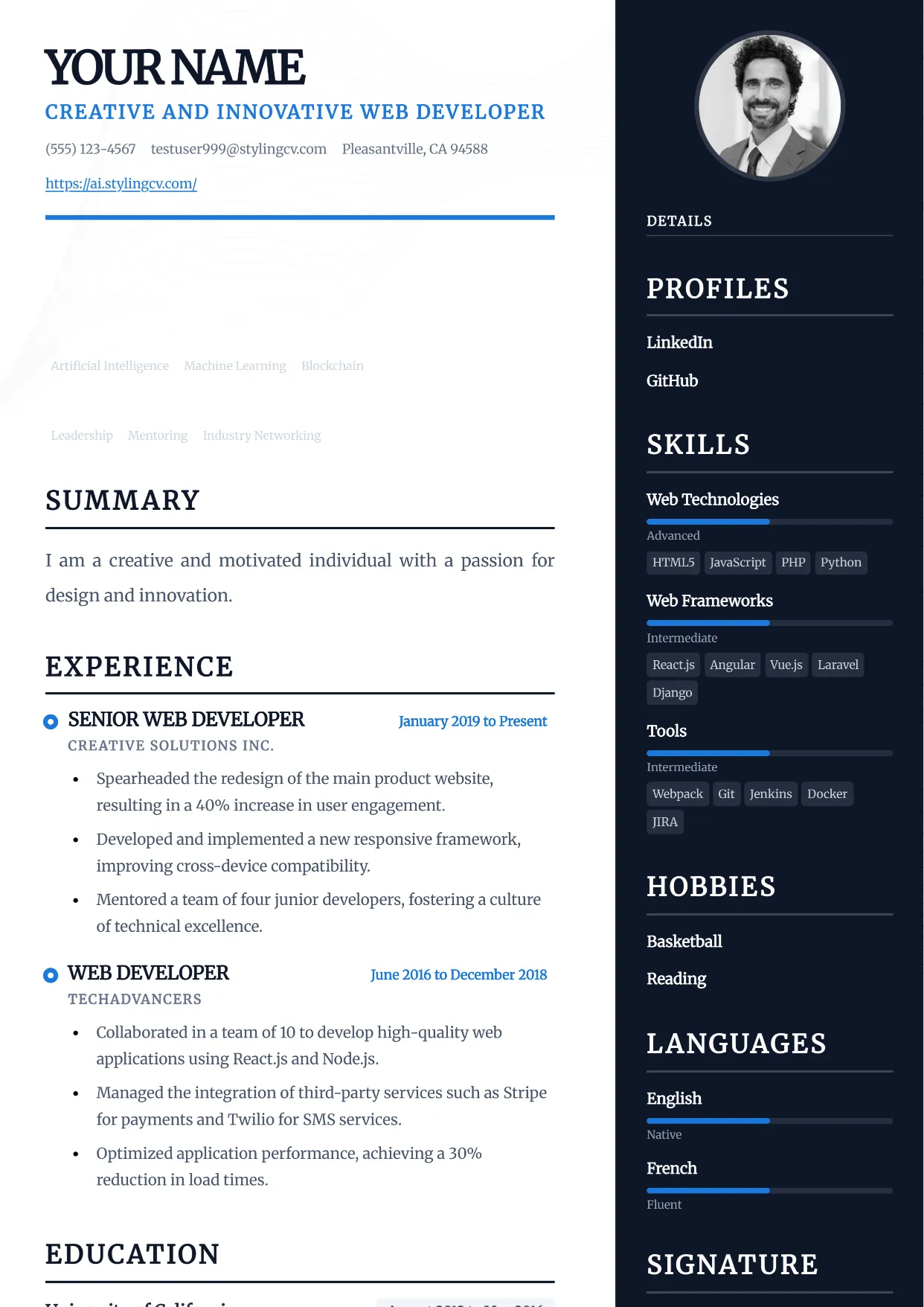
Multi-column formats look great to humans. To ATS software? They’re a disaster. Parsers read left-to-right, top-to-bottom. Columns jumble the order. Your work history ends up next to your skills section instead of below it. Stick to one column.
2. Choose Standard Section Headings
ATS systems look for predictable headers. Use exactly these:
- Work Experience (not “Career Journey” or “Where I’ve Worked”)
- Education (not “Academic Background”)
- Skills (not “Core Competencies” or “What I’m Good At”)
- Certifications (not “Credentials”)
Creative headers confuse parsers. Your beautifully named “Professional Odyssey” section? The ATS has no idea what that means. It skips it entirely.
3. Match Keywords from the Job Description
This is the single most impactful thing you can do. The ATS scores your resume by counting keyword matches between your resume and the job description.
The strategy:
- Copy the job description into a document
- Highlight every hard skill, tool, certification, and qualification mentioned
- Weave those exact keywords into your resume (where they honestly apply)
- Don’t stuff keywords — that’s detectable and penalized by modern ATS systems
Want to learn more? Read our complete guide on how to tailor your resume to a job description for a deeper walkthrough.
4. Avoid Tables, Text Boxes, and Graphics
ATS parsers are terrible at reading text inside tables and text boxes. Some can handle simple tables. Most cannot. If your skills are in a table, the ATS might see empty cells or jumbled text. Use bullet points and plain paragraphs instead.
5. Submit as .docx (Unless Told Otherwise)
The file format hierarchy for ATS friendliness:
- .docx (Word) — Most ATS systems parse .docx flawlessly. Best choice.
- .doc — Older format. Less reliable than .docx but generally works.
- .pdf — Risky. Some ATS read PDFs well. Others turn them into gibberish. Only use PDF if the job posting specifically requests it.
- .rtf / .txt — Workable but stripped of formatting. Use only if desperate.
- .jpg / .png — Never. ATS cannot read text in images.
6. Put Contact Info at the Top — Simply
Your name, phone number, email, and LinkedIn should be at the very top of the page. Nothing else. No fancy icons. No colored logos. Just clean, readable text.
Don’t put contact info in headers or footers. Many ATS systems skip header/footer content entirely. Your phone number becomes invisible.
7. Use Standard Fonts at 10–12pt
Arial, Calibri, Times New Roman, Helvetica, or Verdana. Size 10–12 for body text. Size 14–16 for headings. No script fonts. No decorative fonts. No font size below 10pt.
The ATS doesn’t care about your font choice. The human recruiter does — but only that it’s readable.
8. Spell Out Acronyms (At Least Once)
ATS systems match exact text. The job description says “Search Engine Optimization”? Your resume says “SEO” — might not get a match.
Rule: Spell out every acronym the first time you use it. “Search Engine Optimization (SEO)” — now both the full form and the acronym are captured.
9. Quantify Everything
This helps with both ATS scoring and human reviewers. Numbers are keywords. They’re also compelling evidence of your impact.
Instead of “Managed a team,” write “Managed a team of 12 engineers and increased productivity by 34% in 6 months.”
10. Test Your Resume Before Submitting
Upload your resume into a plain-text editor (like Notepad). If the text is scrambled, missing, or out of order, that’s exactly what the ATS sees. Fix it before you apply.
Reality check: Most people spend 5 minutes on a job application and 4 hours designing their resume layout. That’s backwards. Spend the time tailoring keywords to the job description instead. The ATS rewards substance — not style.
Speaking of common pitfalls, check out our breakdown of 7 ATS resume killers that are silently destroying your applications so you can avoid the biggest mistakes.
Single AI vs. Multi-Agent: Why StylingCV’s Approach Is Different
Most resume builders use a single AI model. You paste text. It reformats it. Done.
That’s not enough for an ATS resume.
StylingCV uses something completely different: an Agentic Squad of 11 specialized AI agents, each handling a specific part of your resume:
| Agent Name | Job | Why It Matters for ATS |
|---|---|---|
| Market Scout | Analyzes your industry and role | Identifies the right keywords for your field |
| Interrogator | Extracts your best achievements | Turns vague duties into ATS-friendly bullet points |
| Truth Check | Verifies accuracy and consistency | Prevents mismatches that trigger ATS rejection |
| ATS Inspector | Scans against 100+ ATS parsers | Ensures your resume passes every major system |
| Format Specialist | Applies perfect ATS-friendly formatting | Single-column, clean, parse-ready |
| Keyword Optimizer | Maps job description terms to your resume | Maximizes your ATS match score |
The result? A resume that scores 95%+ on ATS tests and lands in front of recruiters. Not the rejection pile.
Trusted by over 6 million users globally. Not because we’re fancy. Because it works.
Common ATS Resume Myths — Debunked
Myth 1: “PDF is always better than Word”
False. While PDF preserves formatting, many ATS systems (including Taleo and iCIMS) parse .docx files more reliably. Check the job posting. If they don’t specify, .docx is safer.
Myth 2: “ATS systems reject gaps in employment”
False. ATS systems don’t care about gaps. They parse dates as text. Gap discrimination is a human behavior, not an ATS one.
Myth 3: “You need to include every skill you have”
False. Only include skills relevant to the specific job. Irrelevant keywords dilute your match score — the ATS sees you as a less precise fit.
Myth 4: “Fancy templates help you stand out”
False. Fancy templates are the #1 reason ATS rejects resumes. Clean, simple, single-column, text-based — that’s what works. Not sure which format to pick? Read our guide on the 3 resume formats in 2026 to choose the right one.
Step-by-Step: How to Build Your ATS Resume in 5 Minutes
Step 1: Find the job description for the role you want. Copy it into a document.
Step 2: Highlight 15–20 keywords — skills, tools, certifications, soft skills. These are your targets.
Step 3: Open a clean, single-column document. List your work experience, education, and skills in standard sections.
Step 4: Write each bullet point using this formula: Action Verb + What You Did + Measurable Result. Example: “Led a team of 8 developers to ship a new feature 2 weeks ahead of schedule, driving $120K in new revenue.” Need strong verbs? Grab our 500+ resume action verbs list.
Step 5: Incorporate your 15–20 target keywords naturally into your bullet points and skills section.
Step 6: Paste your resume into Notepad. If everything reads clearly, you’re ATS-ready. If not, fix the formatting.
Step 7: Use StylingCV’s AI resume builder to let our 11 agents do the heavy lifting. Upload your draft, paste the job description, and get an ATS-optimized resume in under 60 seconds.
Internal Links to Level Up Your Job Search
Now that you know what an ATS resume is, dive deeper with these resources:
- How to tailor your resume to a job description — Maximize your ATS score
- Does ATS detect AI-generated resumes? — Our 2026 study with real test results
- 7 ATS resume killers in 2026 — Don’t let these mistakes sabotage your applications
- The 3 resume formats in 2026 — Pick the right structure for your situation
- How to list skills on a resume — 100+ examples included
Frequently Asked Questions About ATS Resumes
What does ATS mean in a resume?
ATS stands for Applicant Tracking System. It’s software that employers use to collect, scan, and rank resumes. An ATS resume is one formatted specifically to be readable by these systems — using clean layouts, standard fonts, and keyword optimization to ensure it passes automated screening.
How do I make my resume ATS-friendly?
Use a single-column layout, standard section headings (Work Experience, Education, Skills), standard fonts like Arial or Calibri, and submit as .docx format. Avoid tables, images, columns, headers/footers, and fancy graphics. Most importantly, match keywords from the job description throughout your resume.
Do ATS systems reject certain resume formats?
Yes. Multi-column layouts, tables, headers/footers with critical info, images, text boxes, and fancy fonts are the most common reasons ATS systems reject resumes. The safest format is a single-column .docx file with clean, text-based content and standard section headings.
Should I use a PDF or Word document for ATS?
Generally, .docx (Word) is the safest choice for ATS compatibility. While PDF preserves formatting better visually, many ATS systems parse .docx files more reliably. If the job posting specifically requests PDF, use PDF. Otherwise, submit .docx for best results.
Can ATS detect AI-written resumes?
Most ATS systems cannot detect AI-written content — they only parse and match keywords. However, AI-written resumes that use generic phrases and lack specific, quantified achievements may fail to impress human recruiters. Use AI as a tool to optimize, not replace, your unique experience. Read our full 2026 ATS AI detection study for details.
Your ATS Resume Starts Now
Here’s what we know for certain:
- 75% of resumes never reach a human
- ATS software rejects candidates in under a second
- Most rejections are due to formatting, not qualifications
- The fix is simple: build an ATS-first resume
You don’t need to be a designer. You don’t need to be a tech wizard. You just need to follow the rules above — or use a tool that already knows them.
StylingCV’s 11 specialized AI agents work together to build, format, and optimize your resume for ATS in under 60 seconds. The Market Scout finds the right keywords. The ATS Inspector validates against 100+ parsers. The Format Specialist ensures perfect readability.
No more guessing. No more ghosting. Just results.