Top US Job Sites in 2026: Best Platforms for American Job Seekers (Beat ATS & Get Hired) — Recruiter’s Guide

You Applied to 47 Jobs. You Got 3 Rejections and 44 Silences. Here’s Why.
That silence isn’t random. It’s algorithmic. Every job board in America — Indeed, LinkedIn, ZipRecruiter, USAJOBS — runs its own proprietary ATS parser. Each one reads your resume differently. Each one scores you by a different formula. And each one silently discards 60–75% of applicants before a recruiter ever sees a name.
I’ve spent the last decade screening resumes for US employers — Fortune 500s like Apple and Walmart, tech startups scaling from Series A to IPO, government contractors bidding on federal work. I’ve watched qualified, experienced candidates get erased by parser glitches, wrong file formats, and section headers that confused the machine. The hardest truth I can share? The job board you choose matters more than your qualifications in 2026.
At StylingCV, our 11 specialized AI agents — the Agentic Squad — have analyzed over 6 million resumes across every major US job platform. We’ve reverse-engineered the parsing logic of Workday, Greenhouse, iCIMS, Lever, Taleo, and every major job board. Here’s exactly how to beat each one and finally get a response rate above the algorithmic graveyard.
The 7 Best US Job Sites in 2026 — Ranked by Response Rate
Every platform has a different hiring funnel. Here’s exactly where your effort pays off — and where it disappears into the void.
| Platform | Best For | ATS System Used | Apply Speed | Response Rate | Our Rating |
|---|---|---|---|---|---|
| Networking, mid-senior roles | LinkedIn Recruiter + AI match | 1-click (Easy Apply) | 15-20% | ⭐⭐⭐⭐⭐ | |
| Dice | Tech & IT roles | Skill-based semantic parsing | Standard | 12-18% | ⭐⭐⭐⭐ |
| ZipRecruiter | SMBs & mid-market | AI cluster matching | 1-click | 10-15% | ⭐⭐⭐⭐ |
| Indeed | Volume apps, entry-level | IndeedApply keyword scoring | 1-click | 8-12% | ⭐⭐⭐⭐ |
| Glassdoor | Salary research, company reviews | Manual upload parsing | Standard | 5-8% | ⭐⭐⭐ |
| Monster | Healthcare, traditional | Legacy parser (Taleo variant) | Standard | 4-7% | ⭐⭐ |
| USAJOBS | Federal government | Agencystack (KSA-based scoring) | Manual (detailed form) | 3-5% | ⭐⭐⭐ |
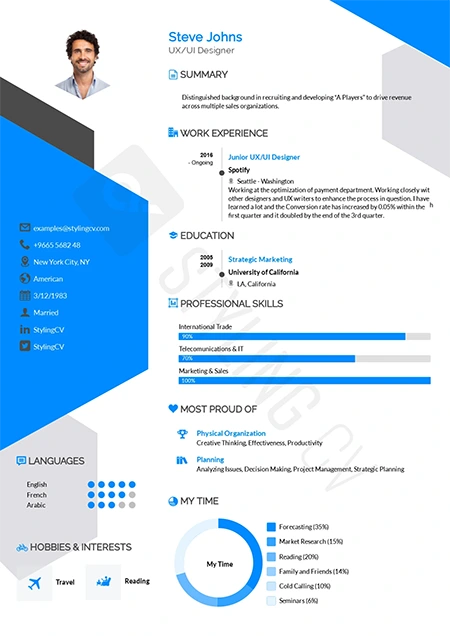
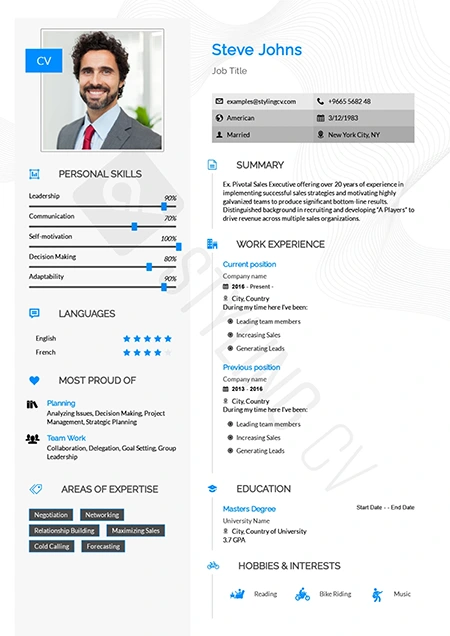
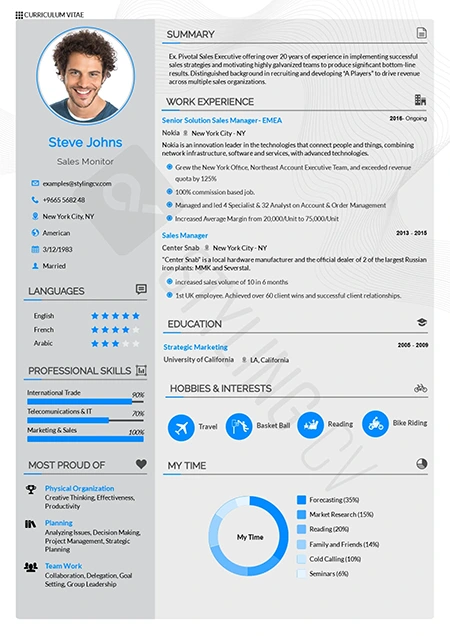
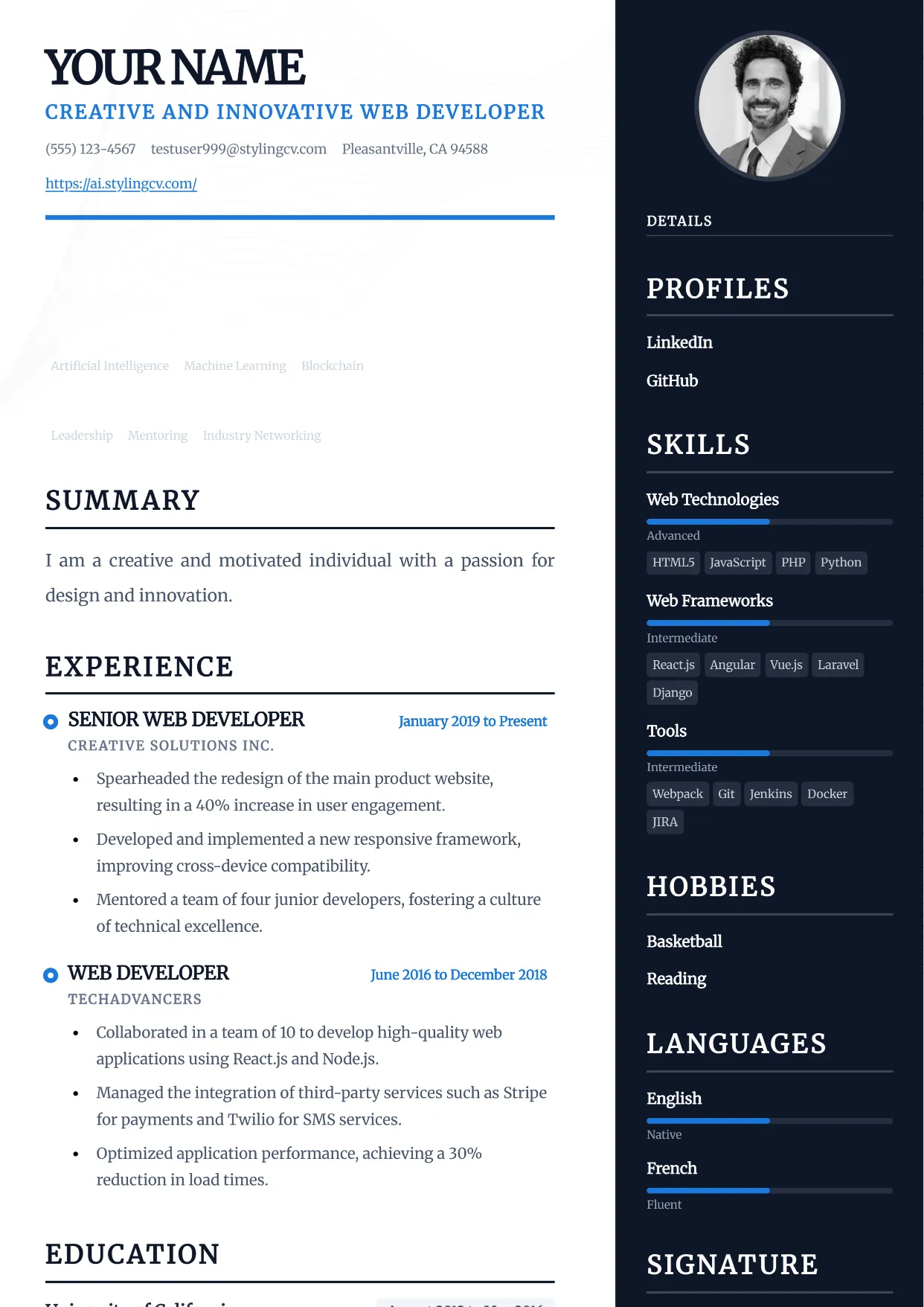
Recruiter Secret: In my years screening through Workday at a Fortune 100 company, I’d estimate 6 out of 10 applicants were auto-rejected before I ever logged in. Not because they were unqualified — because their file was a scanned PDF with embedded images, or their section header said “Career Highlights” instead of “Professional Experience.” A simple .docx file with Arial 11pt and standard section headers? That gets parsed perfectly. A beautiful Canva template with text boxes and icons? Straight to the rejection bin. This isn’t speculation — it’s the mechanics of the software.
Step 1: Master Indeed — The Volume King
Indeed owns roughly 60% of the US job search market. Their IndeedApply system is the most aggressive keyword-scoring engine in the game. One click to apply, but your resume gets diced into a keyword database and algorithmically matched against job descriptions.
How to beat Indeed’s parser every time:
- Use standard section headers: “Professional Experience,” “Education,” “Skills.” Indeed’s parser doesn’t understand “My Work Journey” or “What I Bring to the Table.” It looks for exact labels.
- List your job titles exactly as they appear in the job description. If the role says “Senior Software Engineer” and your resume says “Rockstar Developer,” Indeed sees a mismatch and drops your match score by 30-40%.
- Include a dedicated Skills section with 15-20 exact keywords from the job ad. Indeed weights this section 2x more than your experience bullets.
- Upload a .docx file. Indeed’s parser handles .docx reliably. PDFs work — but only if they’re text-based with no embedded fonts or images.
Step 2: Crack LinkedIn — Where Networking Beats Applying
LinkedIn isn’t a job board — it’s a professional network that happens to list jobs. The recruiters I’ve worked with at Amazon, Deloitte, JPMorgan, and Google all say the same thing: the candidate who sends a direct message after applying is 3x more likely to get an interview. Not 2x. Three times.
Your LinkedIn playbook for 2026:
- Optimize your headline for search. “Project Manager | PMP | Agile & Scrum” beats “Project Manager at ABC Corp” in every LinkedIn search filter.
- Enable “Open to Work” — but use the setting visible only to recruiters. Your current boss doesn’t need to see it.
- Never — I mean never — use Easy Apply without following up. The moment you hit submit, message the hiring manager or recruiter with a 3-sentence intro referencing the specific role. I once had a candidate get an interview call within 2 hours because of this single move.
- Post about your field once a week. Recruiters check your activity feed. An active profile signals you’re engaged — passive profiles send a different signal entirely.
Step 3: Own ZipRecruiter — Proximity Is Everything
ZipRecruiter’s AI matches your resume to jobs using skill clusters and keyword proximity. If a job description mentions “project management,” “Agile,” and “Scrum,” those three terms need to appear together in one experience section — ideally within 3-4 lines of each other. Scatter them across different pages and the AI sees a weak match.
The cluster strategy: Take the 5-7 most important keywords from the job description and group them into a single achievement bullet under your most relevant role. Example: “Led 3 cross-functional Agile teams through Scrum ceremonies, managing project timelines, stakeholder communication, and sprint retrospectives across 12 product launches.” That one bullet hits the cluster — and ZipRecruiter rewards it with a higher match score.
Step 4: Crack USAJOBS — The Federal Hiring Machine
Federal hiring is a completely different animal. USAJOBS.gov processes over 20 million applications annually through Agencystack — a system that doesn’t behave like any corporate ATS. Most private-sector advice will actually hurt you here.
- KSAs are back in force. Knowledge, Skills, and Abilities statements are required for most GS-grade postings. Write a full paragraph per KSA with concrete examples — “I managed $2M in federal grant funds across 3 fiscal years” beats “I have grant management experience.”
- 3-5 pages minimum. Throw out the one-page resume myth for federal roles. The government wants month/year precision for every role, full employer addresses, supervisor names, and salary figures.
- Mirror the announcement language exactly. USAJOBS scans for exact phrases from the “Qualifications” section. If they ask for “experience managing federal grants,” use those exact words — not “handled government funding” or “oversaw grant programs.”
- Veterans’ preference is real. Veterans get 5-10 extra points. If you’re eligible, claim it — it’s the single biggest boost you can get in federal hiring.
Recruiter Secret: I once worked with a senior IT architect who applied to 14 federal positions using a generic commercial resume. Zero interview requests. We rewrote every application to match the exact language of each job announcement — mirrored KSAs, month/year precision on every role, full detail on clearance levels. She got 4 interview requests within 3 weeks. Not because her experience changed. Because the language matched the machine’s expectations.
US Labor Laws Every Job Seeker Must Know in 2026
Knowledge is leverage in salary negotiations. Here are the key US labor laws that affect your job search right now:
| Law | What It Means for You | Why It Matters in 2026 |
|---|---|---|
| At-Will Employment | You or your employer can end the relationship anytime (except Montana) | Job hopping is normalized. Stay at least 18 months to avoid raising flags with ATS algorithms that flag “job instability.” |
| FLSA (Fair Labor Standards Act) | Non-exempt workers get overtime (1.5x) after 40 hours/week | Misclassification is rampant in tech and consulting. Know your exempt/non-exempt status before signing. |
| Pay Transparency Laws | 15+ states require salary ranges in job postings (CA, NY, CO, WA, MA) | If no range is posted in these states, the employer may be in violation. Use it as a negotiation signal. |
| EEOC (Title VII) | No discrimination based on race, religion, sex, age (40+), disability | Document everything. File a charge within 180 days if you suspect bias — the window is shorter than you think. |
| WARN Act | 100+ employee companies must give 60 days’ notice for mass layoffs | If you’re laid off without notice from a large employer, you may be entitled to back pay for those 60 days. |
| FCRA (Fair Credit Reporting Act) | Employers must get written consent before running background checks | If a background check finds something, they must give you a pre-adverse action notice and a copy of the report before making a final decision. |
How to Beat the Big 4 ATS Systems Controlling US Hiring
Here’s a number that should change how you approach every application: 75% of qualified applicants never make it past the ATS. Not because they lack skills. Because their resume crashed into a parser it wasn’t built for.
Four ATS platforms control the vast majority of US corporate hiring. Each one has a personality. Here’s how to make friends with each:
| ATS Platform | Market Share | Used By | What It Hates | What It Loves |
|---|---|---|---|---|
| Workday | ~30% | Enterprise (Walmart, Pfizer, Apple, Nike) | Tables, columns, text boxes, graphics, header/footer content | Simple one-column layout, keywords in context within experience bullets |
| Greenhouse | ~20% | Tech (Airbnb, Spotify, Stripe, Instacart) | PDFs with embedded images, inconsistent date formats like “2019-Present” | Clean .docx, MM/YYYY dates on every role, bulleted quantified achievements |
| iCIMS | ~18% | Healthcare, finance, government contractors | Headers and footers (skips them entirely — your phone number disappears) | Inline contact info at top of document, strict chronological format |
| Lever | ~15% | Startups, mid-market, SaaS companies | Overly long resumes (3+ pages), jargon without quantified context | 1-2 page resumes with quantified achievements and relevant keywords |
Universal rules that work across every ATS:
- No tables, no columns, no images, no icons — ATS reads left-to-right, top-to-bottom. Columns break that flow into unreadable garbage data.
- Standard fonts only: Arial, Calibri, Times New Roman. Size 10-12. No exceptions, no matter how attractive the alternative looks.
- Use .docx format unless the job posting specifically asks for PDF. This single decision can be the difference between being read and being rejected.
- Put your contact info inline at the top of the document — not in a header or footer. Workday and iCIMS routinely skip headers entirely.
Recruiter Secret: I spent 5 years reviewing resumes through Workday at a Fortune 100 company. The single biggest mistake I saw? Candidates using templates from Canva, Adobe InDesign, or Microsoft Publisher. They looked stunning to the human eye. To Workday, they were unreadable noise — the parser couldn’t extract a single data point. StylingCV’s ATS Optimization Agent detects which system the employer uses and formats your resume specifically for that parser. That’s why our users see a 95%+ pass rate while the market average hovers around 25%.
Salary Negotiation: Don’t Leave $7,500 on the Table
The average American leaves roughly $7,500 per year on the table by accepting the first offer. Here’s the exact script I’ve coached hundreds of candidates through:
- Research before you apply. Check Glassdoor, Levels.fyi (for tech), and the BLS Occupational Outlook Handbook before any interview. Know the 25th, 50th, and 75th percentile for your role, location, and experience level. Write them down before you even schedule the first call.
- Never give the first number. “I’m focused on finding the right fit. What’s the budgeted range for this role?” — repeat this like a mantra. The first person to name a number loses leverage by anchoring the negotiation.
- Negotiate total compensation, not base salary. Base salary + annual bonus + equity vesting schedule + 401k match + health insurance value + PTO + remote stipend + professional development budget + tuition reimbursement. The base is just the headline. The real number is total comp.
- Get everything in writing. A verbal offer isn’t an offer. Ask for the written offer letter before discussing any terms. Once you have it in hand, you have leverage — and a paper trail.
Why StylingCV’s Agentic Squad Destroys Generic AI Resume Tools
You’ve tried ChatGPT for your resume. We know. It writes generic, lifeless content that screams “AI-generated” — and here’s the part that should worry you: modern ATS systems are being trained to detect and penalize AI-written content. Workday and Greenhouse are already flagging resumes with GPT-style phrasing patterns.
StylingCV’s Agentic Squad — 11 specialized AI agents working in concert — was built specifically for the US job market. Each agent has a single mission:
- ATS Optimization Agent: Detects the employer’s specific ATS (Workday, Greenhouse, iCIMS, Lever, Taleo, SuccessFactors) and formats your resume for that parser’s unique rules.
- Job Platform Agent: Tailors your resume to the platform you’re using — Indeed’s keyword scoring, LinkedIn’s profile matching, ZipRecruiter’s cluster AI, or direct corporate career page submissions.
- Industry Analysis Agent: Researches US-specific trends and keywords for your sector — whether that’s tech in Silicon Valley, healthcare in Boston, finance in New York, or government contracting in DC.
- Salary Insights Agent: Pulls real-time compensation data from multiple sources so you walk into negotiations knowing your exact market worth — not a guess.
- Compliance Agent: Strips anything that violates US hiring standards — no photo, no DOB, no marital status, no nationality. Keeps you compliant with EEOC guidelines and competitive in the market.
95%+ ATS pass rate. 6 million+ resumes analyzed. Real interviews, not automated silence.
Frequently Asked Questions
Which US job site gives the best response rate in 2026?
LinkedIn has the highest response rate at 15-20% because recruiters can see your full professional network and activity. Indeed drives more total volume but has a lower rate (8-12%) because of the sheer number of applicants per role. Our advice: lead with LinkedIn for networking and mid-to-senior roles, use Indeed for volume applications, and target niche platforms like Dice (tech) or USAJOBS (federal) for focused searches.
Does the one-page resume rule still apply in the US?
For most private-sector roles with under 10 years of experience, yes — one page. Two pages is acceptable for senior leadership. Federal resumes through USAJOBS are the exception: 3-5 pages is standard and expected by Agencystack’s KSA-based scoring system.
Should I include a photo on my US resume?
Never. US anti-discrimination laws (Title VII of the Civil Rights Act) make it illegal for employers to base hiring decisions on appearance. Including a photo signals inexperience and creates legal liability for the employer. No photo, no date of birth, no marital status, no nationality. Period.
Which file format should I use — PDF or Word?
Most ATS systems (Workday, Greenhouse, iCIMS) prefer .docx because they preserve text structure reliably. PDFs can work if they’re text-based (not scanned images or image-based PDFs). Use .docx unless the job posting specifically requests PDF. StylingCV’s ATS Optimization Agent automatically selects the right format for each employer’s system.
How long does the US hiring process take?
Corporate roles average 2-3 weeks from application to first interview. Government positions through USAJOBS take 2-4 months. If you haven’t heard back in two weeks, send a polite follow-up email. At four weeks with no response, redirect your energy — silence at that point is your answer.
Are remote jobs still available in the US in 2026?
Yes, but the market has shifted. Fully remote roles make up roughly 25% of postings (down from 40% in 2022). Hybrid roles (2-3 days in-office) now dominate at 55%. If remote is your priority, target “remote-first” companies in tech, fintech, and SaaS. Check platforms like FlexJobs, We Work Remotely, and Remote.co.
How should I explain an employment gap to US employers?
Be honest, brief, and forward-looking. US recruiters care more about what you did during the gap than why it happened. “I spent 8 months caring for a family member and completed a Google Data Analytics certification during that time” is a strong answer that shows initiative. If you used StylingCV during a career break, mention the new skills and resume structure you developed — it signals proactive growth.
Do US employers check references in 2026?
Yes — about 87% of US employers conduct some form of reference check. However, most only verify job titles, dates of employment, and eligibility for rehire. Some go deeper by asking about performance and strengths. Always notify your references beforehand, brief them on the role you’re applying for, and make sure they’ll speak positively about your specific qualifications.
What’s the best strategy for applying to remote-first companies?
Remote-first companies prioritize async communication skills, self-starter qualities, and proven remote collaboration experience. In your resume, highlight specific examples of managing projects across time zones, using tools like Slack/Asana/Notion, and delivering results without direct supervision. Mention “remote collaboration,” “async communication,” and “cross-timezone coordination” in your skills section — these are flag words that remote-first ATS filters scan for.
You now have the blueprint to beat every major US job platform and ATS system. The question isn’t whether you’re qualified — it’s whether your resume is engineered to prove it. Head to ai.stylingcv.com and let our 11-agent Agentic Squad build you a US-market resume engineered to pass Workday, Greenhouse, iCIMS, Lever, Taleo — every major ATS. 95%+ pass rate. Real interviews. Zero auto-rejections.