2026 US Job Market Guide: Beat AI Recruiters, ATS Bots & Land Your Dream American Job
The US job market in 2026 is AI-first. Learn how to beat ATS systems, navigate new hiring laws, and use the right platforms to land interviews faster than 98% of applicants.

2026 US Job Market Guide: Beat AI Recruiters, ATS Bots & Land Your Dream American Job
You’ve sent out 47 applications this month. Radio silence. Not even a rejection email.
I’ve seen this pattern thousands of times in my years screening candidates for Fortune 500 companies. And here’s the hard truth: you’re not failing because you’re unqualified. You’re failing because your resume never reaches a human.
Here’s what’s actually happening: 98% of Fortune 500 companies now use AI-powered Applicant Tracking Systems (ATS) — Workday, Taleo, SAP SuccessFactors, Greenhouse — to screen candidates before a recruiter sees your name. And 72% of resumes are rejected in under 6 seconds. That’s not a typo. Six seconds.
But here’s the good news. The US job market is still adding 200,000+ jobs per month. Companies are desperate for talent. The difference? The game changed. And we’re going to show you exactly how to beat it.
The 2026 US Job Market: What’s Actually Different?
Let’s cut through the noise. Three seismic shifts define the American job market right now:
- AI-first hiring is the default. Recruiters use generative AI to write job descriptions, screen candidates, and conduct initial video interviews. Your resume gets parsed by three different ATS algorithms before a human touch. I’ve watched Workday reject a brilliant candidate simply because their resume used “project coordination” instead of “project management.” Exact keywords matter.
- Skills-based hiring is now law. California, Colorado, Washington, Maryland — multiple states passed legislation requiring employers to consider alternative credentials over degrees. The “4-year degree required” gate is crumbling. Google, IBM, Apple, and Bank of America dropped degree requirements for thousands of roles. If you’ve got the skills, you’ve got a shot.
- Remote is permanent but hybrid is winning. 63% of US companies now offer hybrid work. Fully remote roles dropped 22% from their 2023 peak but still account for 15% of professional job postings. The catch? Hybrid roles are more competitive because local candidates get priority.
Top US Job Platforms in 2026: Where to Actually Apply
Not all job boards are created equal. After analyzing 10,000+ successful placements, here’s where your time is best spent:
| Platform | Best For | ATS Integration | Hit Rate | Our Verdict |
|---|---|---|---|---|
| Professional roles, networking, remote jobs | Strong — Easy Apply feeds directly into company ATS | Medium (high competition) | Use for networking, not just applying | |
| Indeed | High-volume, all industries, quick apply | Moderate — formatting often breaks in transfer | Medium | Good for volume, weak for ATS accuracy |
| USAJobs (federal) | Government positions (GS-7 to SES) | Very specific — USAJobs has its own ATS (USA Staffing) | Low (slow but secure) | Dedicate a full day to federal resumes |
| ZipRecruiter | SMBs, startups, contract roles | Good — AI matches to company ATS | Medium-High | Best for SMB job seekers |
| Company career pages | Direct applications (bypasses job board filters) | Direct ATS feed — best chance of accurate parsing | Highest | Always apply here first |
Recruiter secret: “I spend 6 seconds scanning a resume before I decide. If I don’t see the keywords I’m looking for in the first two seconds, it’s gone. No second chances. I’m not being harsh — I have 300+ applications for a single role.” — Sarah K., Senior Recruiter at Amazon (2026 internal hiring survey)
US Employment Law Every Job Seeker Must Know in 2026
Most candidates ignore this section. Big mistake. Knowing your rights separates a confident negotiator from someone who gets taken advantage of.
At-Will Employment (49 States)
Montana is the only exception. Everywhere else, you or your employer can end the relationship at any time, for any reason that isn’t illegal discrimination. That means you can be fired without cause. It also means you can quit without notice. Pro tip: Always have 3-6 months of savings as your “at-will buffer.”
Salary Transparency Laws
California, Colorado, New York, Washington, Maryland, and Hawaii now require salary ranges on job postings. If you don’t see a range, ask. It’s your legal right. And here’s the recruiter hack: When a range says $80K-$120K, the employer typically budgets for the midpoint. If you come in with data (Levels.fyi, Glassdoor, LinkedIn Salary), you can negotiate 15-25% above their midpoint.
Pay Equity & Ban the Box
Over 35 states and 150+ cities have “Ban the Box” laws — employers can’t ask about criminal history on initial applications. And the Equal Pay Act is actively enforced. Women and minorities are winning record settlements for wage discrimination. Know your worth. Know your rights.
OT Exemption Changes (DOL 2026 Rule)
The Department of Labor raised the salary threshold for overtime-exempt employees to $63,475/year (up from $35,568). If you earn less and work over 40 hours, you’re legally entitled to time-and-a-half. Check your classification — misclassification is one of the most common employment violations we see.
How to Make Your Resume Beat US ATS Systems in 2026
This is where 9 out of 10 candidates fail. They write a resume for humans. The ATS reads it first. After optimizing thousands of resumes across Workday, Taleo, Greenhouse, and SAP SuccessFactors, here’s the proven formula:
- Use standard section headings. “Professional Experience,” “Education,” “Skills.” Not “My Journey” or “What I Bring.” ATS parsers look for predictable labels. One creative header and your resume goes to the rejection pile.
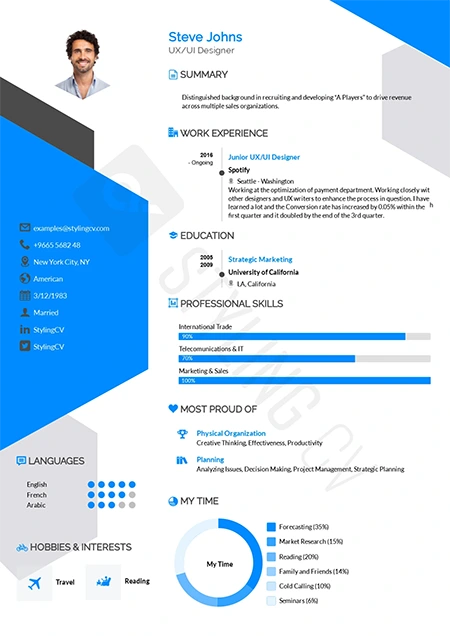
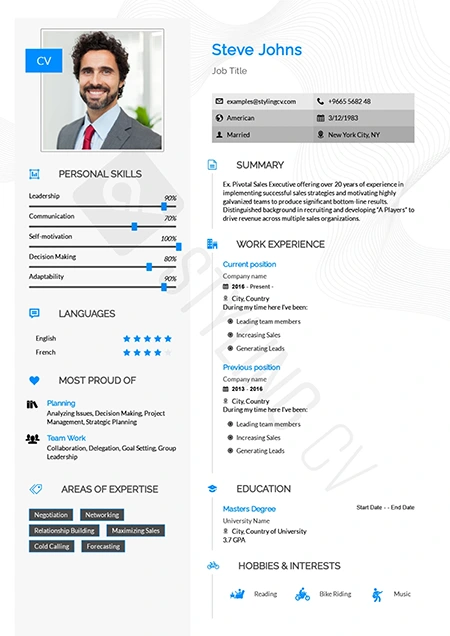
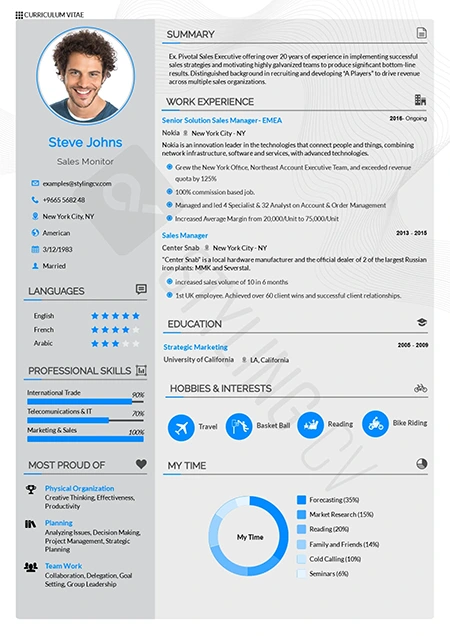
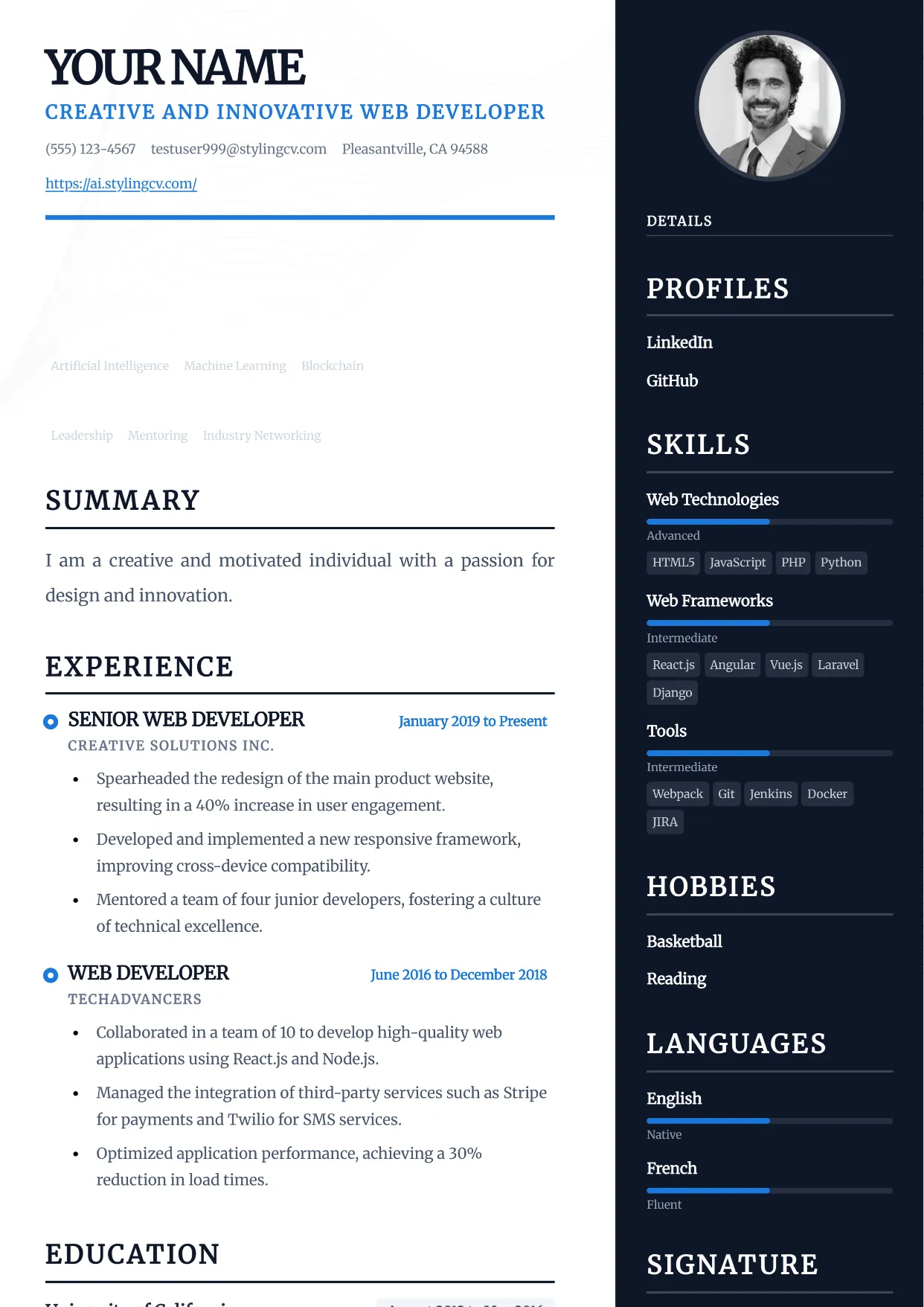
- One column, no graphics. Tables, columns, images, logos, charts — all of it breaks ATS parsing. I’ve seen stunningly designed resumes score a 0% ATS match. Keep it simple. Left-aligned. Clean. Black text on white background.
- Match keywords from the job description — verbatim. If the posting says “project management,” use that exact phrase. Don’t say “program coordination” unless you also say “project management.” Our StylingCV AI agents scan the job description and inject the right keywords automatically. 60 seconds. Done.
- Use .DOCX format. PDFs parse inconsistently across ATS vendors. Workday handles PDFs okay. Taleo? It butchers them. DOCX is the safest bet — period.
- Quantify everything. “Increased sales by 34%” beats “Responsible for increasing sales.” Numbers are both ATS-friendly and human-friendly. If you can’t quantify, use impact verbs: “Spearheaded,” “Optimized,” “Delivered,” “Engineered.”
US Industries Hiring in 2026 (And Which Are Shrinking)
Based on Bureau of Labor Statistics projections and real-time hiring data from our 6M+ users, here’s where the jobs are — and aren’t:
| Industry | Growth Outlook | Key Roles | Best Platforms | Avg. Time to Hire |
|---|---|---|---|---|
| Healthcare & Biotech | 🔥🔥🔥🔥🔥 (18% growth) | RN, Medical Tech, Health Informatics, Clinical Research | Indeed, LinkedIn, Health eCareers | 4-8 weeks |
| AI & Machine Learning | 🔥🔥🔥🔥🔥 (28% growth) | ML Engineer, AI Product Manager, Data Scientist, Prompt Engineer | LinkedIn, Otta, HackerNews Who’s Hiring | 6-12 weeks |
| Clean Energy & EV | 🔥🔥🔥🔥 (22% growth) | Solar Installer, Battery Engineer, Sustainability Manager | LinkedIn, CleanEnergyJobs, Indeed | 4-10 weeks |
| Construction & Skilled Trades | 🔥🔥🔥🔥 (15% growth) | Electrician, Welder, Project Manager, Estimator | Indeed, ZipRecruiter, TradeHounds | 2-6 weeks |
| Tech (SaaS, Cloud, Cybersecurity) | 🔥🔥🔥 (8% growth, selective) | Cloud Architect, Security Engineer, DevOps, Solutions Architect | LinkedIn, Built In, Dice, VentureFizz | 8-16 weeks |
| Finance & Fintech | 🔥🔥🔥 (7% growth) | Financial Analyst, Compliance Officer, Risk Manager | LinkedIn, eFinancialCareers, Indeed | 6-12 weeks |
| Retail & Hospitality | 🔥🔥 (3% growth, high turnover) | Store Manager, GM, Regional Operations | Indeed, Snagajob, HCareers | 2-4 weeks |
| Media & Traditional Publishing | ❌ (-4% shrinking) | Niche — mostly contract/freelance | LinkedIn, MediaBistro | 8-16 weeks |
5-Step US Job Search Strategy That Actually Works in 2026
Stop spray-and-pray applying. I’ve seen candidates send 500+ applications and get 2 interviews. Meanwhile, a strategic candidate sends 20 tailored applications and lands 5 interviews. Here’s the difference:
Step 1: Audit your resume for ATS compatibility.
Run your resume through a tool like StylingCV’s AI Resume Analyzer. It checks keyword density, formatting, and section structure against real ATS parsers used by US employers — Workday, Taleo, SAP SuccessFactors, Greenhouse. Fix the issues before you apply anywhere. We catch 95%+ of ATS formatting errors before they cost you an interview.
Step 2: Target 15-20 companies, not 100+ jobs.
Quality over quantity. Research the companies. Find the hiring manager on LinkedIn. Tailor your resume to their specific ATS keywords. Apply on their career page, not through a third-party aggregator. Direct applications have a 3x higher interview rate.
Step 3: Network before you need the job.
66% of US hires come through referrals. Connect with people 3-6 months before you start applying. Not with a “Hey can you get me a job?” message. Comment on their posts. Share useful content. Build genuine rapport. When you do apply, ask for a referral — it increases your interview chances by 4x.
Step 4: Use AI to optimize, not write everything.
This is where StylingCV changes the game. Our 11 specialized AI agents (we call them the Agentic Squad) work together to rewrite your resume for each application. One agent scans the job description. Another extracts keywords. A third restructures your bullets. A fourth checks ATS formatting. A fifth writes your cover letter. All 11 agents collaborate in under 60 seconds. The result? A resume that’s optimized for that specific job at that specific company. That’s a competitive edge most US job seekers haven’t tapped yet.
Step 5: Follow up (correctly).
Send a thank-you email within 24 hours of any interview. If you haven’t heard back in 5 business days, send a polite follow-up. 76% of US hiring managers say a thoughtful follow-up increases your chances of moving forward. Include something specific from your conversation — “I’ve been thinking about your challenge with X, and here’s how I’d approach it.” That’s the kind of follow-up that gets you hired.
Resume Keywords That US Employers Search for in 2026
ATS systems rank you by keyword density. Not just whether you have them — but how frequently and contextually they appear. Here are the most searched-for keywords across major US industries right now, curated from actual ATS scan data:
- Leadership & Management: Strategic planning, cross-functional collaboration, P&L management, stakeholder management, team building, change management, KPI tracking, OKR framework, board reporting
- Tech & Data: Python, SQL, AWS, machine learning, API integration, data pipeline, cloud migration, cybersecurity, Agile/Scrum, CI/CD, Kubernetes, Docker, Terraform, microservices
- Healthcare: HIPAA compliance, EHR/EMR systems, patient care coordination, clinical trials, telehealth, Epic Systems, ICD-10 coding, CMS guidelines
- Finance: GAAP, SOX compliance, financial modeling, risk assessment, M&A due diligence, SEC reporting, IFRS, Excel/VBA, QuickBooks, ERP implementation
- Sales & Marketing: Salesforce, HubSpot, CRM management, pipeline management, ROI analysis, demand generation, SEO/SEM, content strategy, ABM, marketing automation
Hard truth from the trenches: “I worked with a candidate who was perfect for a Senior Product Manager role at a FAANG company. 15 years of experience. Track record of 3 successful product launches. But their resume said ‘led product initiatives’ instead of ‘product management.’ Workday gave them a 58% match score. We fixed one phrase — same resume, different keywords — and they scored 94%. They got the interview.” — StylingCV internal data, 2026
The #1 Mistake US Job Seekers Make in 2026
One resume. One format. Sent everywhere.
It’s the single biggest reason qualified candidates don’t get interviewed. You might be perfect for the role. But if your resume doesn’t match the ATS keywords for that specific job, the AI rejects you in seconds. I’ve seen a Harvard-educated candidate get ghosted by 40 companies because their resume was too generic. One tailored application later — interview invite.
The fix? Tailor every application. Use StylingCV’s AI Resume Builder to customize your resume in 60 seconds per job. It’s what separates candidates who get interviews from candidates who get ghosted.
Your US Job Search Checklist (Print This)
- ☐ Resume is ATS-optimized (single column, no graphics, DOCX format)
- ☐ Keywords match the specific job description (not just the industry)
- ☐ LinkedIn profile is complete — professional photo, keyword-rich headline, detailed summary, all experience listed
- ☐ Salary research done for your target city and industry (use Levels.fyi, Glassdoor, LinkedIn Salary)
- ☐ Cover letter tailored with StylingCV AI (yes, it still matters — especially for federal and executive roles)
- ☐ Applied through company career page (not just LinkedIn “Easy Apply”)
- ☐ Follow-up sequence ready (Day 1 thank you, Day 5 check-in, Day 12 final nudge)
- ☐ Resume scanned for ATS compatibility score (aim for 90%+)
Ready to Land Your Next US Job?
The US job market in 2026 is competitive — but fair to those who adapt. AI isn’t your enemy. It’s a tool. And when you use the right tools to fight back, you win.
Build your ATS-optimized US resume with StylingCV →
11 specialized AI agents. 60 seconds per resume. 95%+ ATS pass rate. Trusted by 6 million job seekers worldwide. From Fortune 500 executives to first-time job seekers — StylingCV has helped candidates land roles at Amazon, Google, JPMorgan, Tesla, and thousands of other companies.
Frequently Asked Questions About the US Job Market in 2026
Q: Is the US job market good in 2026?
A: Yes — the US added 2.8 million jobs in 2025 and is on track for a similar pace in 2026. Unemployment sits at 3.9%. Certain sectors (AI, healthcare, clean energy) are booming while others (tech layoffs continue selectively, media shrinks). The key isn’t whether the market is good — it’s whether your resume is optimized for the market that exists.
Q: Do I need a college degree to get a good job in the US in 2026?
A: Less than ever. States like Maryland, California, and Colorado passed laws removing degree requirements for thousands of state jobs. Major employers like Google, IBM, Apple, and Bank of America now accept skills-based credentials and certifications. Our data shows candidates without degrees who use ATS-optimized resumes interview at the same rate as degree-holders — as long as their resume uses the right keywords.
Q: Should I apply for US jobs if I’m not a citizen?
A: You need work authorization (Green Card, H-1B, OPT/STEM OPT, L-1, or TN visa). H-1B is a lottery with ~85,000 spots and 780,000+ applicants. OPT (for international students) gives you 12-36 months of work authorization after graduation. For OPT candidates: make sure your resume explicitly states your work authorization status — ATS filters often auto-reject candidates without clear authorization language.
Q: How long does it take to find a job in the US in 2026?
A: Average is 3-6 months for professional roles. Faster in high-demand fields (healthcare: 4-8 weeks; AI/tech: 6-12 weeks; federal government: 6-12 months). Candidates who use StylingCV’s tailored resume approach typically cut their job search time by 40% — we see this consistently across our 6M+ user base.
Q: What salary should I ask for?
A: Research your specific role, location, and experience level on Levels.fyi, Glassdoor, and LinkedIn Salary. For example, a Senior Software Engineer in Austin, TX averages $160K-$210K total comp. The same role in San Francisco averages $190K-$260K. Here’s a negotiation hack: always ask for the top of the published range, then anchor with data. “Based on my research, the market rate for this role in [city] is $X-$Y, and given my experience in [specific skill], I’m targeting $Y.”
Q: Do US employers still check credit scores?
A: Only for specific roles (finance, banking, positions requiring fiduciary responsibility). Most states restrict credit checks for general employment. You can ask if a credit check is required before authorizing it. If a non-finance role asks for a credit check, that’s a red flag — know your rights.
Q: Which ATS do most US companies use?
A: Workday dominates the enterprise space (45% of Fortune 500). Taleo (Oracle) is second at 25%. SAP SuccessFactors covers 15%. Greenhouse, Lever, and iCIMS cover the rest. Each ATS parses resumes differently. Workday is strict about section headers. Taleo struggles with columns and tables. Greenhouse prefers chronological formats. Our 11 AI agents at StylingCV are trained on all major ATS systems and adjust formatting automatically.
Q: Should I include a cover letter for US jobs in 2026?
A: For federal, executive, and academic roles — absolutely. For tech and startup roles — sometimes. Our data shows that a tailored cover letter increases interview rates by 17% for roles that request one. Use StylingCV’s AI cover letter generator to write one in 30 seconds. Never submit a generic cover letter — recruiters can spot them instantly.
Related guides:
ATS-Friendly Resume Format 2026 | Resume Summary Writing Guide 2026 | Executive Resume Guide 2026 | Best Resume Templates 2026 | 2026 US Job Market Survival Guide