USA Resume vs. CV: The 2026 Complete Guide for American Job Seekers (ATS-Approved)
Land more interviews with an ATS-proof USA resume. Learn local job platforms, US hiring laws, and the exact format hiring managers expect in 2026.

Twenty applications. Zero callbacks.
Hurts, doesn’t it?
Here’s what nobody tells you: it’s probably not your skills. It’s your format.
American recruiters scan a resume for six seconds. That’s it. If they can’t find what they need, your application’s gone. Meanwhile, applicant tracking systems silently kill 75% of resumes before a human even breathes on them.
We’ve helped 6M+ job seekers worldwide beat the system. The #1 screw-up? Using the wrong format for the US market.
Let’s fix yours. Right now.
Resume vs. CV: What US Employers Actually Want
Outside America, “CV” and “resume” are the same thing. In the US? Completely different animals. Send the wrong one, and you’re done.
| Feature | US Resume | US CV (Academic) |
|---|---|---|
| Length | 1 page (early career), 2 max (senior) | 5–15+ pages. No limit. |
| Purpose | Business, tech, healthcare, legal — most industries | Academic, research, science, medical fellowships |
| Focus | Skills, achievements, impact metrics | Publications, grants, teaching, conferences |
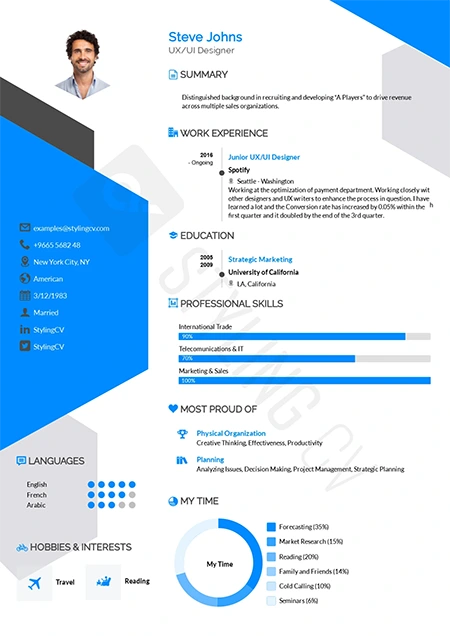
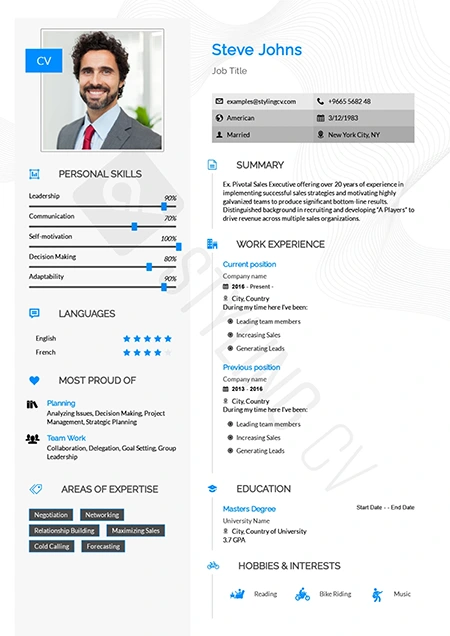
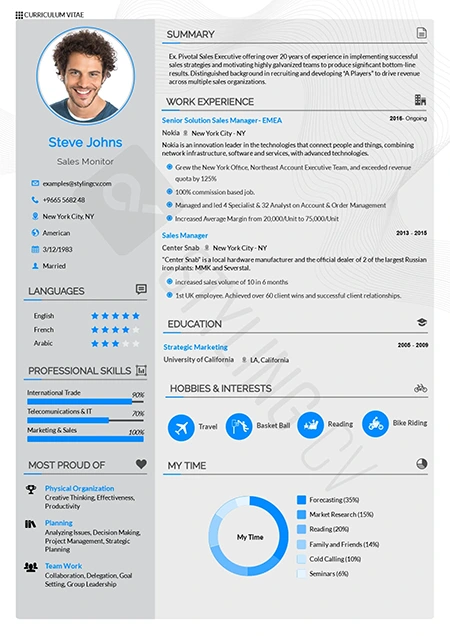
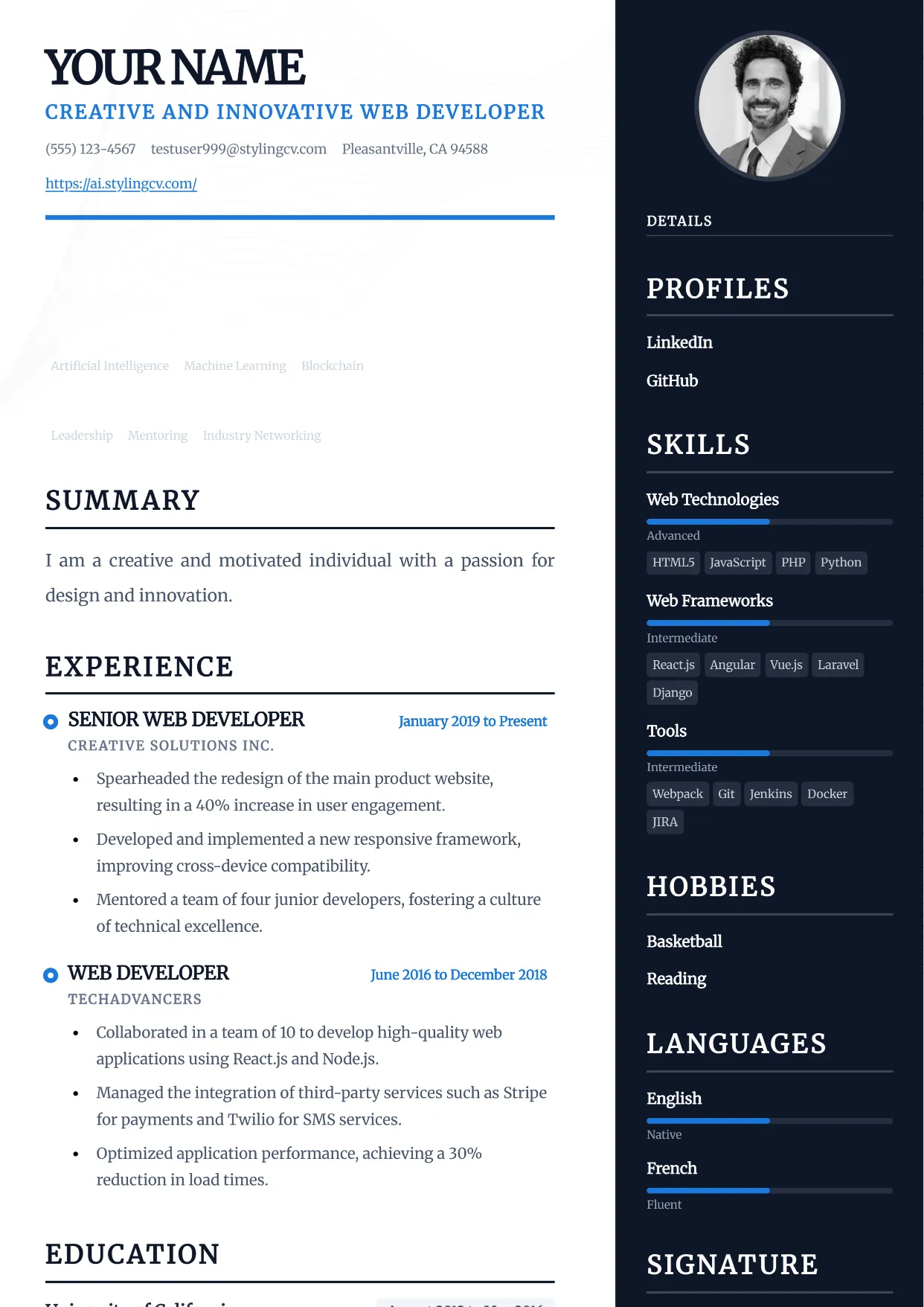
| Photo? | Never. Anti-discrimination law. Zero exceptions. | Not required, but seen in some fields |
| Personal Info | Name, phone, email, LinkedIn, city+state only | Add ORCID, research profiles, full address optional |
| ATS-Friendly? | Mandatory. Simple formatting, no columns, no graphics | Often PDF. Less ATS-dependent. |
Recruiter Reality: “I scan 400+ resumes daily. If yours uses columns, graphics, or a photo, I skip it. The ATS can’t parse it — so I can’t find your skills.” — Senior Recruiter, Fortune 500 Tech
Top US Job Platforms in 2026
Where you apply matters. A lot. Here’s where American hiring actually happens.
Indeed — The Monster
350 million monthly US visitors. Indeed is ground zero for most job seekers. But here’s the catch: its AI scores your resume against the job description. Keywords don’t match? Your app sinks to the bottom.
Optimization tip: Mirror the exact phrasing from the job posting. If they say “managed,” don’t write “oversaw.” Indeed’s AI weights exact matches heavier. Test yours with StylingCV’s free ATS scan before you click submit.
LinkedIn — Your Digital Handshake
93% of US recruiters check LinkedIn before deciding to interview. Your profile should complement your resume — not copy it. Use the Featured section for portfolio work. Post once a week. Stay visible.
Learn more: The 2026 US Job Market Survival Guide
USAJobs.gov — The Federal Gateway
Federal jobs are a different beast. USAJobs expects a “federal resume” — think 5+ pages with every detail. Training. Awards. Supervisor references. Standard one-pagers get auto-rejected instantly.
ZipRecruiter — AI Matchmaker
Employers get alerted the moment a strong match applies. Apply within 24 hours of posting. Early applicants land 3x more interviews on this platform.
Glassdoor — Know Before You Go
Salary data. Interview reviews. Company culture ratings. Use Glassdoor to tailor your application to the company’s actual environment — not the polished job description.
US Employment Laws Every Job Seeker Should Know
Know your rights. It changes how you negotiate — and who you trust.
At-Will Employment (Almost Every State)
Montana is the lone exception. Everywhere else, you or your employer can end things anytime, for almost any non-discriminatory reason. Job security comes from your skills, not your contract.
Anti-Discrimination Protections
Title VII, ADEA, and ADA protect you. Employers can’t ask your age, marital status, or family plans. If they do? Red flag. Walk away.
Salary History Bans
20+ states (CA, NY, CO, WA, and more) ban employers from asking your salary history. If asked, say this: “I’d prefer to discuss the range for this role based on market value and my skills.”
Pay Transparency Laws
Colorado, New York, California, Washington — these states require salary ranges in job ads. No range posted? They’re probably breaking the law. Use Levels.fyi and Glassdoor to benchmark before negotiating.
Pro Tip: Data beats gut feeling. Every. Single. Time.
The StylingCV Difference
Generic ChatGPT answers won’t save your resume. They’re too broad. Too obvious. ATS systems flag them as low-effort in seconds.
StylingCV runs on 11 specialized AI agents. Each agent trained on a specific industry, role, and seniority level. No guessing. No fluff.
- Agent 1: Job Analyzer — Reverse-engineers the job description. Finds the 12 most critical keywords the ATS is weighting.
- Agent 2: Bullet Point Builder — Turns daily tasks into achievement statements with hard numbers.
- Agent 3: Format Optimizer — Strips every element that triggers ATS rejection. Charts, tables, graphics, columns — gone.
- Agent 4: Keyword Harmonizer — Every required skill appears in context, at least 3 times across your resume.
- Agents 5–11 — Industry-specific nuance for tech, healthcare, finance, legal, education, creative, and executive roles.
Result: A resume that reads human to recruiters and scores 95%+ on ATS scans. Try it at ai.stylingcv.com.
3-Step US Resume Optimization Framework
Step 1: Deconstruct the Job Description
Copy the job description. Highlight every hard skill, tool, certification, and responsibility. Group them. The first 5 skills listed are what the ATS weights most. Make sure they appear in your work experience — not just your skills section.
Step 2: Rewrite with US Metrics
American hiring managers worship numbers. Every bullet point follows this formula: Action + Metric + Result.
- ❌ “Managed a team of developers.”
- ✅ “Led a 6-person engineering team, shipping 12 features on schedule and cutting bug reports by 34%.”
- ❌ “Responsible for social media.”
- ✅ “Grew LinkedIn engagement 210% in 6 months, generating 85 qualified leads per quarter.”
Step 3: Test Against the ATS
Before submitting, run the plain-text test. Copy everything into Notepad (not Word). If formatting breaks, columns scramble, or info disappears — the ATS will mangle it too. Use StylingCV’s free ATS scan to check your score before you apply.
Frequently Asked Questions
Should I include a photo on my US resume?
No. Never. Full stop. US hiring managers are trained to avoid photos — they trigger unconscious bias and expose employers to discrimination lawsuits. A photo = instant rejection in most professional environments.
How long should a US resume be in 2026?
One page for 0–5 years experience. Two pages for 6–20 years. Executives with 20+ years can stretch to two pages but focus on the last 10–15 years. Federal resumes for USAJobs.gov? 5+ pages is normal.
Do US employers check LinkedIn before interviews?
Yes — 93% of them. Your LinkedIn should complement your resume, not copy it. Use the About section to tell your career story. Ask colleagues for recommendations. Build social proof.
What is the best resume format for ATS in the USA?
Reverse-chronological. Safest. Most ATS-compatible. Most recent job first. Use standard section headers (Experience, Education, Skills). No tables, no columns. Save as .docx unless PDF is specifically requested. For more, read our complete ATS-friendly resume format guide.
Can I apply to US jobs without a work visa?
You can apply, but employers will ask about work authorization. H-1B sponsorship is available but competitive — most common in tech, engineering, and healthcare. Be upfront. It saves everyone time.
More resources from StylingCV:
• ATS Resume Guide for US Job Seekers
• ATS-Friendly Resume Format: Complete Guide
• Resume Help 2026: Complete Guide
• 2026 US Job Market Survival Guide
• Browse all career guides