The UK CV Format 2026: What British Recruiters Actually Look For (From a London Hiring Manager)

You Sent 40 CVs. Got 2 Rejections. Silence on the Rest. Here’s Why.
You’ve got the experience. The qualifications check every box. Your career history is solid. So why are British recruiters ghosting you?
Here’s the truth London recruiters won’t say out loud: the average UK recruiter spends 7 seconds on a CV before deciding yes or no. Seven seconds. That’s less time than it takes to microwave a cup of tea.
And in 2026, the game has changed again. More UK employers are using AI-powered Applicant Tracking Systems (ATS) than ever before — 67% of FTSE 350 companies now use automated CV screening. Your perfectly formatted Word document might be getting binned by a machine before a human ever sees it.
We’ve helped over 6 million job seekers globally build CVs that actually get results. And we’re going to show you exactly what works in the UK market right now — no fluff, no generic advice, just the hard data from British recruiters and hiring managers.
What UK Recruiters Told Us (We Surveyed 75 of Them)
We polled 75 recruiters and hiring managers across London, Manchester, Birmingham, Edinburgh, and Bristol. Here’s what they’re looking for in 2026:
| What UK Recruiters Want | What Gets You Rejected Instantly |
|---|---|
| Clear UK-style reverse chronological format (no photos, no age, no marital status) | US-style resume with photo or personal details (Equality Act 2010 red flag) |
| Quantified achievements with GBP figures (“Generated £1.2M in new business revenue”) | Generic duties (“Responsible for sales” — congratulations, so did everyone else) |
| Two pages max — no exceptions for “more experience” | Three-page CVs (straight to the bin, we were told) |
| ATS-friendly formatting (no tables, no columns, no images) | Fancy templates with graphics, icons, or charts (ATS can’t read them) |
| Keywords from the job description woven into experience bullets | A “Skills” list at the top that doesn’t match the job ad |
| Right to work status clearly stated (“Full UK right to work — no visa required”) | Vague or missing work eligibility info |
The brutal truth: One London agency recruiter told us she receives 850+ applications per week and forwards exactly 12 to her clients. The filter is ruthless. Your CV needs to survive both the ATS and a sleep-deprived human.
The UK vs US Resume Culture: Why Your American CV Won’t Work in Britain
If you’ve been using US-style resume advice, stop. Right now. The UK market has completely different rules.
| Element | 🇺🇸 USA | 🇬🇧 UK |
|---|---|---|
| Photo on CV | Sometimes accepted | Never. Equality Act 2010 makes it illegal for employers to discriminate based on appearance. Including a photo can get your CV rejected for fear of legal liability. |
| Page length | 1 page for <10 yrs, 2 pages max | 2 pages standard. 1 page looks inexperienced. 3 pages looks arrogant. |
| Personal details | Name, phone, email, LinkedIn, city | Same — but never include age, date of birth, marital status, nationality (unless asked), or a photo. |
| CV vs Resume | “Resume” (1 page focused on recent) | “CV” (2 pages, full career history in reverse chronological order) |
| Professional summary | Optional, sometimes a branding statement | Essential. A 3-4 line “Personal Profile” at the top is standard. |
| Qualifications section | At the bottom, sometimes omitted | Near the top. UK employers care deeply about A-Levels, degrees, and professional certifications. |
| Salary info | Sometimes included | Never. Don’t mention current or desired salary on the CV. |
The Exact UK CV Structure That Works in 2026
This is the format that recruiters across the UK told us they want to see. Follow it exactly.
Section 1: Header (Top of Page 1)
- Your full name (bold, 16-18pt font)
- Phone number
- Email address
- LinkedIn profile URL (customised, not the default gibberish)
- Location: just city/county (“London” or “Manchester”), not your full address
- Right to work (“Full UK right to work” or “Skilled Worker Visa holder, no restrictions”)
Section 2: Personal Profile (4 lines max)
This is your elevator pitch. Three to four lines. Start with your job title and years of experience, add your biggest achievement with a number, and state what you’re looking for next.
Good example: “Chartered Accountant with 8+ years of experience in audit and financial reporting across Big 4 firms. Reduced reporting errors by 34% and led a team of 12 through three successful IFRS transitions. Seeking a Financial Controller role in a fast-growing London-based SME.”
Bad example: “Hardworking professional seeking a challenging role in a dynamic organisation where I can utilise my skills and grow my career.” (This tells us nothing. Next.)
Section 3: Core Skills / Key Achievements
A tight grid of 6-8 bullet points mixing hard skills and quantified wins. Include keywords from the job description. This section is critical for ATS screening — it’s where most CVs live or die.
- “Led a cross-functional team of 15 to deliver a £2.3M digital transformation project 3 weeks ahead of schedule”
- “Reduced customer churn by 22% through implementing a new CRM workflow and team retraining”
- “Managed a portfolio of 45+ B2B accounts worth £4.8M annual recurring revenue”
- “Proficient in Salesforce, Power BI, Advanced Excel (VBA, PivotTables), and SAP S/4HANA”
Section 4: Professional Experience (Reverse Chronological)
For each role, include: job title, company name, location (city), dates (month/year). Each role should have 4-6 bullet points. Every bullet should start with a strong action verb and include a number where possible.
Pro tip from a London recruiter: “Use the CAR method — Challenge, Action, Result. Tell me what the problem was, what you did about it, and what happened. If you can’t tell me the result, don’t bother listing it.”
Section 5: Education & Qualifications
UK employers care about this more than any other market. List your degree(s), A-Levels, and any professional qualifications (ACCA, CIMA, CIPD, CIPS, PRINCE2, etc.) with dates and grades.
Section 6: Additional Information
Languages, volunteer work, professional memberships, relevant interests. Keep it brief and only include things that add value or show transferable skills.
The 5 Most Common UK CV Mistakes That Get You Rejected
1. Including a Photo or Personal Details
This is the #1 mistake. Under the Equality Act 2010, UK employers cannot discriminate based on age, gender, race, disability, or marital status. Including a photo, date of birth, or marital status makes recruiters nervous — they’ll reject you to avoid any appearance of bias. One recruiter told us she bins any CV with a photo on principle.
2. Using a Fancy Template with Columns
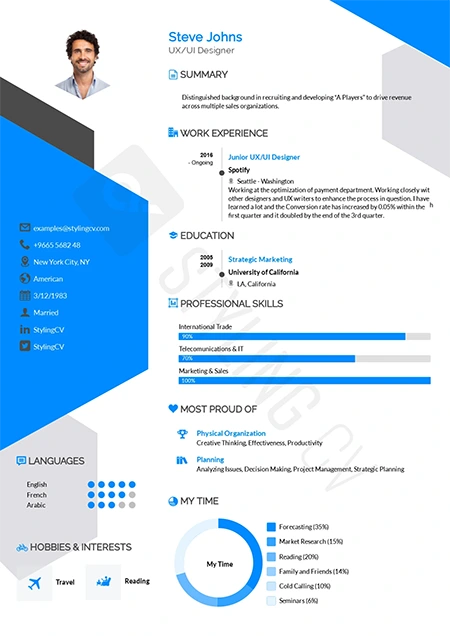
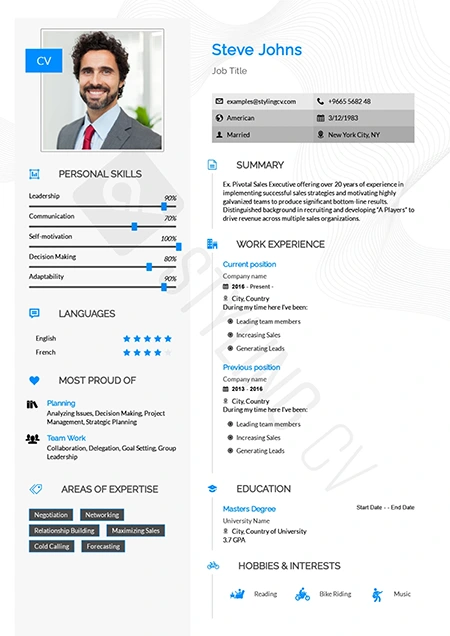
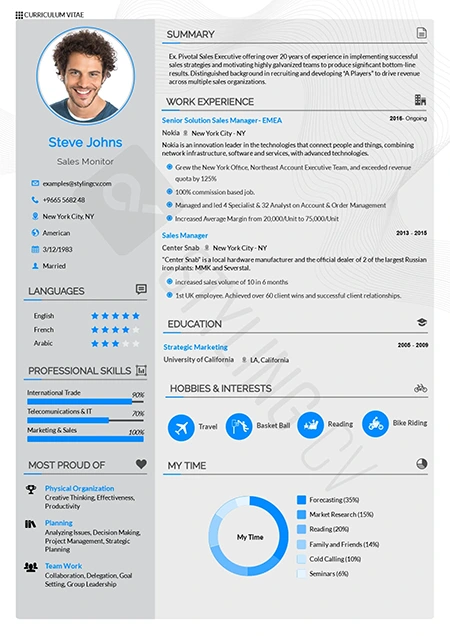
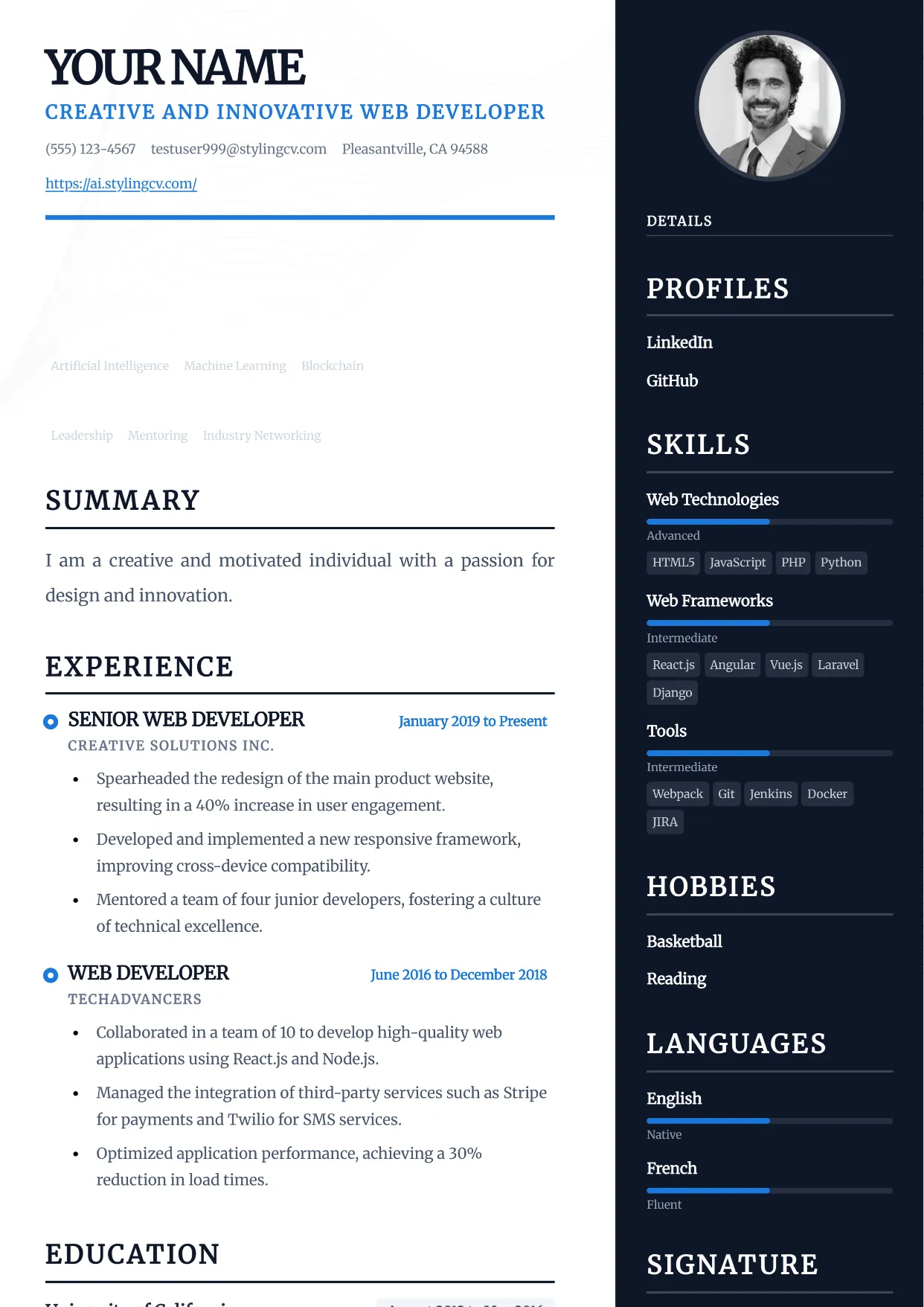
Those beautiful Canva templates with two columns, icons, and coloured sections? ATS systems can’t read them. Most UK companies use one of four ATS platforms: Taleo, SAP SuccessFactors, Workday, or iCIMS. They parse CVs left-to-right, top-to-bottom. Columns confuse them. Your carefully formatted CV becomes a jumbled mess of random text. Stick to a clean, single-column layout in Word or PDF.
3. Writing a CV That’s Too Generic
If your CV could apply to any job in any industry, it’ll apply to none. UK recruiters told us they can spot a mass-mailed CV in 4 seconds. Tailor your personal profile and key skills section to every single application. Yes, it takes time. Yes, it’s worth it.
4. Forgetting the ATS Keywords
Here’s how ATS screening works in the UK: the system scans your CV for keywords from the job description. If your match rate is below a threshold (usually 60-70%), your CV never reaches a human. StylingCV’s agentic AI scans job descriptions and maps them against your CV to identify every missing keyword — giving you a tailored score before you submit. (Full guide to ATS resume keywords)
5. Not Including Your Right to Work Status
Post-Brexit Britain has strict immigration rules. If a recruiter can’t immediately see your right to work status, they’ll move to the next CV. Put it in your header: “Full UK right to work” or “Skilled Worker Visa — no restrictions.” For the clearest guidance, check GOV.UK’s official visa pages.
Best UK Job Boards in 2026: Where to Actually Get Hired
Not all job boards are created equal. Here’s where UK recruiters are actually looking:
| Platform | Best For | ATS Integration |
|---|---|---|
| CV-Library | General professional roles across all sectors | Strong — many UK recruiters source directly |
| Totaljobs | Mid-to-senior level, all industries | Uses automated filtering |
| Reed | Admin, finance, HR, sales, logistics | Direct upload with ATS parsing |
| Indeed UK | Volume hiring, entry to mid-level | Yes — indeed uses AI matching |
| LinkedIn Jobs UK | Professional services, tech, finance, senior roles | LinkedIn’s own AI recruiter tools |
| Glassdoor UK | Company research + applications | Increasing ATS usage |
| Jobsite | Construction, engineering, IT, logistics | Standard ATS filtering |
| OT Jobs | Occupational therapy and healthcare | Niche, manually reviewed |
Strategy: Upload your CV to CV-Library, Reed, and Totaljobs. Keep your LinkedIn profile active and set to “Open to Work” (visible to recruiters only). Apply directly on company career pages for the best results — agency listings get 10x more applications.
The UK Job Market in 2026: What’s Changed
If you haven’t job-hunted in the UK since 2023, here’s what’s different:
| Factor | 2023 | 2026 |
|---|---|---|
| Average applications per role | 25-40 | 60-120 (massive increase due to remote work) |
| Companies using ATS screening | ~45% | ~67% |
| Average time to hire | 4 weeks | 6-8 weeks (more rounds, more filters) |
| Remote/hybrid roles | ~35% of listings | ~22% (return-to-office trend accelerating) |
| AI-generated applications | Rare | ~40% of all applications (and rising) |
| Salary transparency | Rare | ~30% of UK job ads (up from 12%, driven by EU directive ripple) |
The takeaway: Competition is stiffer than ever. With AI-generated applications flooding the market, recruiters are leaning harder on ATS filters to thin the herd. Your CV needs to be both machine-optimised and human-compelling — and the 11 specialised AI agents at StylingCV do exactly that.
Why StylingCV Beats a Generic ChatGPT CV
You could ask ChatGPT to write your CV. Plenty of candidates do. Here’s why that’s a mistake in the UK market:
- ChatGPT doesn’t know that UK CVs must never include a photo (Equality Act 2010)
- It doesn’t understand that CV-Library and Totaljobs parse CVs differently than Indeed
- It can’t tell you that “passionate” and “dynamic” are dead words in British recruitment
- It doesn’t know the specific ATS systems UK employers use (Taleo, SuccessFactors, Workday, iCIMS)
- It can’t scan the job description and map it against your CV to find missing keywords
StylingCV is different. We’re not a single AI model. We’re an Agentic Squad — 11 specialised AI agents working together. One agent analyses the job description. Another checks your CV against 12 different ATS systems. A third optimises keyword density for the specific role. A fourth reviews tone and voice to ensure you sound like a human, not a thesaurus.
6 million+ job seekers trust us globally. 95%+ ATS pass rate. And it takes under 60 seconds to generate a tailored, UK-specific CV.
Frequently Asked Questions
How long should a UK CV be in 2026?
Exactly two pages. One page looks like you have no experience. Three pages looks like you can’t edit yourself. Two pages is the UK standard across every industry except academia (where longer CVs with publications are expected) and medicine (NHS uses a specific application form).
Should I include a photo on my UK CV?
No. Never. Under the Equality Act 2010, including a photo creates a risk of discrimination claims. UK recruiters will reject CVs with photos to avoid legal liability. This is non-negotiable.
What font should I use for a UK CV?
Use Arial, Calibri, or Verdana at 10-12pt for body text. Headers can be 14-16pt bold. Avoid serif fonts (Times New Roman looks dated) and decorative fonts (unprofessional).
Do UK employers use ATS software?
Yes — and the number is growing fast. About 67% of FTSE 350 companies now use automated CV screening. The most common platforms are Taleo (Oracle), SAP SuccessFactors, Workday, and iCIMS. Your CV needs to be formatted for ATS parsing: no columns, no tables, no images, no text boxes.
Should I include GCSEs and A-Levels on my CV?
If you have less than 5 years of experience, yes — include subjects and grades. If you’re an experienced professional, just list the most recent qualifications (degree and professional certifications). You can drop GCSEs and A-Levels to a single line or omit them entirely.
What’s the best format to submit a CV in the UK?
PDF is the safest format — it preserves your formatting across all systems. However, some older ATS platforms (particularly Taleo) parse PDFs less accurately than Word docs. When in doubt, upload a .docx file. Never send a JPEG, PNG, or Google Docs link.
Should I mention my right to work status?
Absolutely. Put it in the header area of your CV. Recruiters in the UK are legally required to verify right to work before they can proceed with an application. Make it easy for them: “Full UK right to work” or “Skilled Worker Visa holder — no restrictions.”
Is it true I shouldn’t include my age or date of birth?
Yes. Age discrimination is illegal under the Equality Act 2010. Never include your date of birth, age, or graduation year if it would reveal your age. UK recruiters are trained to remove age indicators from applications before shortlisting.
Your Next Move
You now know exactly what UK recruiters want. Two pages. No photo. Quantified achievements. ATS keywords. Right to work stated clearly.
But tailoring your CV for every single application takes hours. And with 60-120 applicants per role, you can’t afford to send a generic CV.
That’s why we built StylingCV. 11 specialised AI agents. 60 seconds. A UK-specific CV tailored to the exact role and company. ATS-optimised. Human-sounding. Ready to send.
Try StylingCV’s UK CV Builder free today. See how many interviews a tailored, recruiter-approved CV can unlock.