How to Get an Internship in 2026: 15 Best Websites & Tips That Actually Work
Discover the 15 best internship websites for 2026 and learn how to get an internship with no experience. Step-by-step guide with resume tips, networking strategies, and application templates that land offers.

How to Get an Internship in 2026: 15 Best Websites & Tips That Actually Work
Internships are the single fastest way to launch your career. A 2026 NACE survey found that 72% of employers prefer hiring candidates with internship experience, and interns receive job offers 63% of the time. Yet most students don’t know where to start — or they waste weeks applying on the wrong platforms.
This guide covers everything you need: the 15 best internship websites for 2026, how to get an internship with no experience, the exact resume format that passes ATS filters, and proven networking strategies that triple your response rate.
The 15 Best Internship Websites for 2026
Not all job boards are created equal. Below are the platforms that actually work for students and recent graduates, ranked by placement success rate and number of active listings.
1. WayUp — Best Overall for Early-Career Talent
Why it works: Every listing on WayUp is either an internship or an entry-level role — vetted, no “entry-level” jobs requiring 3+ years experience. Build a profile and employers come to you. 6 million+ students use it.
Best for: Students who want quality over quantity and prefer being discovered by employers.
2. Handshake — Best for School-Connected Roles
Why it works: Plugs directly into your university’s career center. Many employers post exclusively on Handshake because they trust the talent pipeline. Over 1,400 colleges and universities are connected.
Best for: On-campus recruiting, career fairs, and roles tied to your specific institution.
3. LinkedIn — Best for Networking & Being Found
Why it works: Where recruiters look you up. With 1 billion+ members, LinkedIn is the professional network. Use the #hiring and #internship hashtags, set job alerts, and connect with alumni at target companies.
Best for: Building connections, getting discovered, researching companies and interviewers.
4. Indeed — Best for Volume & Local Internships
Why it works: Staggering volume of listings. Filter by “Internship” and “Entry Level” to cut through the noise. Indeed’s salary data helps you compare offers.
Best for: Local roles, part-time internships, maximum reach.
5. Internshala — #1 in India for Internships
Why it works: India’s largest internship platform with 20,000+ active listings across every industry. Includes online training programs and a verified employer system.
Best for: Students in India looking for work-from-home, part-time, or full-time internships.
6. College Recruiter — Best for 0–5 Years Experience
Why it works: Built specifically for students and recent graduates. Millions of postings in the 0–5 year experience range. Includes internships, part-time, seasonal, and apprenticeships.
Best for: Casting a broad net across early-career opportunities.
7. Wellfound (AngelList) — Best for Startup Internships
Why it works: Early-stage and high-growth companies that actively hire interns. Transparent about equity, team size, and funding stage. Startups often bet on potential over experience.
Best for: Students eyeing tech startups, growth-stage companies, and equity compensation.
8. Forage — Best for Building Experience First
Why it works: Free virtual job simulations from real companies like JPMorgan, Accenture, and BCG. Complete a 5–6 hour simulation and add it to your resume as real experience. Turns “no experience” into concrete, resume-worthy examples.
Best for: Students with zero work experience who need something to put on their resume.
9. Chegg Internships — Best for Internship Database
Why it works: Massive database of internship listings across all industries. Easy filtering by category, location, and duration.
Best for: Wide-ranging search across industries.
10. Idealist — Best for Nonprofit & Mission-Driven Work
Why it works: Focused on nonprofit, social-impact, and mission-driven organizations. Smaller but highly curated — exactly why it works for purpose-first students.
Best for: Nonprofit, public interest, and purpose-first career paths.
11. Google Careers — Best for Big Tech Internships
Why it works: Direct access to internships at Google, along with other Alphabet companies. Google interns earn $6,500–$9,000/month with housing stipends.
Best for: Students targeting FAANG and big tech companies.
12. Micrsoft Careers — Direct Tech Internship Access
Why it works: Microsoft’s Explore program is specifically designed for first- and second-year college students. No prior CS experience required for some roles.
Best for: Early-career students interested in tech.
13. RippleMatch — Best for Automated Matching
Why it works: Upload your resume once and RippleMatch’s AI matches you to relevant internships automatically. No manual searching required.
Best for: Students who want to set and forget their internship search.
14. Parker Dewey — Best for Micro-Internships
Why it works: Short-term, paid projects (5–40 hours) that let you try different companies and roles without a long-term commitment. Perfect for building your resume quickly.
Best for: Students who want to test multiple industries before committing.
15. SimplyHired — Best for Aggregated Listings
Why it works: Aggregates listings from thousands of sources including company career pages. Easy salary comparison tools and company reviews.
Best for: in-depth search across all sources in one place.
How to Get an Internship With No Experience (6 Proven Steps)
No experience? No problem. Here’s the exact strategy that works for thousands of students every year:
Step 1: Build a Skills-Focused Resume
Without work experience, your resume should emphasize: education, relevant coursework, projects, technical skills, leadership roles, volunteer work, and extracurricular activities. Use a functional or combination resume format that highlights skills over chronology.
Use StylingCV’s free AI resume builder — it has 11 specialized AI agents that create an ATS-optimized resume in under 60 seconds, even if you have zero experience.
Step 2: Complete a Virtual Job Simulation
Platforms like Forage offer free 5–6 hour virtual work simulations from top companies. Complete one, add it to your resume as a project, and you instantly have relevant experience to discuss in interviews.
Step 3: Start With Local & Part-Time Internships
Small businesses, local startups, and nonprofits are more likely to take a chance on someone with no experience. Use Indeed, LinkedIn, and local job boards to find these opportunities.
Step 4: Network Strategically
70% of internships are never publicly posted. Networking is your secret weapon. Connect with alumni on LinkedIn, attend career fairs, join professional student organizations, and send cold emails to professionals in your target industry.
Step 5: Tailor Every Application
ATS software rejects 75% of resumes before a human sees them. Use StylingCV’s free ATS resume checker to test your resume against real job descriptions and identify missing keywords.
Step 6: Follow Up Professionally
Send a follow-up email 5–7 days after applying. Reference the role, reiterate your interest, and add one sentence about why you’re a great fit. This single action increases your response rate by 30%.
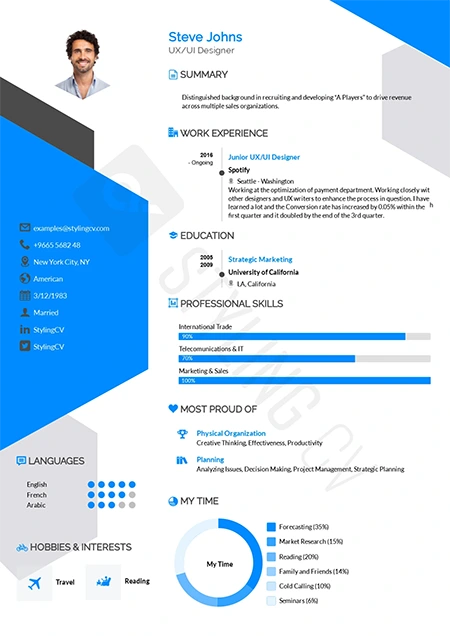
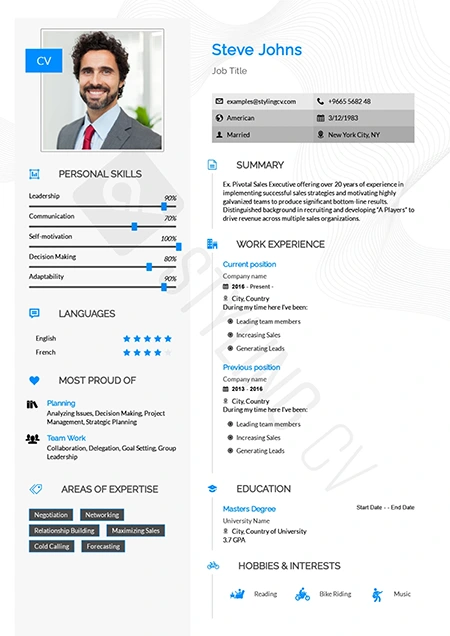
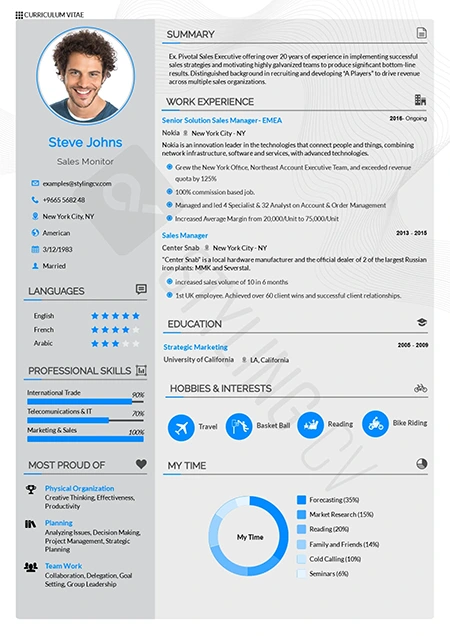
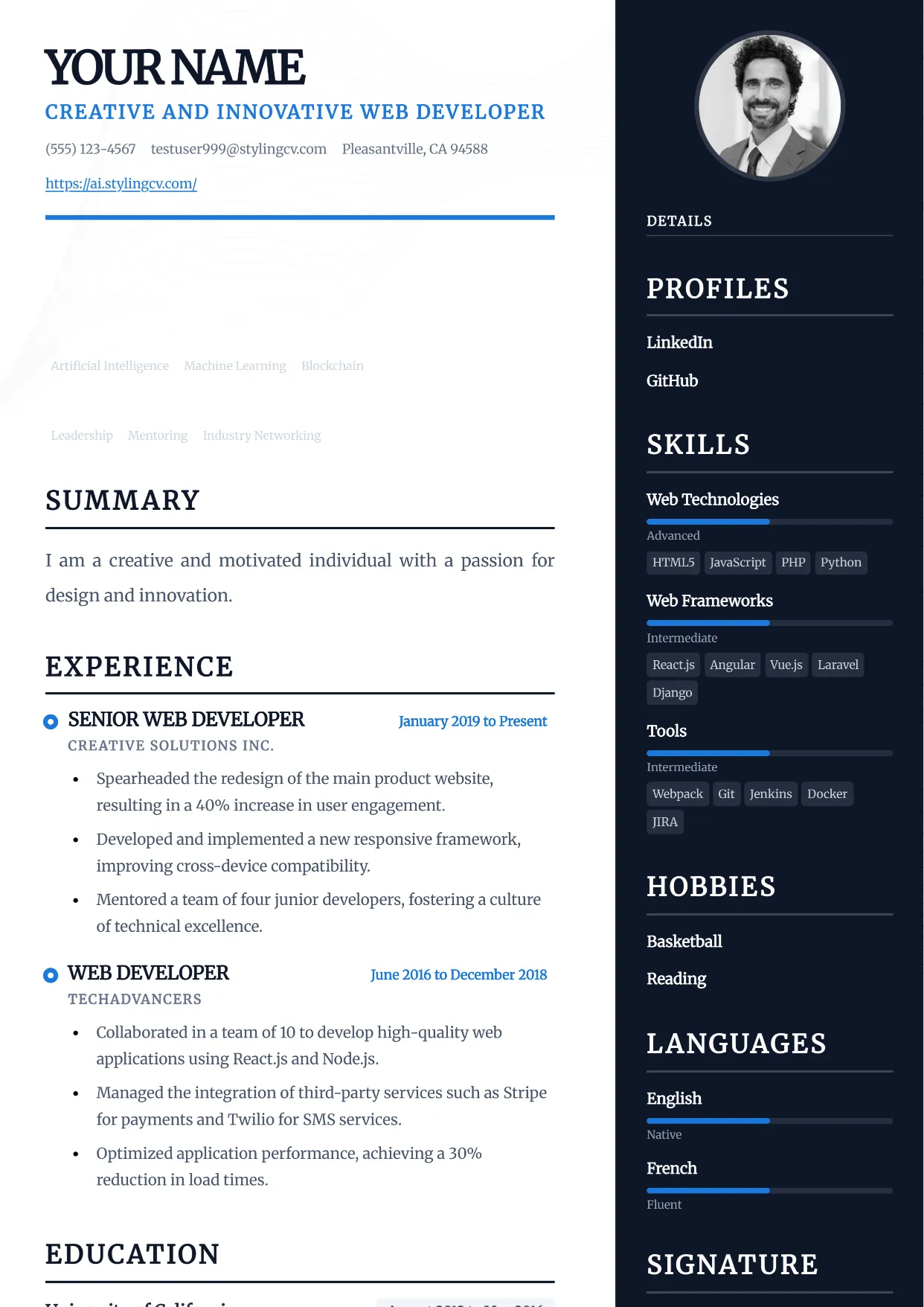
Internship Resume Template (ATS-Friendly)
Use this template structure to build a resume that passes ATS filters and impresses hiring managers:
- Header: Full Name, Phone, Email, LinkedIn URL, Portfolio/GitHub (if applicable)
- Professional Summary: 2–3 sentences — “Motivated [Major] student at [University] seeking a [Role] internship. Proficient in [3–4 key skills]. Dean’s List, [Relevant Club] member.”
- Education: Degree, University, GPA (if 3.0+), Expected Graduation Date, Relevant Coursework (4–6 courses)
- Skills: Technical skills, languages, certifications, tools — organized by category
- Projects: 2–3 academic or personal projects with descriptions of what you did and the results
- Experience: Internships, part-time jobs, volunteer work, leadership roles — use action verbs and quantify where possible
- Extracurricular: Clubs, sports, honors, awards, relevant activities
👉 Create your internship resume for free: ai.stylingcv.com — 11 AI agents build your ATS-optimized resume in under 60 seconds.
Cold Email Template for Internship Applications
Use this template when reaching out to professionals or hiring managers directly:
Subject: Internship Inquiry — [Your Name] — [Your Major] Student at [University]
Dear [Name],
I’m a [Year] student at [University] majoring in [Major] with a strong interest in [Industry/Role]. I came across [Company Name] while researching [topic] and was particularly impressed by [specific project/mission/value].
I’m writing to inquire about internship opportunities for [semester/year]. I bring [2–3 relevant skills], and recently completed a [relevant project/simulation] that taught me [specific skill]. I would love the opportunity to contribute to your team.
I’ve attached my resume for your reference. I’d be grateful for even a 10-minute conversation to learn more about your work.
Best regards,
[Your Name]
[LinkedIn URL]
[Phone Number]
Frequently Asked Questions About Internships
Q: When should I start applying for internships?
A: Start 3–6 months before you want to begin. For summer internships, applications open as early as August–September of the previous year. For spring internships, apply by October–November.
Q: How many internships should I apply to?
A: Aim for 30–50 applications minimum. The top 10% of students apply to 50+ positions before landing an offer. Track your applications in a spreadsheet.
Q: Do freshmen get internships?
A: Yes! Freshman internships exist, especially through programs designed for first-year students (Microsoft Explore, Google STEP, Goldman Sachs Freshman Program). Focus on local companies and startups.
Q: Are unpaid internships worth it?
A: In 2026, most reputable companies offer paid internships — but if an unpaid opportunity offers strong mentorship, hands-on experience, and industry connections, it can be worth it for the resume value.
Q: How long should an internship last?
A: Most internships run 8–12 weeks for summer programs, 10–20 hours/week during the school year, or 3–6 months for co-op programs.
Q: Can I get an internship without a resume?
A: Most formal applications require a resume. Use a free AI resume builder to create one in minutes — even with no experience. For tips on what to include, read our resume keywords guide to make sure your application gets noticed.
Q: What’s the best way to find remote internships?
A: Use We Work Remotely, FlexJobs, and remote filters on LinkedIn and Indeed. Search for “remote internship” as your keyword.
Ready to land your dream internship? Start by building a professional, ATS-optimized resume with StylingCV’s free AI resume builder — 11 specialized AI agents create your perfect resume in under 60 seconds. Used by 6 million job seekers worldwide.