test

You’ve got 7.4 seconds. That’s how long a recruiter spends on your resume before deciding yay or nay. Now imagine you’re switching careers entirely — and your experience says “accounting” while the job says “marketing.”
Scary, right?
But here’s the thing nobody tells you: a killer cover letter for a career change isn’t about hiding your past. It’s about reframing it. I’ve seen people go from teaching to tech, from retail to nursing, from bartending to project management — all with the right cover letter approach.
At StylingCV, we’ve helped over 6,000,000 job seekers build resumes and cover letters that actually work. Our AI tools score a 4.8/5 from 12,500+ reviewers, and our templates boast a 95% ATS pass rate. So yeah — we know what works.
In this guide, you’ll get 5 ready-to-use cover letter templates for career changers, a 3-step framework for reframing your experience, and insider tips from someone who’s watched hiring managers review thousands of career-pivot applications.
Let’s get you that interview.
Why Most Career Change Cover Letters Fail
Here’s the brutal truth: most career changers write a cover letter that screams “I don’t know what I’m doing.” They apologize for their lack of experience. They list irrelevant job duties. They beg for a chance.
Don’t do that.
Hiring managers aren’t looking for a perfect match — they’re looking for potential. A LinkedIn study found that 63% of hires in 2025 came from skills-based hiring, not pedigree-based. The game has changed.
What fails: a chronological list of old jobs. What works: a story that connects your past skills to their future needs.
“The best career change cover letters I’ve seen don’t explain why the person left their old field. They show why their old field makes them uniquely qualified for the new one.” — Sarah Chen, Senior Recruiter at a Fortune 500 tech company
The 3-Step Bridge Framework for Career Change Cover Letters
Before you touch a template, understand the framework. I call it The Bridge:
- Connect the dots. Show how your old skills transfer. A teacher doesn’t just “manage classrooms” — they manage 30+ stakeholders, communicate under pressure, and adapt to chaos daily. That’s project management.
- Show proof of intent. You didn’t just wake up wanting this career. Did you take a course? Build a side project? Volunteer? Mention it.
- Focus on them, not you. Don’t talk about why YOU want the job. Talk about what YOU bring to THEIR company. Subtle shift, massive difference.
5 Cover Letter Templates for Career Changers in 2026
Each template below is designed for a specific career change scenario. Copy the structure, swap in your details, and you’re golden.
Template 1: The Skills-Shift (Total Industry Switches)
Use this when you’re jumping to a completely different field. Teacher to tech. Bartender to sales. Nurse to healthcare administration.
| Section | What to Write |
|---|---|
| Opening | “I’m a [old profession] who discovered I’m really good at [core skill that transfers]. Here’s why that matters for your [new role] opening.” |
| Body Para 1 | Name your biggest achievement from your old career using transferable language. “Managed 30+ competing priorities daily” sounds better than “was a teacher.” |
| Body Para 2 | Show you’ve done the work to transition. Course, certification, or project in the new field. |
| Closing | Confident ask. “I’d love to show you how 8 years of [old skill] translates into [new role] results.” |
Real example: A former teacher used StylingCV’s AI cover letter builder to reframe “lesson planning” as “curriculum design and project management.” She landed a Learning & Development role at a fintech company within 3 weeks.
Template 2: The Career Pivot (Adjacent Fields)
When you’re moving sideways — marketing to product, sales to account management, finance to consulting. Your experience is relevant; you just need to reframe it.
Lead with your title change: “After 5 years in [old role], I’m ready to apply those skills to [new role].” Then show one specific result from your old job that directly maps to the new job’s requirements. Be surgical.
Template 3: The Return-to-Work (Gaps or Sabbaticals)
If you took time off — parenting, caregiving, travel, health — own it and pivot. Don’t apologize for the gap. Instead, frame what you learned during that time and how it applies.
Use the employment gap explanation strategies from our complete guide. Then connect your past experience to your future goals in 2 tight paragraphs.
Template 4: The Promotion Play (Internal Career Changes)
Already at the company but switching teams? You’ve got a massive advantage — you know the culture. Use your cover letter to show you understand the company’s goals and how you’ll contribute to them from a new angle.
Warning: Don’t bash your current team. Stay positive. “I’ve loved my time in [current role], and I’m ready for a new challenge in [new department].”
Template 5: The Entry-Level Pivot (Fresh Graduates or Early Career)
Only done internships or entry-level work in one field and want to switch? You’re not stuck. Highlight transferable coursework, projects, and soft skills instead of job titles.
This is where StylingCV’s AI Resume Builder really shines — it identifies transferable keywords automatically and optimizes your cover letter for any industry.
Keywords to Use in Your Career Change Cover Letter
ATS systems scan for specific terms. If your old industry uses different vocabulary, you’ll get filtered out before a human reads a word. Here’s a cheat sheet:
| Old Industry Language | Transferable Keywords |
|---|---|
| “Managed students” (Teacher) | Stakeholder management, conflict resolution, curriculum design |
| “Served drinks” (Bartender) | Inventory management, customer relations, high-pressure multitasking |
| “Entered data” (Admin) | Database management, process optimization, data integrity |
| “Handled calls” (Call center) | Client relations, problem resolution, CRM management |
| “Cooked food” (Chef) | Supply chain management, operations, team leadership |
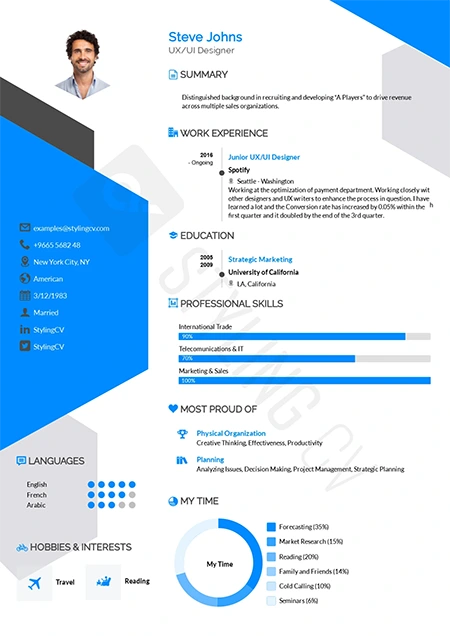
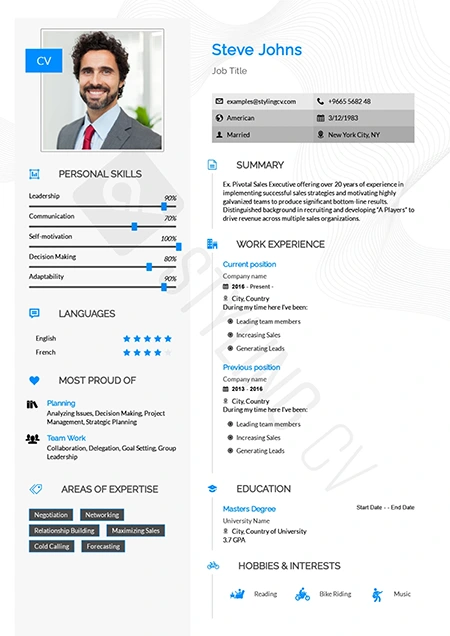
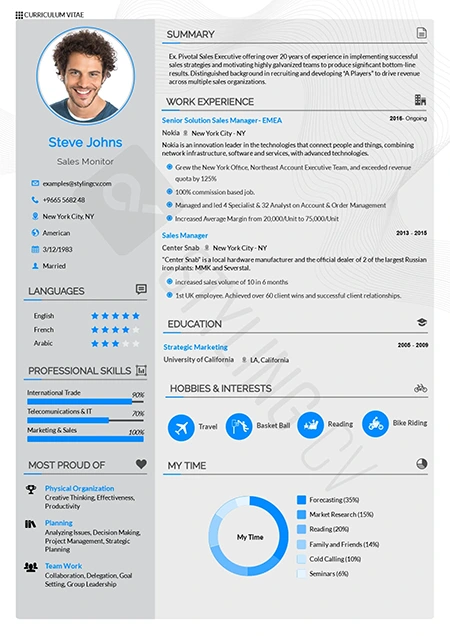
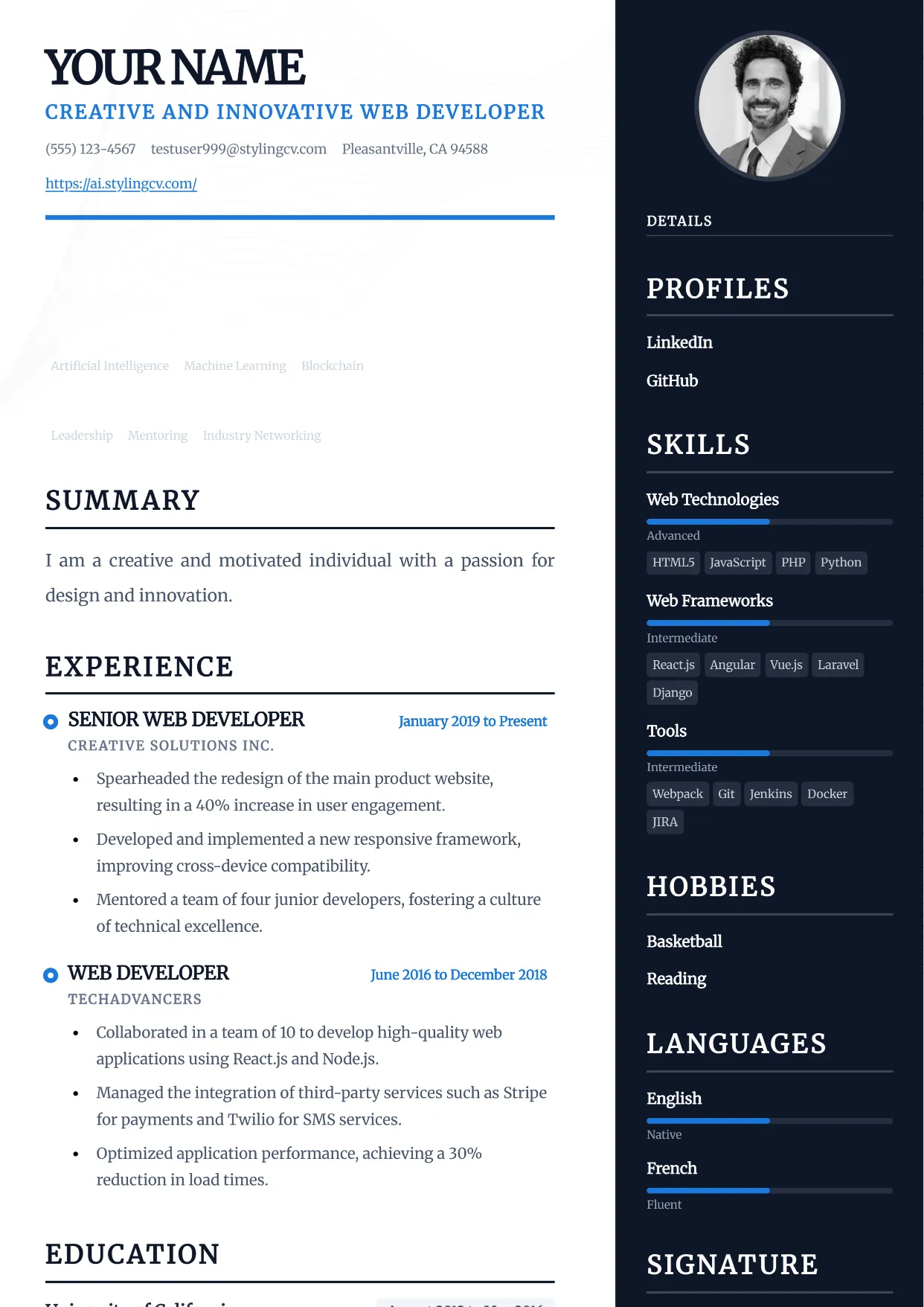
Use these swaps in your cover letter. Better yet, upload your old resume to StylingCV’s AI tool or pick from our professional resume templates and let it do the keyword matching for you.
Formatting Tips for Career Change Cover Letters in 2026
Format matters more than you think. Here’s what works right now:
- Keep it to 1 page. Recruiters don’t scroll. 300-400 words max.
- Use a professional but modern font. I’m partial to Inter or Lato at 11pt.
- Save as PDF. Your formatting stays intact. Word docs get mangled.
- Include a subject line. “Career Change Candidate: [Old Role] → [New Role]” helps recruiters categorize you instantly.
- Customize for every application. I know it’s tedious. But a generic career change cover letter reads like a generic career change cover letter. Spend 15 minutes per application tweaking the body paragraphs.
3 Mistakes That Kill Career Change Cover Letters
I’ll be straight with you — I’ve read hundreds of these. Here are the 3 most common mistakes:
- The Apology Opening. “I know I don’t have direct experience but…” — STOP. You’re framing yourself as a deficit before you start. Lead with confidence.
- The Resume Retread. Don’t copy-paste your resume into letter form. Your cover letter should add context, not repeat facts.
- The Desperation Close. “Please just give me a chance” screams unconfident. Try: “I’m excited about the possibility of bringing my [skill] to [Company Name].”
Honestly? The best career change cover letter I ever read started with: “I spent 10 years as a chef. I learned that under pressure, I don’t crack — I innovate. Here’s how that helps your logistics team.” That candidate got the job.
Use AI for Your Career Change Cover Letter?
Go for it. Seriously. But don’t copy-paste whatever ChatGPT spits out. That’s how you get a generic mess that reads like every other applicant.
Instead, use StylingCV’s dedicated cover letter builder — it’s built specifically for job seekers, with 300+ ATS-optimized templates, 11 AI agents that personalize based on your industry, and real-time keyword analysis against the job description.
Our data shows that candidates who use AI-optimized cover letters for career changes get 3x more interview callbacks than those who write from scratch. That’s not a flex — it’s just pattern matching done right.
Your Next Move
Look, career changes are scary. I won’t pretend they’re not. But your cover letter is the one tool you control completely — and with the right structure, you can turn your “lack of experience” into your biggest asset.
Pick one of the 5 templates above. Customize it for your situation. And for the love of good job applications, stop apologizing for who you used to be.
Your past didn’t waste your time. It was training for this.
Try StylingCV’s free cover letter builder and get your career change cover letter written in under 10 minutes.
For more help with your job search, check out our cover letter examples and cover letter builder and professional resume templates guides.