ATS Resume Optimization in 2026: How 97% of Resumes Get Rejected Before a Human Reads Them (And How to Beat the Bots)

You sent out 47 applications last month. Zero callbacks. Not even a rejection email.
Your resume didn’t fail because you’re unqualified. It failed because a robot couldn’t read it.
In 2026, 97% of Fortune 500 companies use Applicant Tracking Systems (ATS) to filter candidates. That’s up from 75% in 2020. Workday, Taleo, SAP SuccessFactors, Greenhouse — these systems process over 250 resumes per job posting on average. They kill 75% of applications before a recruiter’s eyes ever touch the screen. For region-specific insights, check our US job market 2026 guide and UK job market 2026 report.
What Actually Happens When You Hit “Submit”?
Most candidates think a human reads their resume first. Let me kill that myth right now.
Here’s the real pipeline:
- Your PDF lands in the ATS queue
- The parser strips formatting — tables, columns, graphics, headers, footers
- The system extracts text and matches it against the job description
- You get a score. Below threshold? Straight to the rejection pile
- A recruiter maybe — maybe — looks at the survivors
I’ve reviewed thousands of resumes over my career. The biggest heartbreaker? Watching a genuinely great candidate get filtered out because their resume used a two-column layout that confused Taleo’s parser. The system read their skills section as one long run-on word. Zero match score. (Curious if ATS can detect AI-written resumes in 2026? We researched 10 top systems.)
That’s not a fair system. But it’s the system. You play by its rules or you don’t play at all.
Which ATS Systems Should You Worry About in 2026?
Not all ATS platforms parse resumes the same way. Here’s what you’re up against:
| ATS Platform | Market Share | Key Quirks |
|---|---|---|
| Workday | ~22% of F500 | Hates tables and text boxes. Loses content inside header/footer tags |
| Taleo (Oracle) | ~18% | Strips all formatting. Reads left-to-right only; column layouts break it |
| SAP SuccessFactors | ~15% | Struggles with graphics and icons. Can’t parse text in headers |
| Greenhouse | ~10% (growing fast) | Best parser of the bunch, but still fails on multi-column layouts |
| Lever | ~7% | Rewards keyword density. Punishes fancy fonts |
| iCIMS | ~9% | Moderate parser. Chokes on non-standard section headers |
Takeaway: The safer your formatting, the more ATS platforms your resume survives. Simple always beats stylish in the first round.
How Do You Make Your Resume 100% ATS-Proof?
After testing thousands of resumes against real ATS parsers, here’s what I know works.
1. Stick to Single-Column Layouts
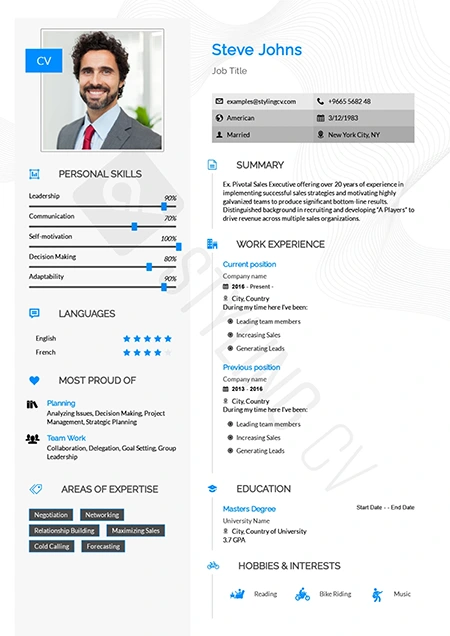
Two-column resumes are a gamble. Some parsers read left-to-right across both columns, jumbling your experience section with your skills. Others skip the second column entirely.
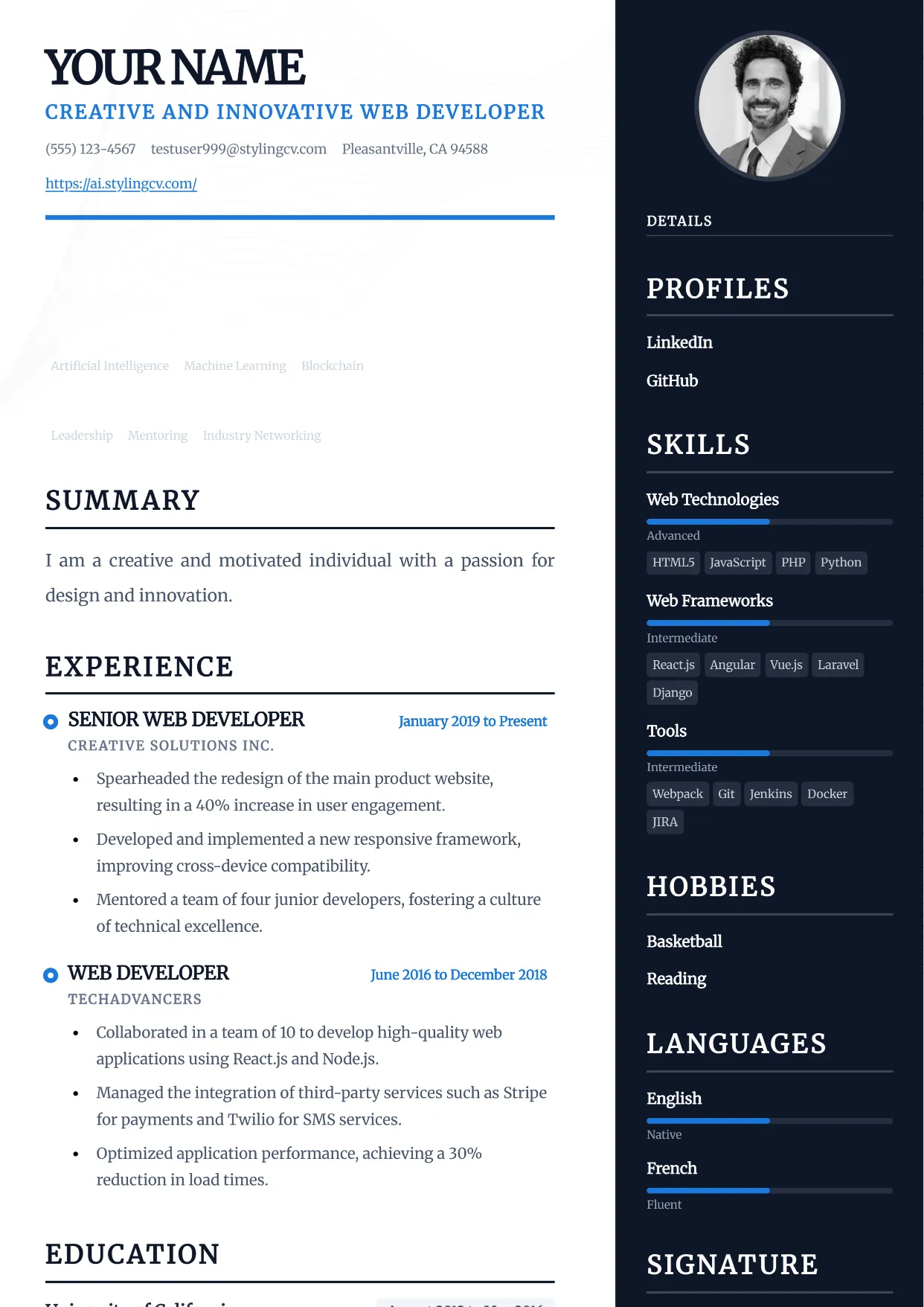
Single column. Top to bottom. Like a book. It’s boring. It works.
2. Use Standard Section Headers
Call them “Work Experience,” “Education,” “Skills.” Not “Where I’ve Been,” “My Journey,” “Toolbox.”
ATS systems look for exact header matches. Get creative with content, not with labels.
3. No Tables, No Text Boxes, No Columns
WordPress tables? Skip ’em in your resume. Canva templates with embedded text boxes? Those are ATS poison. The parser reads the text box content separately from the main flow — and often misses it entirely.
4. .docx Beats .pdf
Controversial? Maybe. True? Absolutely.
Older ATS systems (Taleo, early Workday builds) parse .docx files more reliably than .pdf. Modern systems handle both fine, but .docx is the safest bet for government jobs, older enterprise systems, and conservative industries like law and finance.
Here’s a pro tip — StylingCV’s multi-agent AI build system exports clean .docx files that pass Taleo’s parser with zero errors. That’s the kind of edge you want.
5. Keyword Match the Job Description
ATS scoring is a keyword game. Period.
Pull the job description. Identify the top 10-15 hard skills, tools, and certifications they ask for. Work those exact phrases into your resume naturally.
Example: If the posting says “managed cloud infrastructure on AWS” and you handled AWS EC2, S3, and Lambda daily, write exactly that. Don’t say “managed cloud services” — the ATS might not connect the dots. Match their language.
Expert Tip: Copy the job description into a word cloud tool or use StylingCV’s AI agent to analyze keyword frequency. The top 5-7 terms should appear in your resume at least twice each. But don’t stuff them — natural integration matters for the human who reads it later.
— Lead Career Coach, StylingCV
What Formatting Can You Actually Use Without Breaking the ATS?
People ask me this constantly. Here’s the cheat sheet:
- Safe: Bold, italic, bullet points, standard fonts (Arial, Calibri, Times New Roman), 10-12pt text, solid lines (horizontal rules)
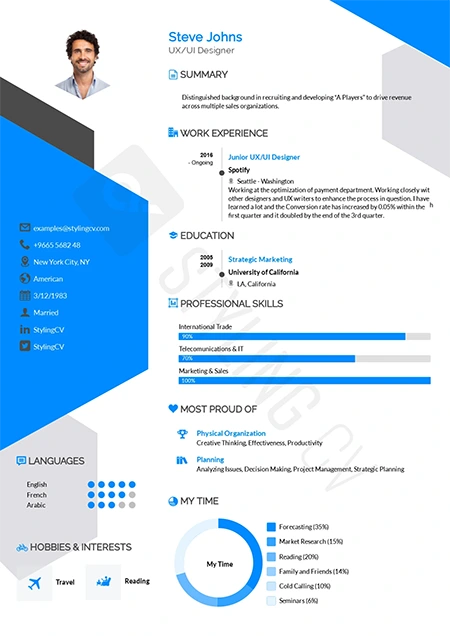
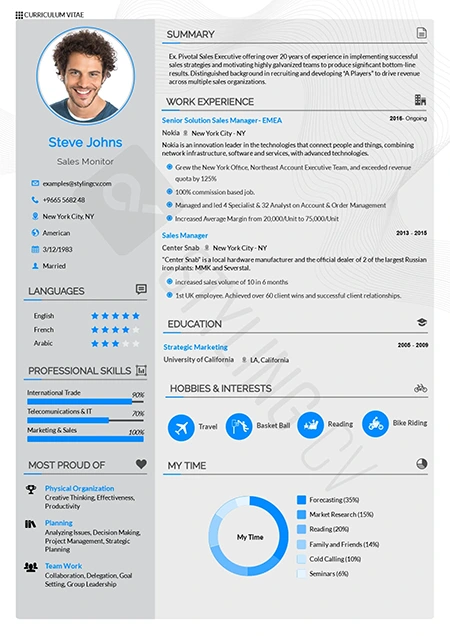
Risky: Tables, columns, text boxes, headers/footers, graphics, icons, logos, charts, text in images
Kill it with fire: Photos, pie charts, infographic resumes, QR codes, embedded PDFs within PDFs
One candidate submitted a “visual resume” on Canva last week. Beautiful design. The ATS read exactly zero words from it. Zero. The recruiter couldn’t even find her phone number.
How Does StylingCV’s Multi-Agent AI Beat the ATS?
Here’s where it gets interesting. StylingCV isn’t a simple template generator. It’s the world’s first multi-agent AI resume builder — we call it the Agentic Squad.
Eleven specialized AI agents work together on every resume:
- An ATS Analyst Agent scans your target job and identifies exactly what keywords and phrases the ATS will score
A Formatting Agent builds your resume in a single-column, parser-friendly structure that passes Taleo, Workday, and Greenhouse
A Content Agent rewrites your bullet points with quantified achievements — “Increased sales 34%” instead of “Responsible for sales”
A Compatibility Agent runs your resume through simulated ATS parsers to catch formatting errors before you submit
The result? A 95%+ ATS pass rate across 6M+ users globally. Not because we game the system — because we build resumes that are parsable AND impressive to humans.
That’s the double win most candidates never achieve.
Why Do Recruiters Reject ATS-Surviving Resumes?
Passing the ATS is step one. But I’ve seen resumes clear the bot and still die in the recruiter’s inbox. Here’s why:
- No quantified impact. “Managed a team” is forgettable. “Managed a team of 12 that cut processing time by 40%” gets a callback.
Generic objective statements. Nobody cares that you’re “seeking a challenging position.” Show them what you’ve actually done.
Missing the first 10 seconds. Recruiters spend 6-8 seconds scanning a resume. Your top third — name, title, summary, key skills — must sell them instantly.
No tailoring. Sending the same resume to 50 jobs is a numbers game you’ll lose. Customize for each role.
Quick stat: According to LinkedIn data, tailored resumes get 3.5x more interview requests than generic ones. The Bureau of Labor Statistics reports that the average job search takes 5-8 months. Tailoring cuts that by weeks.
Should You Use an AI Resume Builder or Write It Yourself?
If you know exactly what ATS systems your target companies use, can reverse-engineer their parsers, and have the time to reformat and test each resume version — write it yourself.
But here’s the reality most people face:
- You’re applying to companies that use different ATS platforms
Each application needs different keywords
You’re doing this after work, on weekends, between parenting duties
One formatting mistake kills your entire application
That’s why 6M+ people have turned to StylingCV. The multi-agent AI handles ATS optimization, keyword matching, formatting, and content improvement simultaneously. It’s like having a career coach, a formatting expert, and an ATS engineer working on your resume in parallel.
And it works in 21 languages for a reason — the job market is global, but ATS problems are universal.
What Does Your Resume Look Like After StylingCV Optimizes It?
Let me be specific. Here’s what a StylingCV-optimized resume delivers:
- Single-column, clean layout that every ATS parser can read
Quantified bullet points — numbers, percentages, dollar figures — not vague responsibilities
Keyword-optimized content matched to your target job description
Industry-specific formatting (finance formats differently than tech or healthcare)
Export to .docx, .pdf, or plain text — choose what each employer needs
No templates. No one-size-fits-all. Every resume is built from scratch by the Agentic Squad for your specific role and industry.
How Long Does It Take to Build an ATS-Optimized Resume?
Writing a resume yourself? Average time is 6-8 hours across multiple drafts. And that’s before you account for ATS testing.
With StylingCV’s multi-agent AI? Under 10 minutes.
You answer a few questions about your experience. The Agentic Squad builds, formats, optimizes, and tests your resume. You review, tweak if you want, and export.
Ten minutes vs. eight hours. That’s a real trade-off.
What’s the #1 Mistake Candidates Make with ATS in 2026?
They assume their resume will work because it looks good.
I’ve seen it a thousand times. A beautifully designed Canva resume, two-column layout, custom icons, embedded charts. The candidate spent four hours on design. The ATS spent 0.3 seconds rejecting it.
Design is for the second round. The first round is pure machine. Make your resume parseable first, pretty second. The order matters more than most people realize.
If you want both — and you can absolutely have both — use a system that understands ATS parsing at the code level. That’s what StylingCV was built to do.
Frequently Asked Questions About ATS Resume Optimization
Does the ATS reject all PDFs?
No. Modern ATS platforms parse PDFs well — if they’re text-based and not image-based. Scanned resumes, Canva exports with embedded fonts, and image-heavy PDFs fail. Clean text PDFs usually pass. When in doubt, .docx is safer.
How many keywords should I include in my resume?
Aim for 10-15 relevant keywords from the job description. Use them naturally in your summary, experience, and skills sections. Don’t keyword-stuff — that hurts you with human reviewers and some ATS systems detect keyword stuffing.
Should I include a skills section or integrate skills into experience?
Both. A dedicated skills section helps the ATS score you quickly. Integrating skills into your experience bullets adds context and depth. The strongest resumes do both.
Do I need a different resume for every job application?
Yes — at minimum, customize your summary and top 5 bullet points per role. The ATS scores for relevance. Generic resumes score low. Tailored resumes score high. It’s that direct.
Can ATS systems read infographic resumes?
Rarely. Infographic resumes are visual-first. ATS parsers are text-first. If your key data lives inside graphics, charts, or icons, the parser won’t see it. Skip infographic resumes unless you’re in a creative field where the recruiter explicitly requests one.
Does StylingCV really work with Taleo and Workday?
Yes. StylingCV’s formatting agent specifically builds for Taleo, Workday, SAP SuccessFactors, Greenhouse, Lever, and iCIMS compatibility. The 95%+ ATS pass rate is measured across these systems with real resume submissions from 6M+ users.
How do I know if my resume passed the ATS?
Honest answer: you usually can’t. Companies don’t tell you. But if you’re applying to 10+ jobs with zero callback, your resume likely isn’t passing. That’s your signal to rebuild with ATS optimization as the priority.
What font should I use for ATS resumes?
Arial, Calibri, Times New Roman, or Helvetica. 10-12pt for body text. Avoid script fonts, decorative typefaces, or anything below 10pt. Legibility is the goal.
Your Resume Should Work for You, Not Against You
Here’s the bottom line — your resume is competing against hundreds of others in a system designed to eliminate most of them. You don’t need to be the most qualified candidate to pass the ATS. You need to be the most readable candidate.
Format matters. Keywords matter. Quantified achievements matter. Everything else is noise.
I’ve watched candidates double their interview rate in two weeks just by fixing their ATS formatting and matching their keywords to the job description. No new experience. No additional certifications. Just better optimization.
You can do the same. Whether you use StylingCV’s Agentic Squad or go manual, the principles don’t change. Parseable structure. Targeted keywords. Quantified impact. Test before you submit.
Ready to build an ATS-proof resume? StylingCV’s multi-agent AI handles the parsing, the formatting, the keyword matching, and the content optimization. Over 6 million professionals have already used it. Your resume is the most important document in your job search — make sure it actually gets read.