How to Make a Resume in the Philippines: Complete 2026 Guide with Templates
How to Make a Resume in the Philippines: Complete 2026 Guide with Templates
Looking for a job in the Philippines in 2026? Whether you’re a fresh graduate applying through JobStreet, a seasoned professional updating your LinkedIn PH profile, or an OFW preparing a resume for overseas employment, knowing how to make a resume in the Philippines that meets local and international standards is essential. The Philippine job market in 2026 is competitive—with BPO, IT, healthcare, and construction sectors driving demand—and your resume is your ticket to landing that first interview.
This guide covers everything you need: the standard Philippine resume format, platform-specific tips for JobStreet PH, Indeed PH, LinkedIn PH, and Kalibrr, a step-by-step walkthrough, PDS (Personal Data Sheet) guidance for government applicants, specialized OFW resume advice, and free downloadable templates.
The Standard Philippine Resume Format in 2026
The Philippine resume format has evolved. While the traditional chronological resume remains the most widely accepted, 2026 employers increasingly prefer a clean, skills-forward layout that balances international best practices with local conventions. Here’s what the standard Philippine resume looks like:
| Section | Details | Required? |
|---|---|---|
| Header | Full name, job title, contact info | ✅ Required |
| Professional Summary | 2–3 sentences summarizing experience and goals | ✅ Required |
| Work Experience | Reverse chronological, company, role, dates, achievements | ✅ Required |
| Education | Highest degree first, school, year graduated | ✅ Required |
| Skills | Hard skills + soft skills relevant to the role | ✅ Required |
| Personal Information | Age, civil status, nationality, birthplace (declining in use) | ⚠️ Optional in 2026 |
| Photo | 2×2 or passport-size, professional | ⚠️ Optional (job-dependent) |
| Character References | “Available upon request” or 2–3 named references | ⚠️ Optional |
| Seminars/Certifications | Relevant training, TESDA certs, online courses | 👍 Recommended |
Photo or No Photo? The 2026 Answer
Historically, Philippine resumes almost always included a 2×2 or passport-size photo. In 2026, this practice is declining—especially for multinational companies and remote positions that follow international anti-bias hiring standards. However, for local SMEs, retail, hospitality, and customer-facing roles, a professional photo is still expected and can be an advantage.
Rule of thumb: If applying to a multinational or foreign-owned company, skip the photo. For local Filipino companies, include a professional 2×2 photo with a white background and business attire.
Personal Information: Less Is More in 2026
The old Filipino resume tradition of listing age, height, weight, religion, and father’s name is fading fast. In 2026, follow this guidance:
- Include: Full name, phone number (with +63 country code), professional email, city/province
- Optional: LinkedIn profile URL, portfolio link, GitHub (for tech roles)
- Avoid: Religion, SSS/PhilHealth/TIN numbers (identity theft risk), parents’ names, height/weight (unless modeling/fitness role)
Step-by-Step Guide: How to Make a Resume in the Philippines
Step 1: Choose the Right Resume Type
Philippine employers primarily expect one of three resume formats:
- Reverse Chronological (Recommended for 80% of applicants): Lists work experience from most recent to oldest. Best for candidates with a consistent career progression in the same industry
- Functional/Skills-Based: Emphasizes skills and competencies over work history. Best for career shifters, freelancers, and those with employment gaps
- Combination (Hybrid): Blends chronological work history with a strong skills section. Best for mid-career professionals with diverse experience
For a detailed comparison of each format, see our guide to choosing the best resume format for 2026.
Step 2: Write a Strong Professional Summary
Your professional summary sits at the top and determines whether the recruiter reads further. In the Philippine context, it should be direct and achievement-oriented. For more examples and templates, see our complete guide to writing a resume summary:
Example: “Detail-oriented Accountant with 5+ years of experience in Philippine taxation (BIR), financial reporting, and bookkeeping using QuickBooks and Xero. CPA licensed with a track record of reducing tax liabilities by an average of 15% for SME clients in Metro Manila.”
Step 3: Detail Your Work Experience with Results
Philippine recruiters look for concrete results, not just responsibilities. For each role, use this structure:
- Job Title | Company Name | Location (e.g., Makati City, Cebu City, Davao City)
- Dates employed (MM/YYYY – MM/YYYY or “Present”)
- 3–5 bullet points starting with action verbs and including measurable results
Weak bullet: “Responsible for handling customer service inquiries.”
Strong bullet: “Resolved 200+ customer inquiries weekly via phone, email, and chat, maintaining a 96% CSAT score for an Australian telecommunications account.”
Step 4: List Education and Certifications
In the Philippines, educational background carries significant weight. List:
- Tertiary: Degree, university (e.g., University of the Philippines, Ateneo de Manila, De La Salle, University of Santo Tomas), year graduated
- Licensure: PRC license number and validity (for nurses, engineers, teachers, CPAs, architects)
- Certifications: TESDA National Certificates (NC II, NC III), Six Sigma, PMP, AWS, Google certifications
Note for fresh graduates: If you graduated with Latin honors (cum laude, magna cum laude, summa cum laude), display this prominently. Philippine employers value academic distinction highly.
Step 5: Tailor Skills to the Philippine Job Market
Different industries in the Philippines value different skills. Here’s what to highlight:
| Industry | Top Skills to List in 2026 |
|---|---|
| BPO/Call Center | English proficiency (neutral accent), CRM tools (Salesforce, Zendesk), multitasking, customer empathy, Australian/US/UK cultural awareness |
| IT/Software Development | Programming languages (Java, Python, JavaScript), cloud platforms (AWS, Azure), Agile/Scrum, DevOps, cybersecurity fundamentals |
| Healthcare/Nursing | PRC license, BLS/ACLS certification, bedside care, EHR systems, NCLEX passer (for US-bound roles) |
| Accounting/Finance | BIR compliance, Philippine tax law, QuickBooks/Xero, financial statement preparation, CPA designation |
| Engineering/Construction | PRC license, AutoCAD, project management, BOQ preparation, safety certifications (COSH, BOSH) |
| Education | LET passer, PRC license, LMS platforms (Google Classroom, Canvas), curriculum development, TESDA methodology |
Platform-Specific Resume Tips for Philippine Job Seekers
Each job platform in the Philippines has unique formatting requirements and recruiter expectations. Here’s how to optimize your resume for each:
JobStreet Philippines Resume Tips
JobStreet remains the #1 job portal in the Philippines with the largest employer database. For 2026:
- Use JobStreet’s resume builder: Their platform uses a parser that extracts your data. Upload a clean, text-based resume (no heavy graphics) for better parsing accuracy
- Complete your JobStreet profile 100%: Profiles with a completeness score of 90%+ appear higher in recruiter searches
- Salary expectations: The 2026 JobStreet platform asks for expected salary. Research the market rate for your role + experience level before filling this in
- Key skills: JobStreet suggests skills based on your target role. Select all that genuinely apply—this affects search visibility
- Mobile-ready resume: Over 70% of JobStreet PH users browse on mobile. Ensure your resume renders well on a phone screen
Indeed Philippines Resume Tips
Indeed PH is strong for BPO, service, and blue-collar roles. Key tips for 2026:
- Indeed Resume format: Indeed provides a free resume builder. Use it—recruiters on Indeed are accustomed to the standardized format and can quickly scan it
- Searchable headline: Your headline is what appears in search results. Make it descriptive: “Customer Service Representative | 4 Years BPO Experience | Australian Account”
- Work authorization: Specify if you’re a Filipino citizen or hold a valid work visa. Indeed PH includes international listings—clarity prevents mismatches
- Assessment scores: Complete Indeed Skills Tests (English proficiency, typing, software skills). High scores are displayed as badges and attract employer attention
LinkedIn Philippines Profile & Resume Tips
LinkedIn PH is the go-to platform for corporate, tech, and multinational roles in the Philippines. Your LinkedIn profile is a form of resume—treat it as such:
- Profile photo: A professional headshot with a neutral background. LinkedIn profiles with photos receive 21× more profile views and 9× more connection requests
- Headline optimization: Don’t just list your job title. Include keywords: “Digital Marketing Manager | SEO, Content Strategy & Paid Ads | 7+ Years in PH E-Commerce”
- Featured section: Upload your formal resume PDF here. Many Philippines-based recruiters download resumes directly from LinkedIn’s Featured section
- Skills endorsements: List at least 20 relevant skills. Endorsements from former colleagues or managers in the Philippine industry add credibility
- Recommendations: Request LinkedIn recommendations from previous supervisors. A recommendation from a known Philippine industry professional carries significant weight
- Open to Work: Use the #OpenToWork frame carefully—it’s visible to recruiters but may signal desperation to some employers
Kalibrr Resume Tips
Kalibrr is a fast-growing Philippine job platform popular with startups, tech companies, and progressive employers:
- Skills-first approach: Kalibrr emphasizes skills over traditional qualifications. Prioritize your skills section and use their skill-assessment features
- Video introduction: Kalibrr supports a short video intro. A 30-second professional introduction in English can differentiate you from hundreds of text-only applicants
- Company research: Kalibrr displays company culture information. Reference the company’s values in your cover letter or summary to show alignment
PDS (Personal Data Sheet): The Philippine Government Resume
If you’re applying for any position in the Philippine government—whether national agencies, LGUs, GOCCs, or public schools—you need a Personal Data Sheet (PDS), not a standard resume. The Civil Service Commission (CSC) mandates the CS Form No. 212 (Revised 2017) format, which remains the standard in 2026.
What’s on the PDS?
The PDS is a 4-page government-prescribed form that covers:
- Page 1: Personal information (name, birth, civil status, citizenship, contact details, government IDs)
- Page 2: Family background (spouse, children, parents), educational background (elementary through graduate studies)
- Page 3: Civil service eligibility (Career Service Professional/Subprofessional, RA 1080, Bar/Board eligibility), work experience, voluntary work
- Page 4: Learning & development interventions, other information (skills, hobbies, non-academic distinctions), and the mandatory notarized oath
PDS Tips for 2026 Government Applicants
- Download from CSC website: Always get the latest CS Form No. 212 from the official Civil Service Commission website. Using outdated forms leads to disqualification
- Handwritten or computerized: CSC allows both, but computerized (typed) is now the standard. If handwriting, use black ink and write legibly in ALL CAPS
- Notarization: The oath at the end of the PDS must be notarized. Find a notary public (available at most city halls and law offices for a minimal fee)
- Work Experience Sheet: If your PDS work experience section overflows, attach a separate Work Experience Sheet using the prescribed CSC format
- Passport-size photos: Attach 3 recent passport-size photos (4.5 cm × 3.5 cm) with your name printed on the back
- Honesty is critical: The PDS is a sworn document. Falsification is grounds for administrative and criminal liability under Philippine law
OFW Resume Guide: How to Make a Resume for Overseas Jobs
Overseas Filipino Workers (OFWs) need resumes that meet international standards while showcasing the credentials valued by foreign employers. As of 2026, the top OFW destinations remain Saudi Arabia, UAE, Qatar, Singapore, Hong Kong, Japan, Canada, Australia, and the United Kingdom—each with distinct resume expectations.
OFW Resume Best Practices for 2026
- Passport details: Include passport number and expiry date. Overseas employers and agencies require this upfront
- Visa status: If you have an existing work visa for the target country or have previously worked abroad, mention it prominently
- POEA/DMW registration: For agency-assisted deployments, mention your e-Registration or DMW (Department of Migrant Workers) status
- Employment certificates from abroad: Always attach Certificates of Employment (COEs) from previous overseas employers. These are more valuable than local references
- Language skills: Highlight any foreign language proficiency beyond English (Arabic, Japanese, Mandarin, German)—this can significantly increase your market value
- Country-specific formatting: Saudi/UAE employers prefer chronological resumes with photo; European employers prefer CVs without photo or personal details
- OEC awareness: Mention your Overseas Employment Certificate (OEC) or exemption status—this signals deployment readiness
Country-Specific OFW Resume Tips
| Destination | Resume Format | Key Points |
|---|---|---|
| Middle East (KSA, UAE, Qatar) | Detailed CV, 2–3 pages | Include photo, passport details, nationality. Emphasize years of experience and similar Gulf experience if any |
| Singapore & Hong Kong | Concise, 1–2 pages | Skills-focused. Include FDW (Foreign Domestic Worker) certificate for household roles. English proficiency is key |
| Japan | Japanese rirekisho + English CV | Submit both formats. Include visa status. Technical trainees (TITP/SSW) should include training certificates |
| Canada & Australia | 2-page maximum, no photo | Adapt to local format. Mention Express Entry CRS score (if applicable) or visa subclass. Remove age, marital status, religion |
| Europe (UK, Germany, etc.) | Europass CV or local format | No photo. Europass format preferred. Include language proficiency levels (A1–C2) |
Free Philippine Resume Templates for 2026
The right template makes resume creation faster and more professional. Here are your options:
Template Options for Filipino Job Seekers
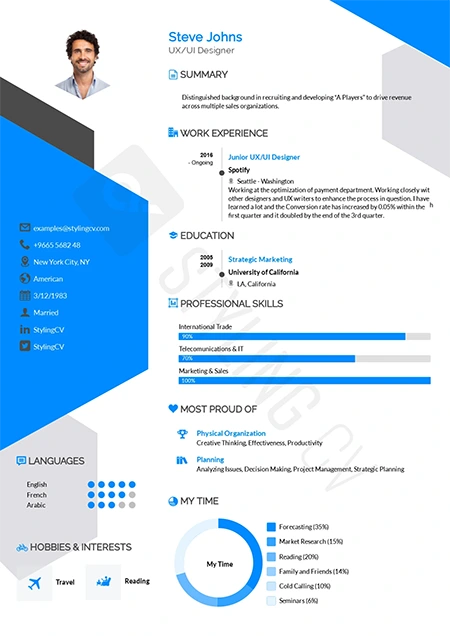
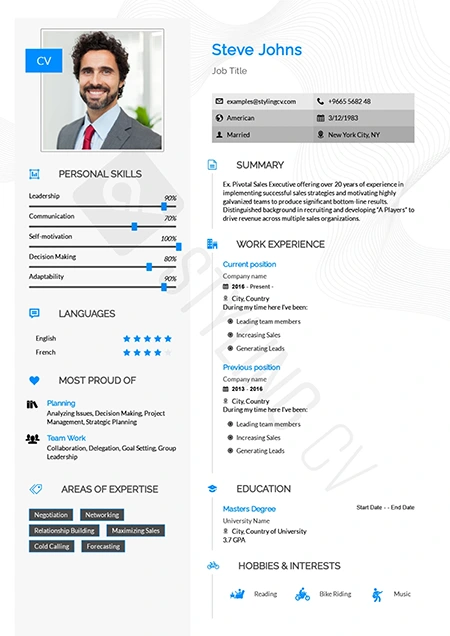
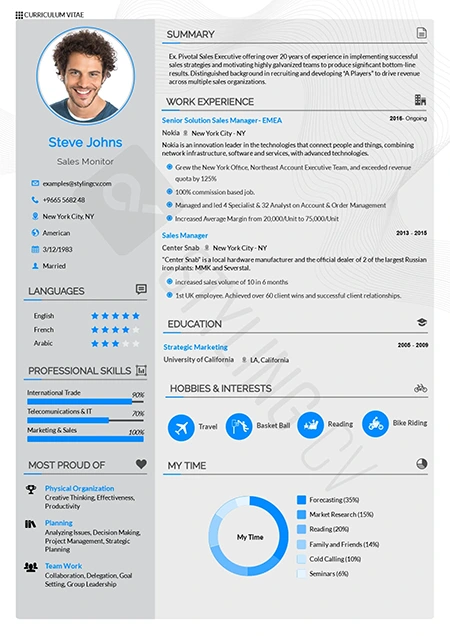
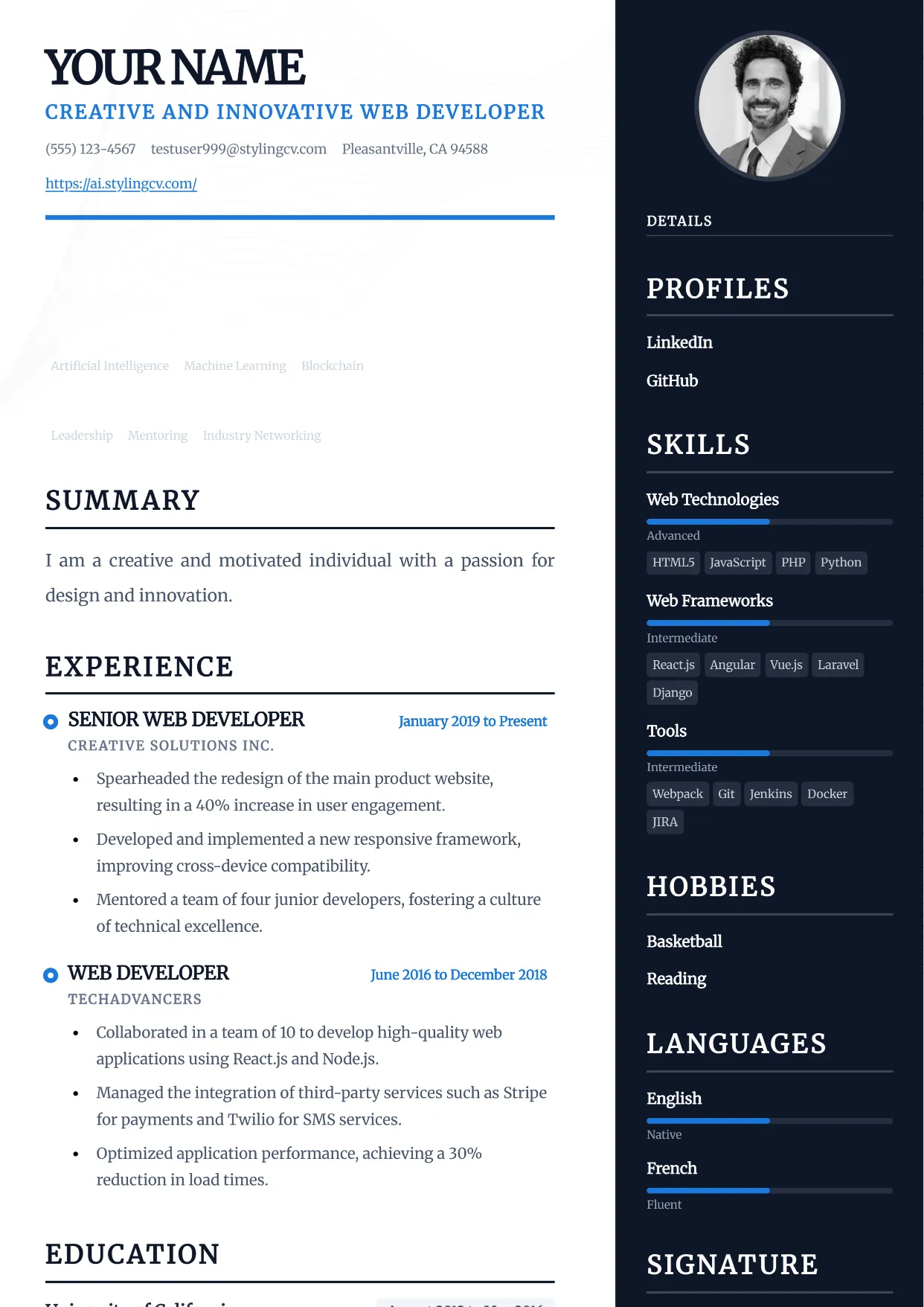
- StylingCV Professional Templates: ATS-friendly, customizable resume templates that work for Philippine employers and international companies alike. Choose from clean, modern designs that highlight your skills and experience without the formatting headaches of manual Word documents. Browse templates here
- Microsoft Word: Built-in resume templates accessible from File → New → Resume. Basic but functional. Avoid the overly designed templates with graphics and columns—they confuse applicant tracking systems
- Google Docs: Free resume templates in the Template Gallery. Ideal for collaborative editing and easy sharing via Google Drive link
- Canva: Visually appealing designs for creative roles (graphic design, marketing, media). Export as PDF. Note: Canva resumes don’t always parse well in ATS systems—use for roles where design matters more than searchability
Common Resume Mistakes to Avoid in the Philippines
After reviewing thousands of Philippine resumes, here are the most frequent errors—and how to avoid them:
- Including too much personal information: Your SSS number, TIN, PhilHealth number, and Pag-IBIG MID number have zero business being on a private-sector resume. They expose you to identity theft and recruiters don’t need them at the application stage
- Using an unprofessional email address: “cutegirl_143@yahoo.com” or “astig_boy69@gmail.com” will get your resume skipped. Create a professional email: firstname.lastname@gmail.com
- Listing every seminar attended: A one-day seminar on “Basic Leadership” from 2018 doesn’t belong on your resume. Include only certifications and training that are accredited (TESDA, PRC CPD) or directly relevant to the role
- Generic objectives: “To obtain a challenging position in a reputable company where I can utilize my skills and grow professionally”—every recruiter has read this 10,000 times. Replace with a specific, tailored professional summary
- Misspelling company names: “Accenture” not “Accentur.” “Shopee” not “Shoppee.” “Converge” not “Converge ICT” (the company rebranded). Attention to detail matters
- Lying about employment dates: Background checks in the Philippines are thorough. Companies verify employment through SSS contributions, BIR Form 2316, and direct reference checks. Gaps can be explained; lies cannot
- Using a template that doesn’t parse: Beautiful Canva resumes with text boxes and layers often become unreadable when uploaded to JobStreet or Indeed. Test your resume by copying all text and pasting into Notepad—if it’s jumbled, the ATS can’t read it either
- Forgetting to update LinkedIn: Recruiters will cross-reference your resume with your LinkedIn profile. Inconsistencies raise red flags
Frequently Asked Questions About Philippine Resumes
How many pages should a Philippine resume be in 2026?
For private-sector jobs: 1–2 pages maximum. Fresh graduates should aim for 1 page. Professionals with 10+ years of experience may extend to 2 pages. For government positions, the PDS (CS Form No. 212) is a standardized 4-page form—follow it exactly. For OFW applications to the Middle East, 2–3 pages is acceptable. The key principle: include what’s relevant, cut what isn’t. For more guidance, read our one page vs two page resume guide.
Should I include my photo on my Philippine resume?
It depends on the employer. For local Filipino companies—especially in retail, hospitality, sales, and administrative roles—a professional 2×2 photo is still common and often expected. For multinational corporations, BPO companies with foreign clients, and remote/online jobs, skip the photo to align with international anti-bias hiring standards. When in doubt, check the company’s culture: if they’re a global brand, omit the photo; if they’re a local Filipino SME, include it.
What’s the difference between a resume, a CV, and a biodata in the Philippines?
In the Philippine context, these terms are often used interchangeably but have distinct meanings: A resume is a 1–2 page summary tailored for a specific job application (standard for private-sector jobs). A CV (Curriculum Vitae) is a comprehensive, multi-page document detailing your entire academic and professional history—used mainly for academic, research, and medical positions. A biodata is an older format focusing on personal details (age, parents, religion, height)—rarely used today except for certain government and domestic helper applications. For most job seekers in 2026, a resume is the correct document.
How do I apply for government jobs in the Philippines?
Philippine government job applications follow a specific process: (1) Check vacancies on the CSC Job Portal (csc.gov.ph/career) or the specific agency’s website. (2) Prepare your PDS (CS Form No. 212, Revised 2017), notarized. (3) Gather supporting documents: Transcript of Records, PRC license (if applicable), Civil Service eligibility certificate, NBI clearance, and authenticated birth certificate. (4) Submit your application in person or via the agency’s online portal within the posting period. (5) Track your application status through the CSC portal. The entire process is governed by Republic Act 7041 and CSC Omnibus Rules.
What resume format do BPO companies in the Philippines prefer?
BPO companies in the Philippines—including Concentrix, Teleperformance, Accenture, Alorica, and TaskUs—prefer a clean, text-based chronological resume that emphasizes communication skills, customer service experience, and technical proficiencies. Key elements to include: English proficiency level (mention if you have neutral or American accent training), specific CRM/tool experience (Salesforce, Zendesk, Avaya, Cisco), shift flexibility (willingness to work night/GY shifts), and any Australian, UK, or US cultural training. BPO recruiters scan resumes in under 30 seconds—make your communication skills and relevant tools visible immediately. Fresh graduates: highlight any BPO-specific training from TESDA or your university’s career center.
Create Your Philippine Resume with StylingCV
Building a resume that works for the Philippine job market doesn’t have to be complicated. StylingCV provides professional, ATS-optimized resume templates designed for Filipino job seekers—whether you’re applying on JobStreet, Indeed, LinkedIn, preparing a PDS for a government role, or building an OFW resume for overseas deployment.
Our templates are clean, modern, and parse perfectly across all major Philippine job platforms. Customize your resume in minutes, choose from dozens of industry-specific designs, and download a recruiter-ready PDF. Browse our Philippine-friendly resume templates and take the first step toward your next career move—here in the Philippines or anywhere in the world.