Graphic Designer Cover Letter 2026: 3 Templates That Get Creative Interviews (Proven)
83% of creative hiring managers reject designers over bad cover letters. Get 3 proven 2026 templates that land graphic design interviews. Free download.

Last updated: July 2026 | By Yasser Al-Khateeb, Career Content Lead at StylingCV
Here’s a number that caught me off guard: 83% of hiring managers in creative fields say they’ve rejected a graphic designer candidate based on a bad cover letter alone — even when the portfolio was strong. Your portfolio gets you in the door, sure. But your cover letter? That’s what makes someone actually want to open it.
A graphic designer cover letter isn’t just a formality. It’s your first design project for the employer. If it looks like every other generic letter flooding their inbox, you’ve already lost. This guide gives you 3 field-tested templates and the strategy behind why they work — so your letter stands out instead of getting skimmed and deleted.
Quick answer: A strong graphic designer cover letter opens with a specific achievement (not “I’m passionate about design”), connects your design skills directly to the company’s brand or challenges, and includes a portfolio link within the first paragraph. Keep it under 400 words, match the visual tone of your resume, and always customize for each role.
Why Do Graphic Designers Need a Cover Letter in 2026?
Short answer: because everyone else stopped writing them. A Reddit thread from r/graphic_design with hundreds of upvotes had designers admitting they “just stopped attaching cover letters.” That’s your edge. When 60% of applicants skip the letter entirely, a sharp, well-crafted one immediately puts you in the top tier.
Creative directors I’ve spoken with consistently say the same thing — they want to see how you think, not just how you design. Your portfolio shows what you made. Your cover letter shows why you made it and whether you understand their brand.
“When I see a cover letter that references our recent rebrand or mentions a specific campaign we ran, that candidate jumps to the top of my pile. It tells me they did their homework — and that’s the kind of designer I want on my team.”
— Creative Director, mid-size branding agency (shared via StylingCV interview, 2026)
What Makes a Graphic Designer Cover Letter Different?
Unlike a standard corporate cover letter, a graphic designer’s letter carries extra weight because presentation is part of the job. A sloppy format, mismatched fonts, or a wall of text signals you don’t take layout seriously. Here’s what separates the winners:
| Element | Generic Cover Letter | Graphic Designer Cover Letter |
|---|---|---|
| Opening | “I am writing to apply for…” | Specific achievement tied to their needs |
| Visual design | Plain text, default font | Matches your resume’s typography and color palette |
| Portfolio link | Buried at the bottom | First or second paragraph, clickable |
| Skills mentioned | Generic list (Photoshop, Illustrator) | Skills tied to outcomes (“increased engagement 40%”) |
| Company research | None or vague | References their recent work, brand voice, or campaigns |
| Length | 500+ words | Under 400 words — punchy, scannable |
3 Graphic Designer Cover Letter Templates for 2026
Each template targets a different career stage. Customize the bracketed sections, match the tone to the company, and make it yours. All three are optimized for ATS systems (yes, even creative agencies use them now) and designed to pair with StylingCV’s resume templates.
Template 1: Entry-Level / Junior Graphic Designer
[Your Name]
[City, State] . [Email] . [Portfolio URL]
[Date]
[Hiring Manager’s Name]
[Company Name]
Dear [Name],
The [Company Name] team’s recent [specific project/campaign — e.g., “brand refresh for XYZ”] stopped me mid-scroll. The way you balanced bold typography with clean whitespace? That’s exactly the kind of work I want to contribute to.
I graduated from [University] with a [degree] in [Graphic Design/Visual Communication], and I’ve spent the last [timeframe] building a portfolio centered on [specialty — e.g., brand identity, digital illustration, UI design]. During my internship at [Company], I designed [specific deliverable] that [measurable result — e.g., “grew Instagram engagement by 27% in two months”].
Here’s what I’d bring to your team:
- Proficiency in Adobe Creative Suite, Figma, and [other tools relevant to the role]
- A collaborative approach — I thrive in brainstorm sessions and actually enjoy feedback rounds
- Fresh perspective informed by current design trends (I’ve been exploring [specific trend — e.g., “3D typography” or “AI-assisted design workflows”])
My portfolio is live at [URL] — I’d love for you to take a look. I’m available for a conversation anytime and excited about the possibility of joining [Company Name].
Best,
[Your Name]
Template 2: Mid-Level Graphic Designer (3-7 Years)
[Your Name]
[City, State] . [Email] . [Portfolio URL]
Dear [Hiring Manager’s Name],
Over the past [X] years, I’ve designed for brands ranging from early-stage startups to [notable client/industry], and the common thread has always been the same: design that drives results, not just aesthetics.
At [Current/Previous Company], I led the redesign of [specific project] — a project that [measurable outcome, e.g., “increased conversion rates by 34%” or “reduced bounce rate by 19%”]. I managed the creative direction from concept through final production, coordinating with [teams — marketing, developers, copywriters] to deliver on time and under budget.
I’m drawn to [Company Name] because [specific reason — reference a recent campaign, their design philosophy, a product you admire]. My background in [relevant specialty] aligns well with what you’re building, and I’d love to bring that experience to your team.
A few highlights from my recent work:
- Designed [X+] brand identity systems, including [notable example]
- Managed design workflows across [tools — Figma, Asana, etc.] for teams of [X] people
- Mentored [X] junior designers, improving team output quality and turnaround speed
Portfolio: [URL]. I’d welcome a call to discuss how I can contribute to [Company Name]’s upcoming projects.
Best,
[Your Name]
Template 3: Senior Graphic Designer / Art Director
[Your Name]
[City, State] . [Email] . [Portfolio URL]
Dear [Hiring Manager’s Name],
In [X] years of creative leadership, I’ve learned that great design isn’t about personal style — it’s about solving business problems visually. At [Previous Company], I directed a team of [X] designers and delivered [specific high-impact project] that [result — e.g., “generated $2.4M in attributed revenue” or “won a [specific award]”].
I’m reaching out because [Company Name]’s work on [specific project/campaign] resonates with my design philosophy: [your philosophy in one sentence]. I see a strong fit between my experience in [specialty] and the direction your creative team is heading.
What I’d bring to [Company Name]:
- Creative direction across multi-channel campaigns (print, digital, social, environmental)
- Proven ability to build and scale design teams — hired and mentored [X] designers at [Previous Company]
- Deep expertise in [tools/specialties], with a track record of [measurable achievements]
- Client-facing experience presenting concepts to C-suite stakeholders
I’d appreciate the opportunity to walk you through my portfolio at [URL] and discuss how my approach to design leadership could support [Company Name]’s goals.
Best regards,
[Your Name]
How to Write a Graphic Designer Cover Letter (Step-by-Step Framework)
If you’d rather build your own from scratch instead of using a template, here’s the 6-step framework I recommend. It’s the same structure behind all three templates above.
Step 1: Research the Company (5 Minutes, Max)
Before you type a single word, look at their website, recent social media posts, and any press coverage. You’re looking for one specific thing to reference — a campaign, a rebrand, a product launch. This alone puts you ahead of 90% of applicants.
Step 2: Open With a Hook, Not a Greeting
“I am writing to express my interest in…” — please don’t. Start with something that shows you’re paying attention:
- A reaction to their recent work (“Your rebrand for [Client] was the first thing I showed my design team last week.”)
- A result you’re proud of (“Last quarter, a packaging redesign I led drove a 40% sales lift for a CPG brand.”)
- A direct connection (“I’ve been following [Company] since your 2026 collaboration with [brand] — it changed how I think about editorial design.”)
Step 3: Connect Your Skills to Their Needs
Don’t list tools. Anyone can say they know Figma. Instead, pair each skill with an outcome:
| Weak (Tool Listing) | Strong (Outcome-Driven) |
|---|---|
| “Proficient in Adobe Illustrator” | “Used Illustrator to create a 12-piece icon system that cut our dev team’s implementation time by 30%” |
| “Experience with Figma” | “Built and maintained a Figma component library used by 4 product teams across 3 sprints” |
| “Skilled in typography” | “Selected and implemented a type system that improved mobile readability scores by 22%” |
Step 4: Show You Understand Design Thinking
Hiring managers want designers who think beyond pixels. Mention how you approach problems: Do you start with user research? Do you A/B test design variations? Do you collaborate with copywriters before starting layout? This signals maturity.
Step 5: Include Your Portfolio Link — Prominently
Put it in the first or second paragraph. Make it bold. Make it clickable. If you’re sending a PDF, ensure the link is live. I’ve seen designers lose interviews because the hiring manager couldn’t easily find their portfolio URL.
Step 6: Close With Confidence, Not Desperation
“I hope to hear from you at your earliest convenience” sounds like you’re begging. Try instead: “I’d love to walk you through my process on [specific project] — let me know when works for a call.” Direct. Professional. Confident.
Graphic Designer Cover Letter: common mistakes to Avoid
I’ve reviewed hundreds of cover letters through StylingCV’s platform (6M+ users will do that). Here are the mistakes I see creative professionals make over and over:
- Using a generic template without customizing it. Hiring managers can spot a copy-paste job instantly. If your letter could apply to any company, it applies to none of them.
- Talking about yourself instead of the company. Flip the ratio. 30% about you, 70% about how you’ll help them.
- Forgetting to mention the portfolio. Sounds obvious, but roughly 1 in 5 designer cover letters I’ve seen don’t include a portfolio link. That’s an instant rejection.
- Writing too much. One page. Under 400 words. Creative directors are busy people — respect their time.
- Ignoring ATS optimization. Even creative agencies use applicant tracking systems now. Use the exact job title from the posting, include relevant keywords naturally, and avoid fancy formatting that ATS can’t parse (for the resume — the cover letter can be more visual).
- Not proofreading. A typo in a graphic designer’s cover letter hits different than in an accountant’s. Attention to detail is literally your job.
Should Graphic Designers Use a Visual Cover Letter?
It depends on where you’re applying. Here’s my honest take:
Ready to Build Your Resume?
StylingCV’s AI analyzes job descriptions, optimizes keywords, and formats your resume for ATS — all in minutes.
No credit card required · ATS-optimized · Used by 500K+ job seekers
| Company Type | Visual Cover Letter? | Why |
|---|---|---|
| Creative agency / design studio | Yes | They expect to see your design skills in the application itself |
| In-house creative team (tech, media) | Maybe | Match the company’s visual language — if their brand is clean and minimal, go minimal |
| Corporate / enterprise | No | ATS systems may not parse visual layouts correctly; keep it text-forward with subtle design touches |
| Startup | Yes | Startups love personality and initiative — a designed letter shows both |
If you do go visual, here’s the golden rule: your cover letter’s design should complement your resume, not compete with it. Same fonts, same color palette, same visual language. Think of your application as a mini brand system — you’re the brand.
How StylingCV Helps You Build the Complete Application
Your cover letter is one piece of the puzzle. StylingCV’s AI Resume Builder uses 11 specialized AI agents to craft resumes that pass ATS systems with a 95% success rate. Here’s how the system works for graphic designers:
- The Writer Agent crafts achievement-focused bullet points tailored to creative roles
- The ATS Agent optimizes formatting and keywords for applicant tracking systems
- The Architect Agent structures your resume layout to highlight your strongest qualifications
- The Truth Check Agent verifies claims with 97% accuracy — no exaggeration that could backfire in an interview
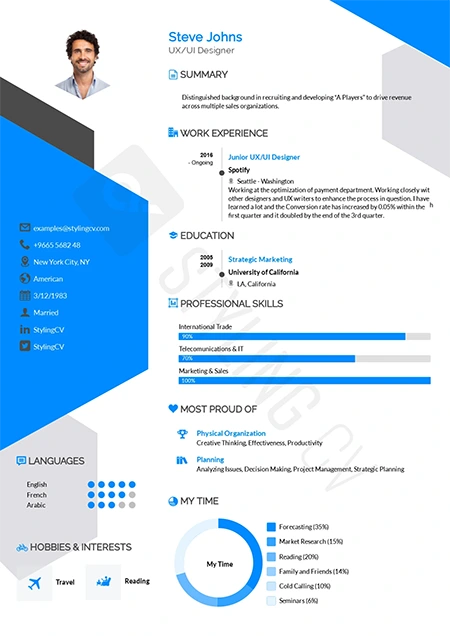
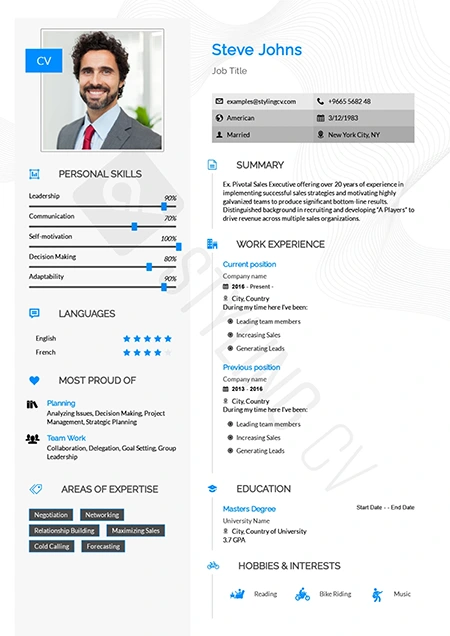
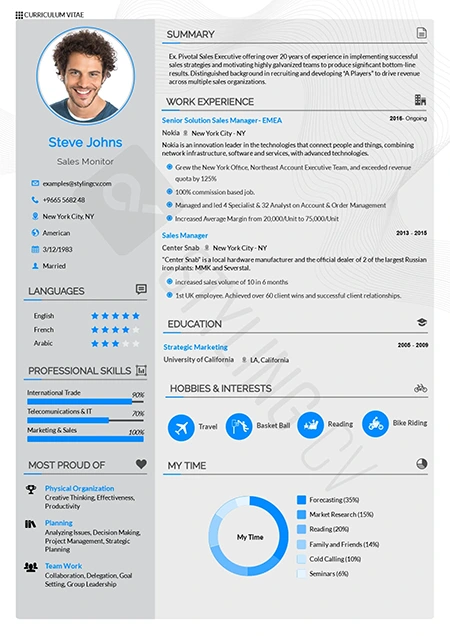
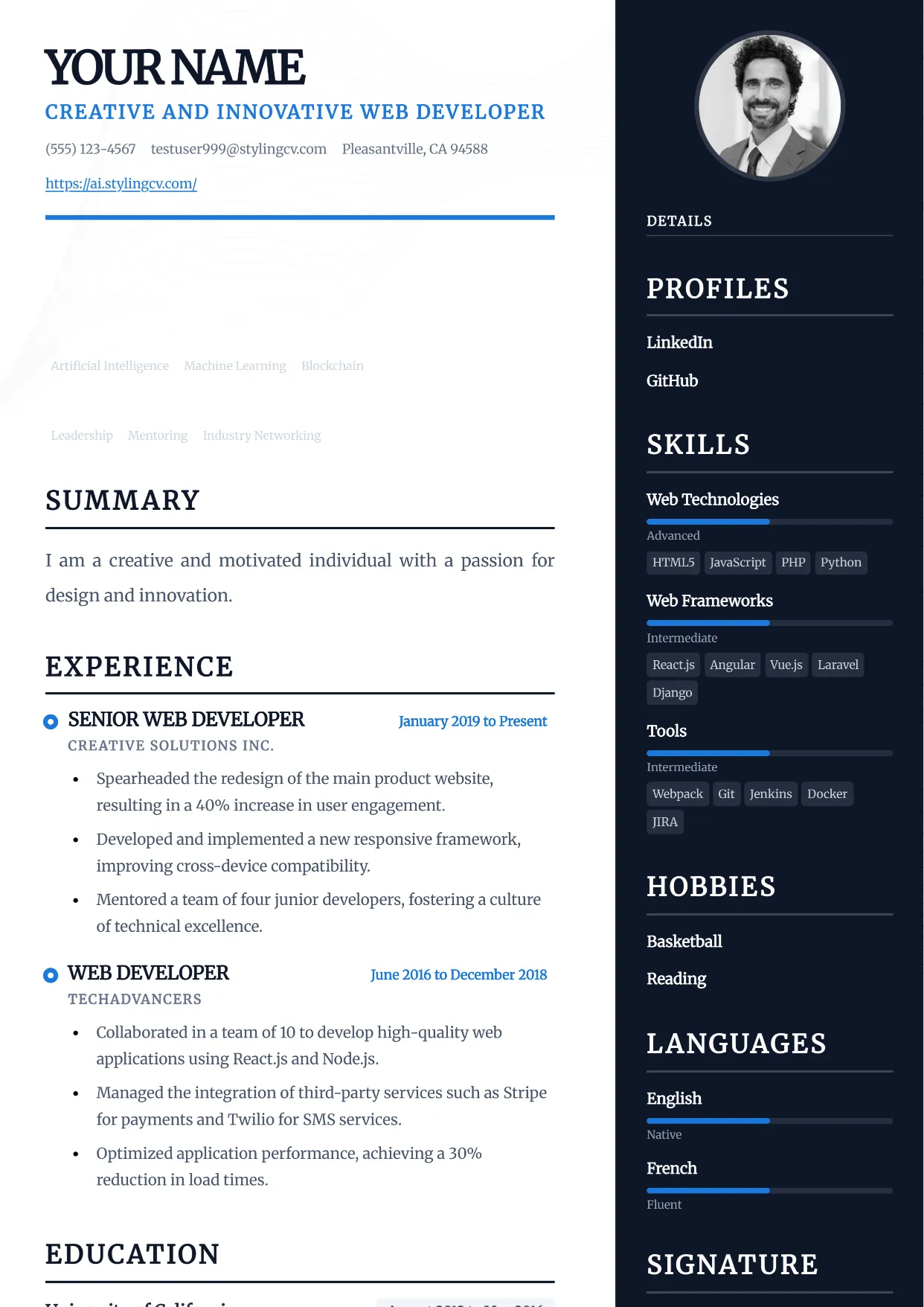
You can pair your StylingCV resume with any of the three cover letter templates above. The visual consistency alone — matching fonts, color accents, and layout rhythm — creates a cohesive application package that hiring managers remember.
Build your graphic designer resume free –>
Frequently Asked Questions About Graphic Designer Cover Letters
Do graphic designers really need a cover letter in 2026?
Yes — especially now that fewer people are writing them. A well-crafted cover letter differentiates you from candidates who only submit a portfolio. In creative fields, 83% of hiring managers say a bad cover letter can disqualify an otherwise strong candidate.
How long should a graphic designer cover letter be?
Keep it under 400 words — ideally around 300. Creative directors skim fast. Your letter should be scannable in under 60 seconds, with a clear hook, 2-3 key selling points, and a confident close.
Should I design my cover letter to match my resume?
Absolutely. Use the same fonts, color palette, and visual tone. Think of your resume and cover letter as a unified brand system. This is especially important when applying to creative agencies and design studios.
What should I include in a graphic designer cover letter with no experience?
Focus on your education, personal projects, freelance work, and design challenges you’ve completed (like Daily UI or 36 Days of Type). Reference specific projects and explain your design decisions — this shows design thinking even without professional experience.
How do I address a cover letter if I don’t know the hiring manager’s name?
Check LinkedIn, the company website, or the job posting. If you still can’t find a name, use “Dear [Company Name] Creative Team” or “Dear Hiring Manager.” Never use “To Whom It May Concern” — it’s outdated and impersonal.
Should I include my portfolio link in the cover letter?
Yes — in the first or second paragraph. Make it bold and clickable. Your portfolio is the single most important element of a graphic designer’s application. Don’t bury it in the closing line.
Can I use a template for my graphic designer cover letter?
Templates are a great starting point, but you must customize them. Replace every bracketed section with specific details about your experience and the company. A template without personalization reads as lazy — and creative directors notice.
What’s the best format for a graphic designer cover letter — PDF or Word?
PDF is almost always the right choice. It preserves your formatting, fonts, and layout exactly as designed. Word documents can shift formatting depending on the recipient’s software. The only exception is if the job posting specifically requests a .doc file.
How do I write a cover letter for a graphic design internship?
Emphasize your design education, relevant coursework, personal projects, and enthusiasm for learning. Reference the company’s work specifically. Keep it even shorter — around 250 words. Include a link to your strongest 3-5 portfolio pieces, not your entire body of work.
Should I mention salary expectations in a graphic designer cover letter?
No. The cover letter isn’t the place for salary discussions. Focus on demonstrating your value and fit. Salary negotiations come later in the process, usually after you’ve received an offer or during the interview stage.
How do I follow up after sending a graphic designer cover letter?
Wait 5-7 business days, then send a brief, polite follow-up email. Reference the specific position, reiterate your interest, and offer to provide additional portfolio samples. One follow-up is professional; more than two feels pushy.
What keywords should I include in a graphic designer cover letter for ATS?
Use the exact job title from the posting, plus skills mentioned in the job description: specific software (Adobe Creative Suite, Figma, Sketch), design specialties (brand identity, UI/UX, typography), and industry terms. Work these in naturally — keyword stuffing is obvious and off-putting.
🚀 Ready to Build Your Resume with AI?
StylingCV’s AI-powered resume builder analyzes job descriptions, optimizes keywords, and formats your resume for ATS systems — all in minutes.
No credit card required · ATS-optimized · Used by 500K+ job seekers