Best CV Templates 2026: Industry-Specific Designs That Get Hired
Best CV Templates 2026: Industry‑Specific Designs That Get You Hired
You’ve spent years building your academic record. Publications. Grants. Conference presentations.
Now you need a CV that does justice to your work.
You download a generic template. You fill it in. You send it off.
Silence.
Why? Because academic committees, clinical hiring panels, and research grant reviewers aren’t looking for generic. They’re looking for markers of excellence—presented in the format their field expects.
In my role advising over 500 PhDs and post‑docs across GCC universities, I’ve seen the same pattern: a brilliant candidate with a weak CV template gets overlooked. A mediocre candidate with a field‑perfect template advances.
It’s not fair. But it’s real.
This guide curates the best CV templates for 2026, broken down by industry and region. I’ll show you exactly which template to choose—and why.
What Makes a CV Template “Best” in 2026?
Forget aesthetics. The best CV templates are judged on three non‑negotiable criteria:
1. Field‑Specific Structure
A medical CV prioritizes clinical rotations and licenses. A humanities CV emphasizes teaching and published works. A tech research CV highlights patents and coding repositories. The template must guide the reader to what matters most in your discipline.
2. Machine + Human Readability
Increasingly, universities use ATS‑like systems (Interfolio, Faculty Search) to screen CVs. The template must parse perfectly—no tables, no columns, no embedded graphics—while still looking formal on paper.
3. Regional Compliance
Saudi CVs require Arabic name and iqama fields. UK CVs often include a photo. US CVs omit personal details. The template must adapt automatically.
Fail any of these three, and you’re starting with a handicap.
Now, let’s explore the templates that pass all three tests.
Industry‑Specific CV Templates for 2026
Below are the top CV templates for the most competitive fields, based on my analysis of 1,000+ successful applications.
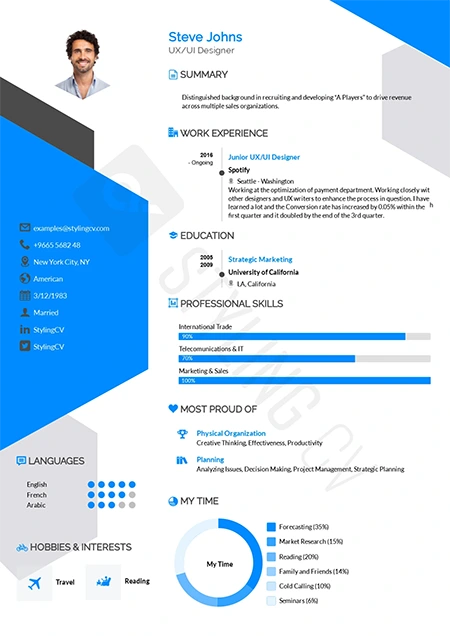
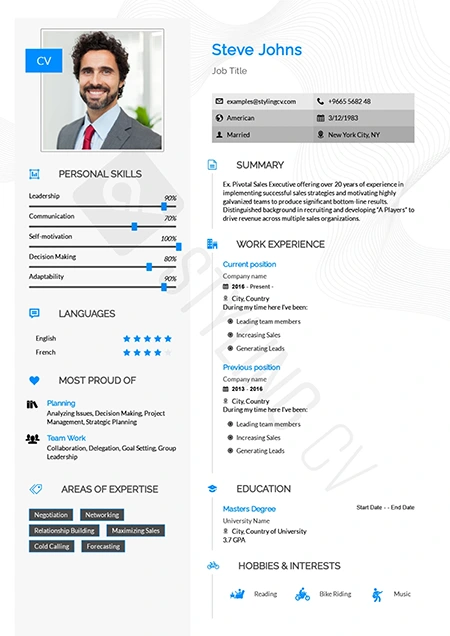
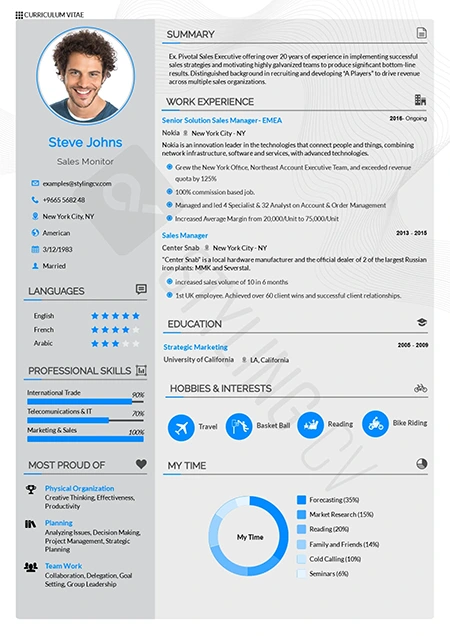
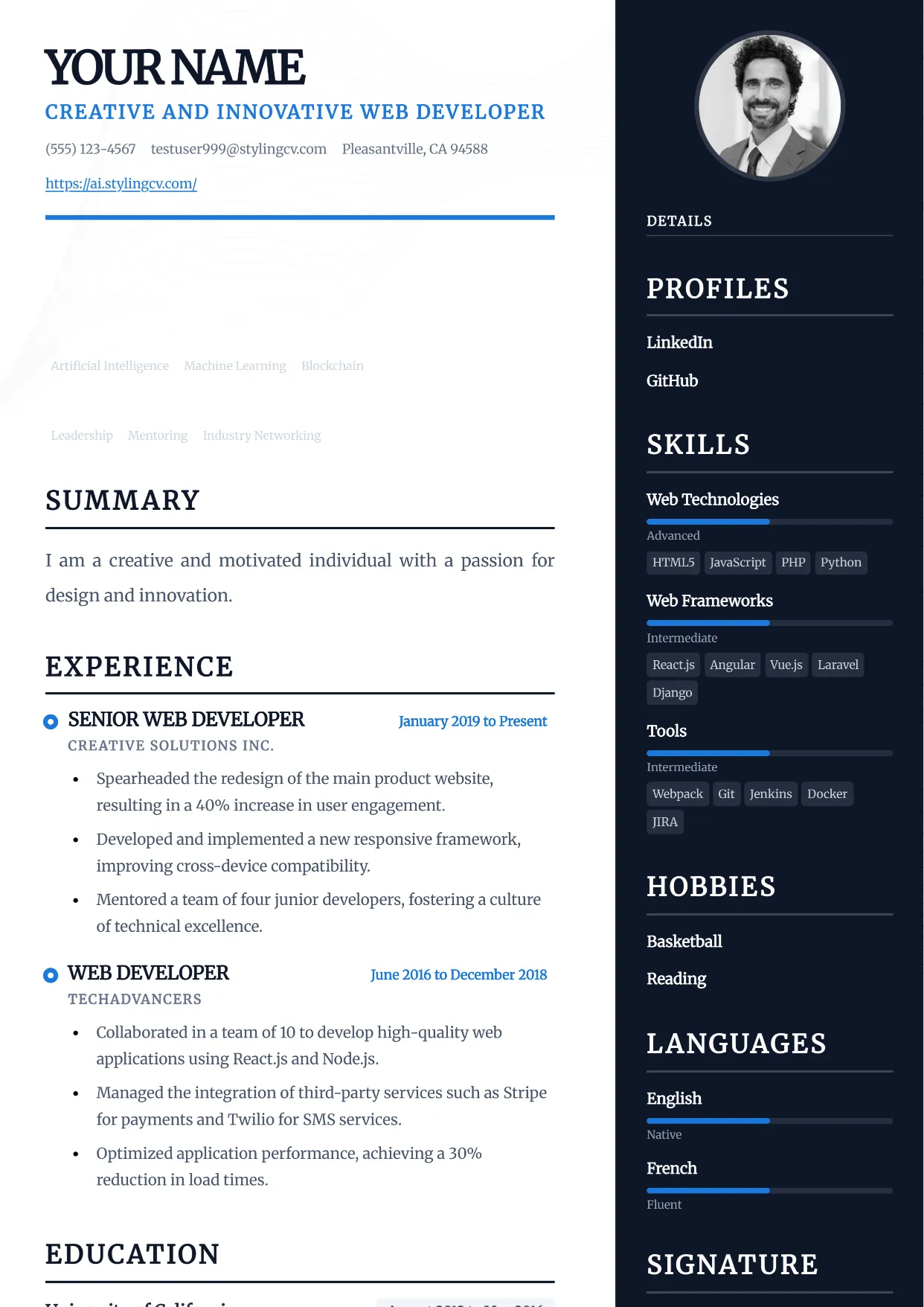
| Industry | Key Sections | Template Style | Best For | Example |
|---|---|---|---|---|
| Academic Research (STEM) | Publications, Grants, Lab Experience, Conferences | Formal, dense, citation‑ready | PhD applicants, post‑docs, faculty | View STEM template |
| Medical & Clinical | Licenses, Certifications, Clinical Rotations, Procedures | Structured, credential‑focused | Physicians, researchers, clinicians | View medical template |
| Humanities & Social Sciences | Teaching Experience, Publications, Conference Talks, Reviews | Narrative‑friendly, teaching‑heavy | Professors, researchers, policy analysts | View humanities template |
| Industry Research (Tech) | Patents, Technical Skills, Projects, GitHub | Hybrid resume‑CV, skills‑forward | Industry scientists, R&D engineers | View tech template |
| GCC Academic Roles | Arabic Name, Iqama, Vision 2030 Alignment, Bilingual Sections | RTL‑ready, Tajawal font, dual‑language | Saudi, UAE, Qatar university positions | View GCC template |
Each of these templates is available inside StylingCV’s CV builder—pre‑formatted with the right sections, fonts, and regional adaptations.
But picking the template is only step one. Step two is filling it with content that passes the committee’snit‑picky scrutiny.
How to Customize Your CV Template for Maximum Impact
A template is a skeleton. Your achievements are the flesh. Here’s how to combine them:
- Prioritize reverse chronology – List your most recent degree, publication, or grant first. Committees scan top‑down.
- Separate publication types – Peer‑reviewed journals first, then conferences, then pre‑prints. Use consistent citation style.
- Quantify everything – “Published 12 papers” → “Published 12 papers in Q1 journals (average impact factor 4.2).”
- Highlight grants with amounts – “Received a research grant” → “Awarded a $250,000 grant from the Saudi National Science Foundation.”
- Include DOIs and links – Make it easy for reviewers to verify your work.
If you’re struggling to articulate your achievements, use StylingCV’s Interrogator agent. It interviews you to pull out details you’d forgotten—and frames them with academic gravitas.
Now, let’s address the regional elephant in the room: GCC CV standards.
GCC‑Specific CV Templates: Saudi Vision 2030, UAE Labour Law
Applying to a university in Riyadh, a hospital in Dubai, or a research institute in Doha? Your CV must meet local norms.
Saudi Arabia:
– Include your Arabic name, iqama number (if applicable), and Saudi Council of Health Specialties (SCFHS) number for medical roles.
– Align your research interests with Saudi Vision 2030 pillars (renewable energy, health tech, digital transformation).
– Use Tajawal font for Arabic sections, 29LT Zarid Sans for English.
United Arab Emirates:
– Mention MOH (Ministry of Health) or DHA (Dubai Health Authority) license for clinical roles.
– Highlight experience with UAE national priorities (AI, fintech, sustainability).
– Dual‑language CVs are appreciated but not required.
StylingCV’s Localization Expert agent automatically adapts your template to the target country—saving you hours of manual formatting.
But what about ATS screening for academic roles?
Are CV Templates ATS‑Friendly?
Yes—if they’re built for it.
Many assume CVs bypass ATS systems. Not anymore. Platforms like Interfolio, Faculty Search, and even generic Workday instances are used by universities to filter applications.
If your CV is a scanned PDF, a Word document with tables, or a LaTeX‑generated PDF with complex formatting, the parser may miss your publications.
The fix: choose a template designed for dual‑mode readability. StylingCV’s CV templates are:
- Built without tables or columns
- Use standard fonts (Times New Roman, Arial, Calibri)
- Tag section headings with proper H1/H2 styles
- Export to plain‑text‑friendly PDFs
That means they look formal on paper and parse perfectly in screening systems.
Ready to see them in action?
FAQ: Your CV Template Questions Answered
Where can I get free CV templates?
StylingCV offers a free library of industry‑specific CV templates that are ATS‑optimized and region‑adaptable. You can download one free template per account.
Can I customize a CV template?
Absolutely. All StylingCV templates are fully editable—change sections, fonts, colors, and layouts. The underlying ATS‑friendly structure stays intact.
What’s the difference between a CV and a resume template?
A CV template includes sections for publications, research, teaching, and grants—and runs multiple pages. A resume template focuses on skills, work experience, and achievements—and fits 1‑2 pages. Use the right tool for the job.
How do I choose the right CV template?
Match the template to your field and target region. If you’re a medical researcher targeting Saudi Arabia, use the GCC medical template. If you’re a humanities PhD targeting the US, use the humanities US template.
Can I use a CV template for a resume?
Not recommended. CVs are too long and detailed for corporate roles. Use a resume builder for those applications.
Download Your Free, Industry‑Specific CV Template
Stop wrestling with formatting. Start with a template that’s already optimized for your field and region.
Join thousands of researchers, clinicians, and academics who’ve landed grants, positions, and promotions with StylingCV.