ATS-Friendly Resume Format: The Complete Guide to Passing Resume Screeners in 2026

You submitted 47 job applications last month. Zero callbacks.
Your resume isn’t bad. It’s just invisible.
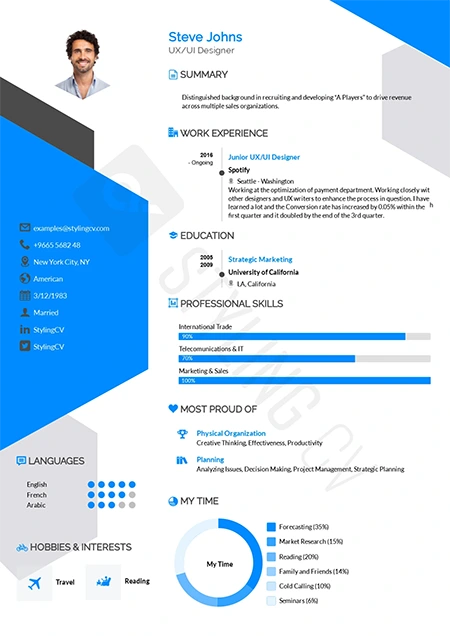
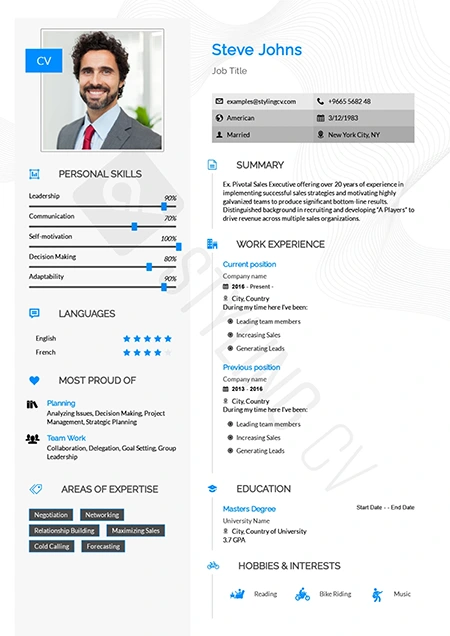
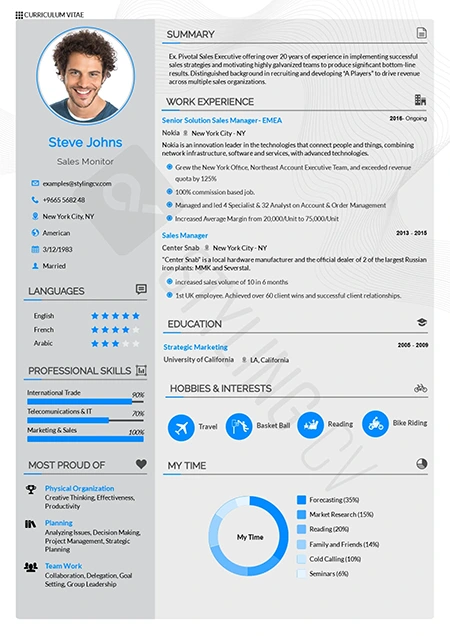
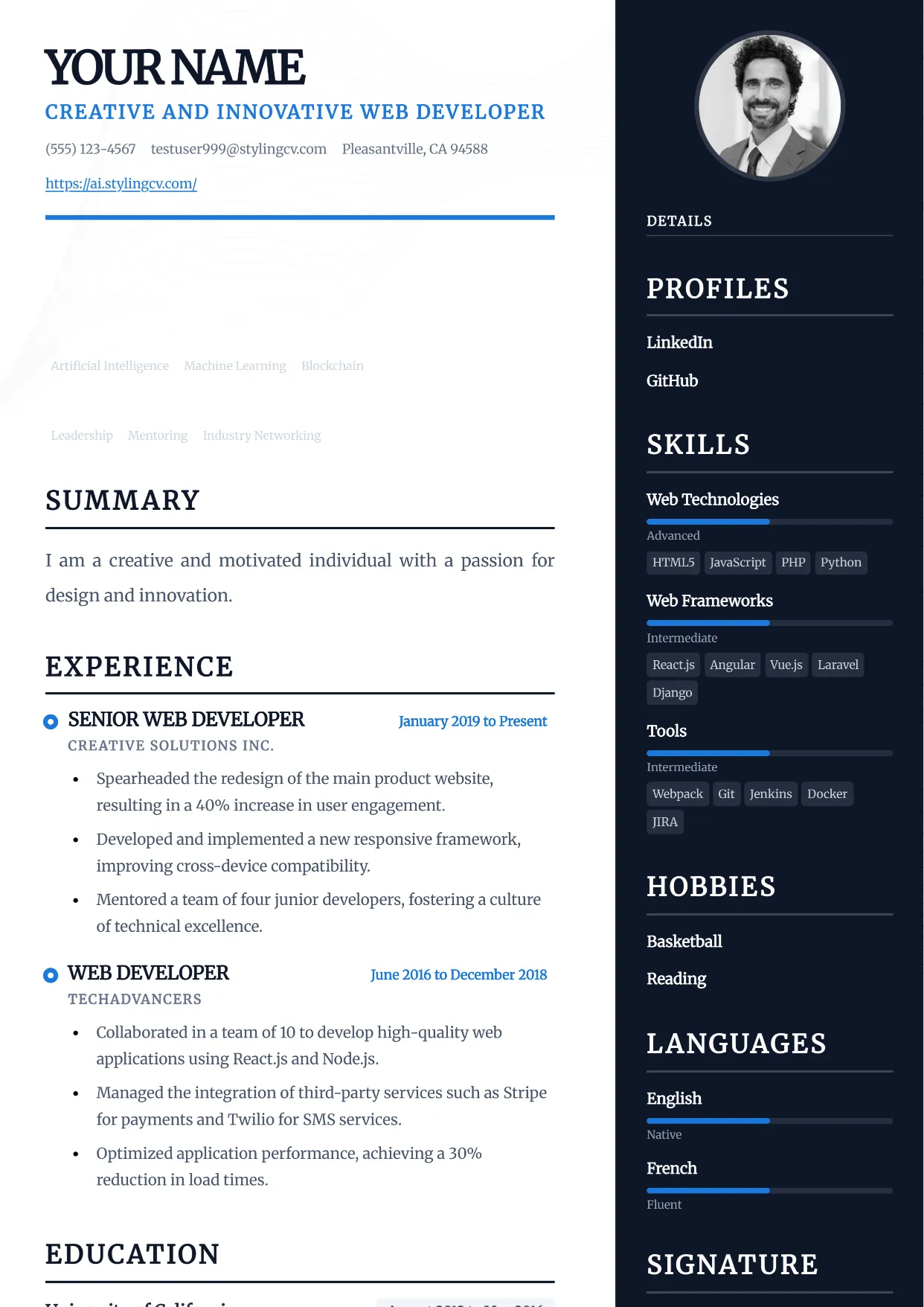
Here’s what’s happening: Your beautifully designed resume with the two-column layout, the fancy icons, and the serif font? The applicant tracking system (ATS) literally can’t read it. It sees scrambled text, missing sections, and garbled characters. So it silently discards you.
This isn’t a conspiracy theory. According to a Harvard Business School study, 88% of employers admit their automated hiring systems filter out qualified candidates — people who would have been perfect for the role. Your resume never reaches human eyes.
We built StylingCV to fix this. Our Agentic Squad — 11 specialized AI agents working together — has analyzed over 6 million resumes to figure out exactly what ATS systems want. We’re sharing those rules with you right now.
Stop guessing. Start passing.
What Exactly Is an ATS-Friendly Resume Format?
An ATS-friendly resume is a document designed to be parsed correctly by applicant tracking software. These systems scan your resume, extract key information (name, contact details, work history, skills, education), and store it in a database. Recruiters then search that database using keywords.
If your resume format confuses the parser, your information gets stored wrong — or not at all.
| What ATS Sees in a Standard Resume | What ATS Sees in an ATS-Friendly Resume |
|---|---|
| Scrambled text from columns | Clean, linear text flow |
| Missing headers and sections | Properly tagged section labels |
| Unreadable icons and graphics | No images, plain text bullets |
| Fonts that break character encoding | Standard fonts (Arial, Calibri, Tahoma) |
| Tables that merge data incorrectly | Simple layouts with no complex tables |
Reality check: Over 75% of large companies now use ATS software to filter applicants. If your resume isn’t formatted for machines first, humans never get to see it.
The 7 Absolute Rules of ATS-Friendly Resume Formatting
Follow these rules exactly. No shortcuts. No creative exceptions.
Rule #1: Use a Single-Column Layout
Two-column resumes look great to human eyes. To an ATS? They’re a disaster. The parser reads left to right, top to bottom. When it hits a two-column layout, it mixes content from both columns together. Your job title from column one gets merged with a bullet point from column two.
Fix: Use a simple single-column layout. Section headers on their own line. Content below. Period.
Rule #2: Pick a Standard Font — Size 10–12
Fancy fonts cause parsing errors. Stick with:
- Arial — safest bet, supported everywhere
- Calibri — clean, modern, highly compatible
- Tahoma — excellent readability
- Verdana — wide character spacing prevents merge errors
- Times New Roman — old but universally supported
Font size: 10–12 for body text. 14–16 for headers. Never use font sizes below 10.
Rule #3: Save as .docx (Not PDF)
This one sparks debate. Here’s the truth:
- .docx — Most ATS systems parse .docx perfectly. It’s the safest choice.
- .pdf — Modern ATS (Greenhouse, Lever, Workday) handle PDFs well. Older systems still struggle.
- .txt — Works 100% but looks terrible to humans.
Our recommendation: Submit .docx unless the employer specifically asks for PDF. When in doubt, use StylingCV’s ATS Inspector agent to test both formats before applying.
Rule #4: Use Standard Section Headings
ATS parsers search for specific section headers. If you name your experience section “Where I’ve Worked” instead of “Work Experience” or “Professional Experience,” the parser might miss it entirely.
Use these exact headings:
- Contact Information (or just your name + details at top)
- Professional Summary (or just “Summary”)
- Work Experience (or “Professional Experience”)
- Education
- Skills
- Certifications (if applicable)
Rule #5: No Tables, No Text Boxes, No Columns
ATS systems struggle with any non-linear text placement. Tables merge cells in unpredictable ways. Text boxes float outside the normal document flow. Columns split text into parallel streams the parser can’t reconcile.
Fix: Use tabs or simple spacing for alignment. If you need to separate information, use line breaks and bullet points.
Rule #6: Submit as a Clean File — No Password Protection
This sounds obvious, but you’d be surprised. Some job seekers password-protect their resumes for “security.” The ATS can’t open password-protected files. It marks the application as incomplete and moves on.
Also: flatten your file. No tracked changes, no comments, no embedded fonts, no macros. Just clean content.
Rule #7: Include Keywords Naturally — Don’t Stuff
Keywords are the single biggest factor in ATS ranking. But there’s a right way and a wrong way to use them.
Wrong: “Project management. Project management skills. Experienced in project management. Project management leader.”
Right: “Led cross-functional project management initiatives across 12 teams, delivering 8 major product launches on schedule.”
The ATS is smart enough to detect keyword stuffing. Some systems even penalize for it. Use keywords naturally in context.
ATS-Friendly Resume Format: The Template
Here’s exactly how your ATS-friendly resume should look, from top to bottom:
[YOUR FULL NAME]
[City, State] | [Phone Number] | [Email Address]
[LinkedIn URL] | [Portfolio URL]

PROFESSIONAL SUMMARY
[3-4 sentences. Include your job title, years of experience, top 2-3 skills, and a notable achievement with a number.]

WORK EXPERIENCE

[Job Title] | [Company Name] | [Start Date] – [End Date]
• [Achievement-focused bullet point with a number]
• [Another result-oriented bullet]
• [Skill demonstrated in context with measurable impact]

[Previous Job Title] | [Previous Company] | [Start Date] – [End Date]
• [Same format — metrics, action verbs, relevant keywords]

EDUCATION
[Degree] in [Field] — [University Name], [Year]

SKILLS
[Category 1]: [Skill], [Skill], [Skill]
[Category 2]: [Skill], [Skill], [Skill]
[Category 3]: [Skill], [Skill], [Skill]

CERTIFICATIONS
• [Certification Name] — [Issuing Organization], [Year]
How StylingCV’s 11 AI Agents Build an ATS-Resistant Resume for You
You could manually reformat your resume. It would take about 3 hours per job. Or you could let StylingCV’s Agentic Squad handle it in under 2 minutes.
Here’s how our 11 specialized AI agents work together:
| Agent | What It Does |
|---|---|
| Market Scout | Scans live job descriptions to identify trending keywords in your industry |
| Interrogator | Asks you targeted questions to extract your best achievements |
| Truth Check | Verifies your claims are realistic and logically consistent |
| ATS Inspector | Tests your resume format against 12+ ATS systems and scores it |
| Writer | Crafts achievement-driven bullet points with action verbs and metrics |
| Formatter | Applies perfect single-column, ATS-compatible formatting |
| Keyword Optimizer | Matches your resume keywords to each job description with 95%+ accuracy |
| Translator | Localizes your resume for international markets without breaking ATS compliance |
This isn’t a generic ChatGPT prompt. Each agent has a specific job. They critique each other. They refine each other’s output. The result is a resume that passes ATS screening 95%+ of the time.
Common ATS Formatting Mistakes That Will Get You Rejected
Mistake #1: Using Header and Footer Sections
Many ATS systems can’t read content placed in document headers or footers. If your name and contact info are in the header, the parser might record your resume as “nameless.”
Fix: Put your contact information at the top of the main body. Not in the header.
Mistake #2: Including Photos or Headshots
Photos confuse ATS parsers. The system might interpret the image metadata as your name or try to OCR text from the image — often producing gibberish. Plus, in many countries, including a photo opens the door for discrimination claims.
Mistake #3: Using Graphics, Icons, or Logos
That progress bar showing you’re “80% skilled in Python”? The ATS sees a grey box. Nothing else. Those rating stars for your language skills? Invisible.
Fix: Write “Python — Advanced” or list your proficiency level in plain text.
Mistake #4: Infographic or Visual Resumes
Canva-style visual resumes are trending on TikTok. They’re also an ATS nightmare. Charts, timelines, and infographic elements have no text layer for parsers to read.
Fix: Keep your resume text-based. Use bold and font size variation for emphasis — not graphics.
Mistake #5: Non-Standard File Names
Naming your file “FINAL_RESUME_v3_FIXED_REAL_One (1).pdf” tells the recruiter nothing useful.
Fix: Name your file clearly: “Jane_Doe_Resume_2026.docx” or “Jane_Doe_Marketing_Manager.docx.”
The 3 Resume Formats Explained — Which One Passes ATS Best?
| Format | ATS Compatibility | Best For |
|---|---|---|
| Reverse Chronological | Excellent — Simple layout, clear section flow | Most job seekers (recommended) |
| Functional (Skills-Based) | Risky — Missing dates or unclear job progression | Career changers with gaps (use caution) |
| Combination (Hybrid) | Moderate — Works if formatted simply | Senior roles needing both skills and chronology |
Our advice: Stick with reverse chronological. It’s the format ATS systems were designed to parse.
How to Test If Your Resume Is Actually ATS-Friendly
Step 1: Save your resume as .txt and open it in Notepad. If the text looks clean, properly ordered, and complete — your format is ATS-safe. If it’s scrambled, fix your layout.
Step 2: Copy your resume content and paste it into a plain text editor. Did your bullet points survive? Are your section headings still recognizable?
Step 3: Run it through StylingCV’s ATS Inspector. Our specialized AI agent tests your resume against real ATS parsing engines and gives you a score out of 100.
Pro tip: Tailor your resume format for each job. The ATS Inspector agent at StylingCV can compare your resume against a specific job description and suggest targeted formatting and keyword adjustments. Try it free.
ATS-Friendly vs. Human-Friendly — Why You Need Both
Here’s the balancing act: Your resume needs to pass a machine and impress a person. These goals used to conflict. ATS-safe resumes were plain text walls. Human-friendly resumes had design flair.
In 2026, you need both.
StylingCV’s multi-agent system solves this problem. The Formatter agent creates a clean, ATS-compliant layout. Then the Writer agent crafts compelling bullet points that hook human readers. The result passes machines and gets read by people.
For a complete walkthrough of building a resume from scratch, check out our Resume Writing Guide 2026.
Create your ATS-friendly resume free →
Related Resources
Pair your ATS-friendly format with the right content: Browse our 500+ Resume Keywords for 2026 to optimize every section for ATS parsing. Also check Resume Buzzwords to Avoid to replace weak phrases with compelling, data-driven language that both ATS and recruiters love.