Resume vs CV: Key Differences and When to Use Each (2026)
Resume vs CV: Key Differences and When to Use Each (2026)
If you’re applying for jobs, you’ve probably heard the terms “resume” and “CV” used interchangeably. But they are not the same thing. Using the wrong document can cost you an interview — especially when applying internationally. This guide breaks down the key differences between a resume vs CV, when to use each, and what format employers expect in the US, Europe, and the Middle East.
What Is a Resume?
A resume is a concise, targeted summary of your professional experience, skills, and education. Typically one to two pages long, a resume is tailored for each job application. It highlights only the most relevant qualifications for a specific role.
Key characteristics of a resume:
- Length: 1–2 pages
- Purpose: Quick snapshot of qualifications for a specific job
- Customization: Tailored for every application
- Content: Work experience, skills, achievements, education (summary format)
- Used in: USA, Canada, Australia, much of the private sector worldwide
Resumes are the standard in the corporate world. Recruiters spend an average of 6–8 seconds scanning a resume, so every word must earn its place. If you need professional help crafting one, check out StylingCV’s resume builder to create a polished, ATS-friendly resume in minutes.
What Is a CV?
A CV (Curriculum Vitae, Latin for “course of life”) is a comprehensive document detailing your entire academic and professional history. Unlike a resume, a CV grows with your career and can span many pages.
Key characteristics of a CV:
- Length: 2+ pages (often 5–10+ for academics)
- Purpose: Full record of career achievements, publications, research, and presentations
- Customization: Static — updated when you achieve something new
- Content: Publications, research projects, teaching experience, conferences, grants, awards, detailed education
- Used in: Academia, medicine, research, and most of Europe, Africa, Asia, and the Middle East
A CV never shortens — it only grows. Every published paper, conference talk, fellowship, and grant adds to it. For academic and research positions, your CV is your professional autobiography.
Key Differences at a Glance
| Aspect | Resume | CV |
|---|---|---|
| Length | 1–2 pages | 2+ pages (no limit) |
| Focus | Job-specific skills & achievements | Full career & academic history |
| Customization | Tailored per application | Static (updated over time) |
| Format | Summary/achievement-based | Chronological, detailed |
| Common industries | Corporate, tech, sales, marketing | Academia, medicine, research, government |
| Geographic norm | USA, Canada, Australia | Europe, Middle East, Africa, Asia |
The simplest rule: if you’re applying for a corporate job in the US, send a resume. If you’re applying for an academic position anywhere in the world, or any job in Europe or the Middle East, send a CV. For more help, explore our career resources for tailored advice on your job market.
When to Use Each
When to use a resume
- Applying to private-sector jobs in the US, Canada, or Australia
- Tech, finance, marketing, sales, operations roles
- When the job posting specifically asks for a “resume”
- Career fairs and networking events where brevity matters
When to use a CV
- Applying for academic positions (professor, researcher, postdoc)
- Medical and healthcare roles (especially outside the US)
- Jobs in Europe, the Middle East, Africa, or Asia
- Grant applications, fellowships, and PhD programs
- When the job posting requests a “CV” — even in the US
When in doubt, check the job description. If it says “CV,” send a CV. If it says “resume,” send a resume. Following instructions is the first test of your application.
Regional Differences (USA, Europe, Middle East)
USA
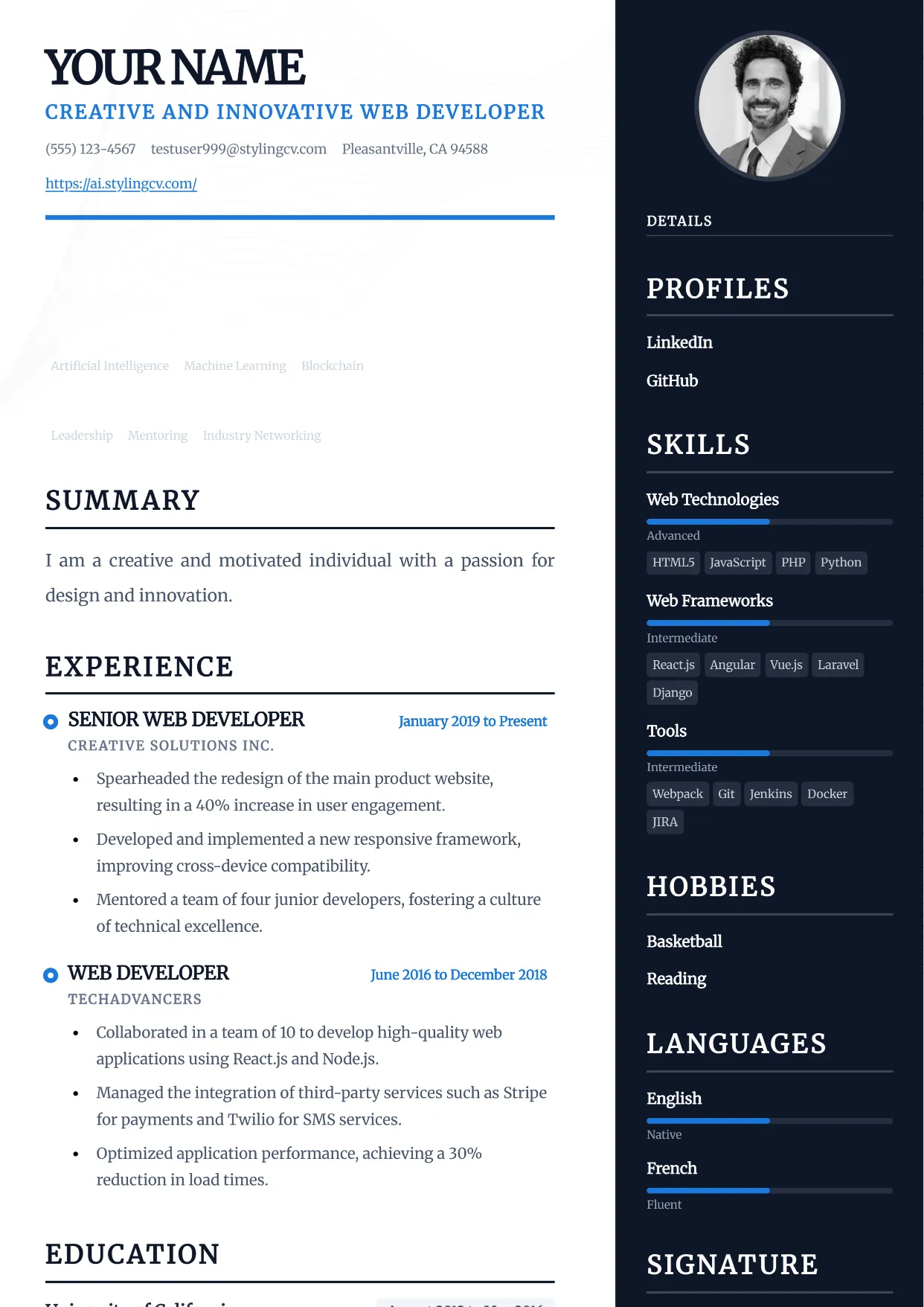
In the United States, the resume is king for private-sector roles. One page is standard for entry-level and mid-career professionals; two pages are acceptable for senior roles with 10+ years of experience. CVs are reserved almost exclusively for academia, medicine, and scientific research. US resumes are achievement-oriented, quantified, and ruthlessly concise. ATS (Applicant Tracking System) compatibility is critical — use standard fonts, simple formatting, and relevant keywords from the job description. Use StylingCV’s ATS-friendly templates to ensure your resume passes automated screening.
Europe
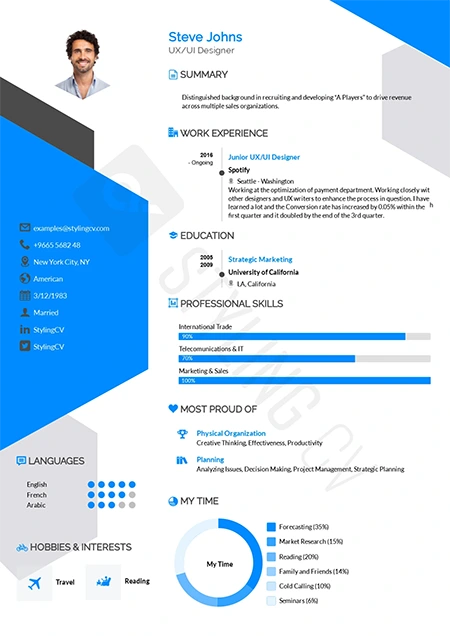
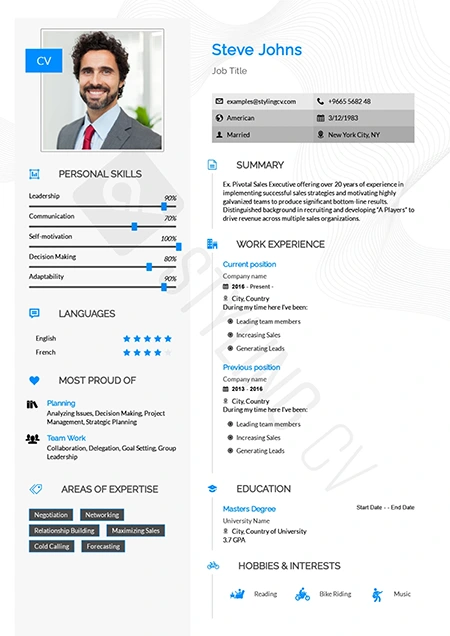
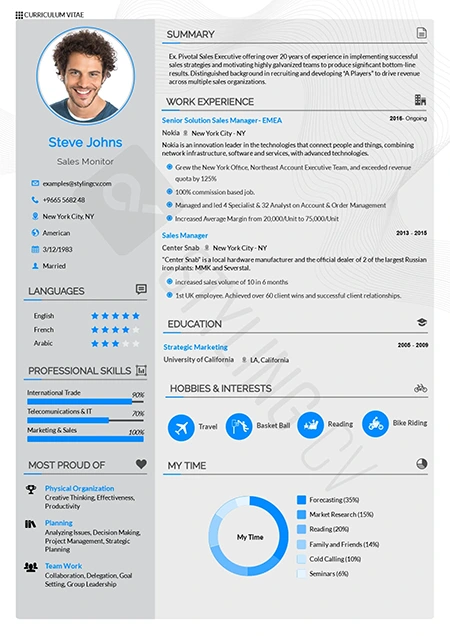
Across Europe, the CV (often called a “Europass CV”) is the standard for nearly all job applications — including private sector. Unlike the US, European CVs typically include a professional photo, date of birth, nationality, and sometimes marital status. They are more detailed and comprehensive than US resumes, often running 2–3 pages. The UK sits in the middle: a CV is expected, but at 2 pages max with a style closer to a US resume. Many European employers also expect a cover letter and specific documents like a “motivation letter” or “letter of recommendation.”
Middle East
In the Middle East (GCC countries, Levant, Egypt), the CV is the standard document for all professional roles. A photo is expected (professional headshot), and personal details like nationality, age, marital status, and visa status are commonly included — things you would never put on a US resume. CVs in the Middle East are typically 2–3 pages and emphasize educational credentials, certifications, and a detailed work history. Bilingual CVs (English + Arabic) are highly valued for regional roles. Language proficiency, software skills, and professional certifications carry significant weight.
Frequently Asked Questions
Is a CV the same as a resume?
No. A CV is a comprehensive document covering your entire career, while a resume is a brief, targeted summary. The main difference is length and purpose: CVs are detailed and static; resumes are concise and tailored per application.
How many pages should a resume be?
A resume should be 1–2 pages. One page is standard for early- to mid-career professionals. Two pages are acceptable for senior roles with 10+ years of experience. Never exceed two pages for a resume.
How many pages should a CV be?
A CV has no page limit. For early-career academics, 2–3 pages is common. Senior academics and researchers may have CVs of 10–15+ pages including publications, presentations, and grants. Unlike a resume, a CV does not need to be shortened — it only grows.
Do employers in the Middle East prefer a resume or a CV?
Employers in the Middle East prefer a CV. The CV format is standard across the region for all professional roles. Include a professional photo, nationality, age, and detailed work history. Bilingual CVs (English and Arabic) are highly recommended.
Can I use the same document for jobs in the US and Europe?
No. US employers expect a concise resume (1–2 pages, no photo, tailored per job). European employers expect a more detailed CV (2–3 pages, photo, sometimes personal details). You should maintain both a US-style resume and a European/CV-style document to apply internationally.
Ready to build your resume or CV?
StylingCV helps you create professional, ATS-friendly documents in minutes. Whether you need a US-style resume or an international CV, our templates and builder have you covered.