ATS-Friendly Resume Guide 2026: How to Pass Applicant Tracking Systems

ats-friendly resume guide 2026: how to pass applicant tracking systems
Published: August 20, 2026 | Reading time: 8 minutes
Over 75% of resumes never reach human eyes—they get filtered out by Applicant Tracking Systems (ATS) before a recruiter sees your name. In 2026, understanding how to create an ats friendly resume is key for landing interviews. Whether you’re applying through Workday, Greenhouse, or Lever, this guide shows you exactly how to build a resume that passes every parser.
What Is an Applicant Tracking System (ATS)?
An Applicant Tracking System is software that employers use to collect, sort, scan, and rank resumes. When you submit your application online, an ATS is usually the first gatekeeper. These systems parse your resume, extract information like work experience and Skills-First Resume: How to Write One in 2026 That Beats ATS and Gets Interviews, and store it in a structured database.
Recruiters search this database using keywords related to the job opening. If your resume doesn’t contain the right terms, or if the parser can’t read your document properly, you might as well have never applied. Understanding how these systems work is the foundation of creating an ats friendly resume that gets seen.
How ATS Parsing Works in 2026
Modern ATS software has evolved significantly. While early systems were essentially glorified keyword scanners, 2026-era parsers use a combination of OCR, natural language processing, and machine learning to evaluate candidates:
- Document Ingestion: The ATS receives your resume in PDF, DOCX, or TXT format.
- Text Extraction: OCR and parsing engines extract raw text and identify sections.
- Information Parsing: The system maps text to standard fields: Name, Email, Experience, Education, Skills.
- Keyword Matching: Your resume is compared against the job requisition for required qualifications.
- Scoring & Ranking: Candidates are scored based on match percentage and experience level.
- Recruiter Review: Only the top-ranked resumes are presented to human recruiters.
The Major ATS Platforms in 2026
Different companies use different ATS platforms, and each has its own parsing quirks:
Workday
Favored by Fortune 500 companies. Workday’s parser is strong but strict about section headings. It excels at parsing standard formats but struggles with creative layouts.
Oracle Taleo
One of the oldest enterprise ATS platforms, still widely used in healthcare and government. Taleo is notoriously picky about file formats and often prefers .docx over PDF.
Greenhouse
Popular among tech startups and mid-size companies. Greenhouse has better support for modern resume designs but still requires clean, parseable text.
Lever
Common in Silicon Valley and high-growth companies. Its parser handles most standard formats well but may skip information in headers and footers.
BambooHR
Widely used by small to medium businesses. BambooHR’s ATS is straightforward but basic—if your resume isn’t clearly structured, it may miss important details.
Because you rarely know which ATS a company uses, the safest strategy is to create a resume that works across all of them using a universally compatible format.
Common ATS Mistakes That Kill Your Chances
Even experienced professionals make these errors. Avoiding them is the fastest way to improve your application success rate:
1. Using Graphics, Charts, and Images
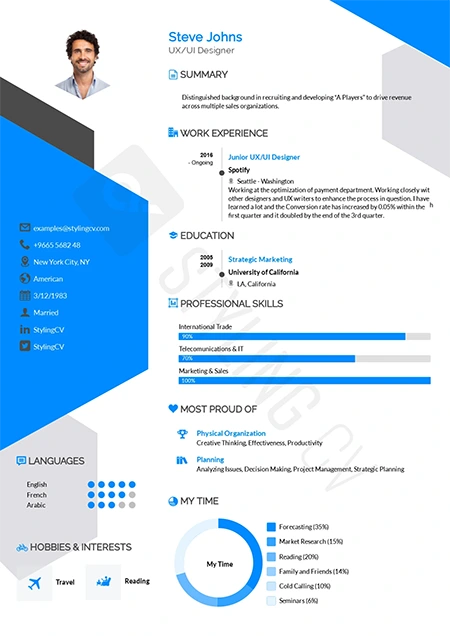
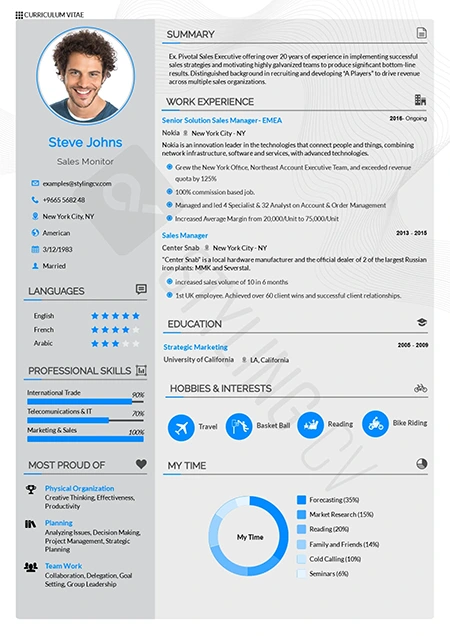
That beautiful infographic resume with skill bars? ATS software sees nothing. Most parsers extract text only—images, icons, and graphical elements are completely ignored. If you list your proficiency in Python via a progress bar, the ATS sees blank space. Always use plain text for skills and qualifications.
2. Multi-Column Layouts
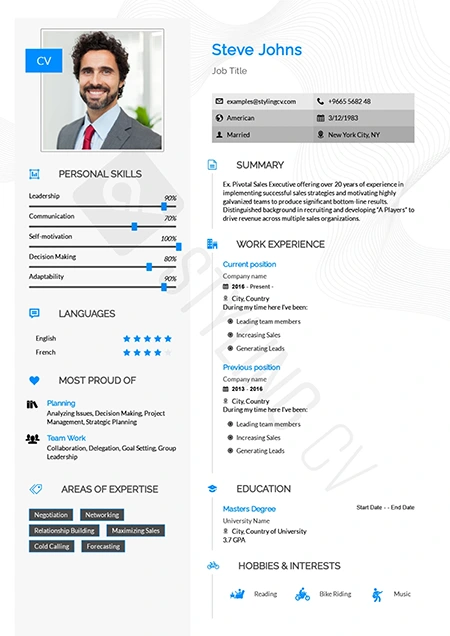
Two-column resumes look modern, but they’re an ATS nightmare. Parsers read left-to-right, line by line. In a two-column layout, the system may read a line from column one followed by a line from column two, creating jumbled content. Stick to a single-column format for maximum compatibility.
3. Tables for Structuring Content
Tables might seem like a great way to organize skills, but ATS software often can’t parse table cells correctly. Information gets merged, misplaced, or dropped entirely. Use bulleted lists instead—they’re universally parseable.
4. Unusual or Custom Fonts
Decorative fonts might express your personality, but if the ATS doesn’t have that font installed, your resume may display as gibberish. Stick to standard system fonts: Arial, Calibri, Garamond, Georgia, Helvetica, or Times New Roman.
5. Missing Keywords from the Job Description
This is the #1 reason qualified candidates get rejected. If the job posting asks for “search engine optimization” and your resume says “SEO,” some older parsers won’t make the connection. Use the exact phrasing from the job description where appropriate, and include both acronyms and full terms.
6. Headers, Footers, and Text Boxes
Important information placed in headers, footers, or text boxes is often skipped by ATS parsers. Your name, contact information, and key qualifications should always appear in the main body of the document.
7. PDFs from Design Software
PDFs exported from Adobe InDesign or Canva may contain your resume as an image rather than selectable text. Always verify that text in your PDF can be highlighted and copied. If not, the ATS can’t read it either.
Section Headings That ATS Systems Expect
ATS software is trained to recognize standard section headings. Using creative alternatives might confuse the parser and cause it to misfile or ignore your information:
- Contact Information — Full name, phone, email, LinkedIn URL, and location.
- Professional Summary or Summary — A brief 3-4 line overview of your qualifications.
- Work Experience or Professional Experience — Jobs in reverse chronological order.
- Education — Degree, major, institution, and graduation date.
- Skills — Bulleted or comma-separated list of relevant technical and soft skills.
- Certifications — Industry certifications with dates if applicable.
Avoid creative headings like “My Journey” or “Career Story.” While these might appeal to human readers, they tell the ATS nothing about what section follows. Clarity beats creativity when machines are reading your resume first.
ATS Pass Rates: Template Style Comparison
Not all resume templates are created equal. Here’s how different template styles perform when tested against major ATS platforms:
| Template Style | Workday | Taleo | Greenhouse | Lever | BambooHR | Average |
|---|---|---|---|---|---|---|
| Simple Single-Column | 98% | 95% | 99% | 97% | 96% | 97% |
| Modern Minimalist | 94% | 88% | 96% | 93% | 89% | 92% |
| Two-Column Professional | 76% | 62% | 82% | 78% | 65% | 73% |
| Creative / Infographic | 45% | 32% | 58% | 51% | 38% | 45% |
| Template with Tables | 68% | 55% | 74% | 71% | 60% | 66% |
| StylingCV ATS-Optimized | 99% | 97% | 99% | 98% | 97% | 98% |
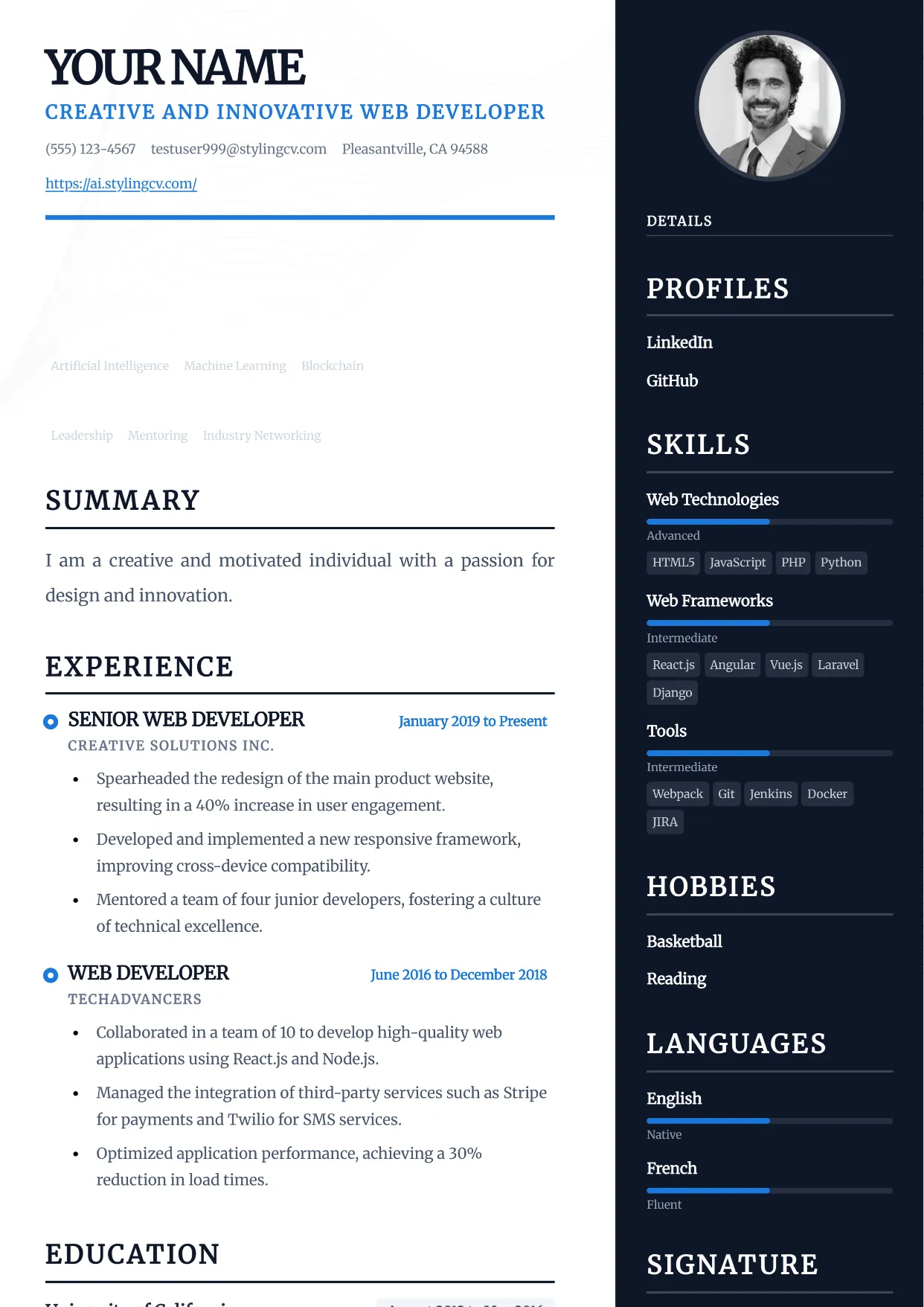
The data is clear: simple, clean, single-column designs dramatically outperform creative or complex layouts when it comes to ATS compatibility. This doesn’t mean your resume has to be boring—modern ats resume template designs from StylingCV prove you can have both style and substance.
How to Optimize Your Resume with Keywords
Keyword optimization is where the art of resume writing meets the science of ATS algorithms:
- Analyze the Job Description: Highlight every skill, qualification, certification, and action verb mentioned. Requirements that appear multiple times are weighted more heavily.
- Mirror the Language: Use the exact phrasing from the posting. If it asks for “project management experience,” use that phrase rather than “managed projects.” Include both acronyms and full terms.
- Place Keywords Strategically: Keywords in your summary carry weight, but contextual usage in work experience is even more effective. Write “Conducted data analysis using SQL and Python, resulting in a 23% efficiency increase” rather than just listing “Data Analysis.”
- Quantify Achievements: Numbers are universally parseable. “Increased sales by 40%” is more effective than “significantly increased sales.”
File Format: PDF vs. DOCX vs. TXT
The file format you choose matters more than most candidates realize:
- PDF: Modern ATS systems handle text-based PDFs well. Ensure your PDF is exported from a word processor, not saved as an image. Some older systems still struggle with PDFs.
- DOCX: The safest choice for maximum compatibility. All major ATS systems can parse Word documents reliably. If a job posting doesn’t specify format, DOCX is your safest bet.
- TXT: 100% parseable but stripped of all formatting. Use only as a last resort.
When applying through an online portal, follow the employer’s instructions exactly. If they don’t specify, DOCX offers the Best Fonts for Resumes 2026: Professional Fonts That Pass ATS balance of formatting control and ATS compatibility.
Building Your ATS-Friendly Resume: A Checklist
Use this checklist before submitting any application:
- Use a single-column layout with clear hierarchy
- Stick to standard fonts: Arial, Calibri, Garamond, Georgia, or Helvetica
- Include standard section headings: Summary, Experience, Education, Skills
- Mirror keywords from the job description naturally
- Quantify achievements with specific numbers and percentages
- Avoid tables, text boxes, headers, and footers for important content
- Save as .docx or text-based PDF
- Test by copying text into a plain text editor
- Keep formatting consistent throughout
- Limit to 1-2 pages for early-career, 2-3 for experienced professionals
- Include both acronyms and full terms for certifications and skills
- Verify contact information is in the main document body
Related Guides:
- Software Engineer Resume 2026
- Best AI Skills to Put on Your Resume in 2026 (With Real E…
- Data Scientist Resume 2026
Try StylingCV’s AI Resume Builder free — 11 specialized AI agents create ATS-optimized resumes in under 60 seconds.
Frequently Asked Questions
An ATS-friendly resume is formatted to be easily read and parsed by Applicant Tracking Systems. It uses standard section headings, avoids complex formatting like tables and graphics, incorporates relevant keywords from the job description, and uses common fonts that OCR software can recognize.
Yes, most modern ATS systems can read text-based PDFs. Scanned PDFs or PDFs with embedded images are typically unreadable. The safest format is a text-based PDF created from a word processor or resume builder like StylingCV. Some older ATS systems still prefer .docx files.
Yes, tables and multi-column layouts are common reasons resumes fail ATS parsing. Most ATS software reads left-to-right, line by line. In columns or tables, the parser may jumble the order or skip sections entirely. Use a single-column layout with standard section headings.
The best ATS-safe fonts are standard system fonts: Arial, Calibri, Garamond, Georgia, Helvetica, and Times New Roman. Avoid decorative or custom web fonts. Stick to 10-12pt font size for body text.
Read the job description and identify key skills, qualifications, and action verbs. Mirror the exact phrasing used in the posting. Place important keywords in your summary, skills section, and work experience bullet points. Avoid keyword stuffing; integrate terms naturally into context.
Most creative resume designs with graphics, icons, and unconventional layouts won’t pass ATS screening. These elements confuse resume parsers. Use a clean, ATS-optimized template for online applications.
The most widely used ATS platforms in 2026 include Workday (Fortune 500), Oracle Taleo (enterprise), Greenhouse (tech startups), Lever (Silicon Valley), and BambooHR (small to medium businesses).
Conclusion: Your Resume Deserves to Be Seen
In 2026’s competitive job market, having the right qualifications isn’t enough—your resume needs to navigate the digital gatekeepers that stand between you and your next opportunity. By following the principles in this guide, you’ll dramatically increase the odds that your application reaches human eyes.
Remember: an ats friendly resume doesn’t have to be boring. It needs to be smart—clean formatting that parsers understand, strategic keywords that match job requirements, and content that showcases your achievements in a machine-readable way. The best resumes impress both algorithms and recruiters.
Ready to build a resume that passes every ATS? StylingCV offers a collection of professionally designed, ATS-optimized templates that take the guesswork out of resume formatting. Each template is tested against Workday, Taleo, Greenhouse, Lever, and BambooHR to ensure your qualifications shine through—no matter which system reads them first.
Build Your ATS-Proof Resume Today
Join thousands of job seekers who use StylingCV to create resumes that pass every parser and land more interviews. Start Free Resume Templates 2026: 50+ ATS-Friendly Designs for Every Industry—no credit card required.
Related reading: Two-Column Resume and ATS in 2026: Does It Actually Break…
Related reading: How to Name Your Resume File in 2026: The Recruiter-Appro…
Related reading: One-Page Resume Guide 2026: When and How to Keep It Short