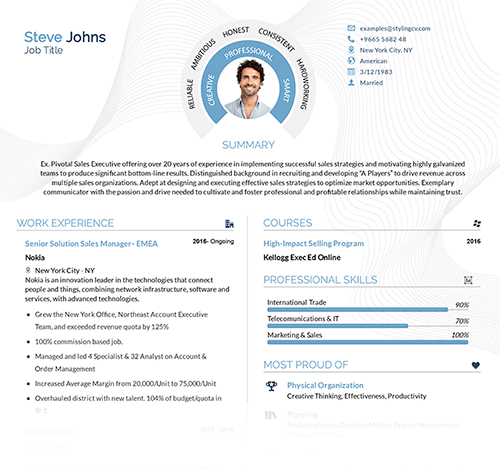
Discover the power of a professional resume and learn key tips to make yours stand out to recruiters and ATS systems. Elevate your job application today!

Sources & References
- ✓ Career development best practices from leading HR associations
- ✓ Industry research and surveys
- ✓ Expert interviews and case studies
- ✓ Verified by professional career advisors
Last updated: November 30, 2025
Why Professional Resumes Are Essential for Successful Job Applications
Discover the power of a professional resume and learn key tips to make yours stand out to recruiters and ATS systems. Elevate your job application today!

Sarah Reynolds
Content Specialist

Why Do You Need Professional Resume?
There are many professional websites that can make amazing looking resumes for you and can even provide a promising resume template at minimal cost. A well-formatted, error-free professional resume—designed with clear sections for education, skills, and work experience—makes it easier for hiring managers and ATS (applicant tracking systems) to find the information they need. That visibility increases your chance of getting an interview, especially when you’re competing for positions in a crowded field.
On a first pass recruiters often skim a resume for just a few seconds, so visual hierarchy and concise content matter. If your resume isn’t easy to scan—clear headings, readable fonts, and well-ordered bullet points—your qualifications and relevant skills can be missed, even if you have the right experience for the job. Aim for a readable format (one page for most students and many early-career applicants; two pages for more extensive experience), include your email and phone near the top, and lead with a short career summary or top-line position highlights to capture attention quickly.
Check Out These Writing Resume Tips and Tricks
A clear heading and a concise professional summary make it far more likely that a hiring manager or recruiter will read your resume. Use bold or italic sparingly to highlight section headings and key achievements, not to decorate the page—readability beats ornamentation every time.
Use short, scannable bullet points to call out your top skills and most relevant experience. Prefer reverse-chronological ordering for jobs and education (most recent first) so employers quickly see your current position and recent accomplishments. Start each bullet with an action verb, quantify results when possible, and keep each line focused on one clear outcome or responsibility.
Quick formatting rules: use a professional font, 10–12pt body size, consistent margins, and 1–1.15 line spacing. Save and submit your resume in the file format requested (PDF is usually safest for preserving formatting). Place your name, phone, and email at the top so employers can easily contact you.
Sample bullet comparisons (weak → strong):
- Weak: “Responsible for improving sales.”
- Strong: “Increased regional sales by 22% in 12 months by redesigning the sales process and training three new account managers.”
- Weak: “Helped with onboarding.”
- Strong: “Reduced new-hire onboarding time by 35% through development of a structured training program and documentation.”
ATS and keyword tips: read the job description and mirror important terms—job title, required skills, and tools—naturally in your content so your resume matches recruiters’ searches. Balance keywords with human-readable phrasing so both machines and people can see your qualifications.
For students and graduate students, lead with education and relevant projects if you have less work experience. Include a short “Skills” section that lists technical and transferable skills (for example, programming languages for computer science students), and link to samples or a portfolio when appropriate.
Point Out Accomplishments Clearly
Start your resume with a short career summary or two clear top-line job descriptions that quickly communicate your strongest positions and value. Employers and hiring managers scan for relevant positions and measurable outcomes—lead with your most recent position and two to four bullet highlights that demonstrate impact.
Avoid generic language and heavy industry jargon: a resume is a marketing document that sells your skills to prospective employers. Replace vague phrases with concrete actions and numbers so recruiters and ATS systems can match your resume to the job description and skills qualifications they’re searching for.
How to present accomplishments (three quick rules):
- Start with action verbs: Use strong verbs (led, implemented, reduced, designed) to open each bullet.
- Quantify results: Add numbers, percentages, timeframes, or scope (e.g., “increased retention by 18%,” “managed a $200K budget”).
- Be specific and relevant: Tailor accomplishments to the job posting—highlight the skills and outcomes that match the role.
Annotated examples (generic → improved):
- Generic: “Responsible for improving user onboarding.”
- Improved: “Redesigned user onboarding flow, increasing 30-day activation by 28% and reducing churn by 12% in six months.”
- Generic: “Worked on research projects.”
- Improved: “Led a two-person research project on machine-learning model evaluation, producing a published report and improving prediction accuracy by 14%.”
If you have limited work experience (students or graduate students), swap the order: list education, relevant projects, research, and sample work before less-relevant positions. Include a brief note about degree, thesis or capstone, and list the technical skills (for example, programming languages for computer science) with links to a portfolio or GitHub when possible.
Finally, consider using trusted resume templates and builders (the link below) to get ATS-friendly formatting, but always customize content: a template helps formatting, your words sell the results. Also remember to tailor your resume cover letter to the role—use the job description to select which accomplishments to emphasize.
Further resources and next steps
For more comprehensive information on resume writing and job search in Saudi Arabia, and to find resume samples and templates by field, check the curated guides and practical how-tos below. If you’re a student or a graduate, these links also point to career services tips, what documents you may need, and role-specific advice (for example, for computer science and other technical positions).
- Top 10 In-Demand Jobs in Saudi Arabia for 2025 — an overview of high-growth positions and the skills employers are prioritizing so you can tailor your resume and cover letter accordingly.
- How to Write a Winning Resume for Saudi Arabia in 2025 — a practical guide with sample resumes, formatting tips (how many pages you may need), and notes on local hiring expectations.
- How to Get a Job in Saudi Arabia as a Foreigner — practical steps on documents, employer expectations, and career development advice for applicants relocating or applying internationally.
Why Do You Need Professional Resume?
There are many professional websites that can make amazing looking resumes for you and can even provide a promising resume template at minimal cost. A well-formatted, error-free professional resume—designed with clear sections for education, skills, and work experience—makes it easier for hiring managers and ATS (applicant tracking systems) to find the information they need. That visibility increases your chance of getting an interview, especially when you’re competing for positions in a crowded field.
On a first pass recruiters often skim a resume for just a few seconds, so visual hierarchy and concise content matter. If your resume isn’t easy to scan—clear headings, readable fonts, and well-ordered bullet points—your qualifications and relevant skills can be missed, even if you have the right experience for the job. Aim for a readable format (one page for most students and many early-career applicants; two pages for more extensive experience), include your email and phone near the top, and lead with a short career summary or top-line position highlights to capture attention quickly.
Check Out These Writing Resume Tips and Tricks
A clear heading and a concise professional summary make it far more likely that a hiring manager or recruiter will read your resume. Use bold or italic sparingly to highlight section headings and key achievements, not to decorate the page—readability beats ornamentation every time.
Use short, scannable bullet points to call out your top skills and most relevant experience. Prefer reverse-chronological ordering for jobs and education (most recent first) so employers quickly see your current position and recent accomplishments. Start each bullet with an action verb, quantify results when possible, and keep each line focused on one clear outcome or responsibility.
Quick formatting rules: use a professional font, 10–12pt body size, consistent margins, and 1–1.15 line spacing. Save and submit your resume in the file format requested (PDF is usually safest for preserving formatting). Place your name, phone, and email at the top so employers can easily contact you.
Sample bullet comparisons (weak → strong):
- Weak: “Responsible for improving sales.”
- Strong: “Increased regional sales by 22% in 12 months by redesigning the sales process and training three new account managers.”
- Weak: “Helped with onboarding.”
- Strong: “Reduced new-hire onboarding time by 35% through development of a structured training program and documentation.”
ATS and keyword tips: read the job description and mirror important terms—job title, required skills, and tools—naturally in your content so your resume matches recruiters’ searches. Balance keywords with human-readable phrasing so both machines and people can see your qualifications.
For students and graduate students, lead with education and relevant projects if you have less work experience. Include a short “Skills” section that lists technical and transferable skills (for example, programming languages for computer science students), and link to samples or a portfolio when appropriate.
Point Out Accomplishments Clearly
Start your resume with a short career summary or two clear top-line job descriptions that quickly communicate your strongest positions and value. Employers and hiring managers scan for relevant positions and measurable outcomes—lead with your most recent position and two to four bullet highlights that demonstrate impact.
Avoid generic language and heavy industry jargon: a resume is a marketing document that sells your skills to prospective employers. Replace vague phrases with concrete actions and numbers so recruiters and ATS systems can match your resume to the job description and skills qualifications they’re searching for.
How to present accomplishments (three quick rules):
- Start with action verbs: Use strong verbs (led, implemented, reduced, designed) to open each bullet.
- Quantify results: Add numbers, percentages, timeframes, or scope (e.g., “increased retention by 18%,” “managed a $200K budget”).
- Be specific and relevant: Tailor accomplishments to the job posting—highlight the skills and outcomes that match the role.
Annotated examples (generic → improved):
- Generic: “Responsible for improving user onboarding.”
- Improved: “Redesigned user onboarding flow, increasing 30-day activation by 28% and reducing churn by 12% in six months.”
- Generic: “Worked on research projects.”
- Improved: “Led a two-person research project on machine-learning model evaluation, producing a published report and improving prediction accuracy by 14%.”
If you have limited work experience (students or graduate students), swap the order: list education, relevant projects, research, and sample work before less-relevant positions. Include a brief note about degree, thesis or capstone, and list the technical skills (for example, programming languages for computer science) with links to a portfolio or GitHub when possible.
Finally, consider using trusted resume templates and builders (the link below) to get ATS-friendly formatting, but always customize content: a template helps formatting, your words sell the results. Also remember to tailor your resume cover letter to the role—use the job description to select which accomplishments to emphasize.
Further resources and next steps
For more comprehensive information on resume writing and job search in Saudi Arabia, and to find resume samples and templates by field, check the curated guides and practical how-tos below. If you’re a student or a graduate, these links also point to career services tips, what documents you may need, and role-specific advice (for example, for computer science and other technical positions).
- Top 10 In-Demand Jobs in Saudi Arabia for 2025 — an overview of high-growth positions and the skills employers are prioritizing so you can tailor your resume and cover letter accordingly.
- How to Write a Winning Resume for Saudi Arabia in 2025 — a practical guide with sample resumes, formatting tips (how many pages you may need), and notes on local hiring expectations.
- How to Get a Job in Saudi Arabia as a Foreigner — practical steps on documents, employer expectations, and career development advice for applicants relocating or applying internationally.
Next steps: download a sample resume for your position, compare two resume templates (one ATS-friendly, one design-forward), and draft a tailored resume cover letter that highlights two measurable accomplishments tied to the job description. If you need personalized help, contact your institution’s career services or use the resume builder linked earlier to save time while ensuring proper formatting.
Sources & References
- ✓ Career development best practices from leading HR associations
- ✓ Industry research and surveys
- ✓ Expert interviews and case studies
- ✓ Verified by professional career advisors
Last updated: November 30, 2025
⚡ Create Your Resume in Just 5 Minutes
Templates designed by hiring experts. No design skills needed.
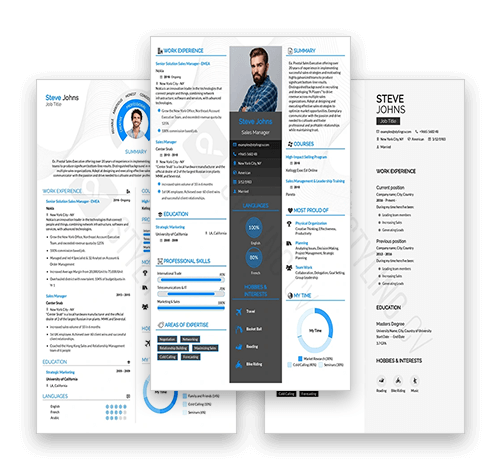 Building Your Resume Now
⭐ 4.8/5 Rating
Building Your Resume Now
⭐ 4.8/5 Rating
3,000+ Success Stories