Discover the difference between Resume Examples and Resume Templates. Learn which one is best for your job search and how to use them effectively.

Sources et références
- ✓ Les meilleures pratiques en matière de développement de carrière des principales associations de RH
- ✓ Recherches et enquêtes sur l'industrie
- ✓ Entretiens avec des experts et études de cas
- ✓ Vérifié par des conseillers d'orientation professionnelle
Last updated: December 15, 2025
Resume Examples” vs. “Resume Templates
Discover the difference between Resume Examples and Resume Templates. Learn which one is best for your job search and how to use them effectively.

Sarah Reynolds
Spécialiste du contenu
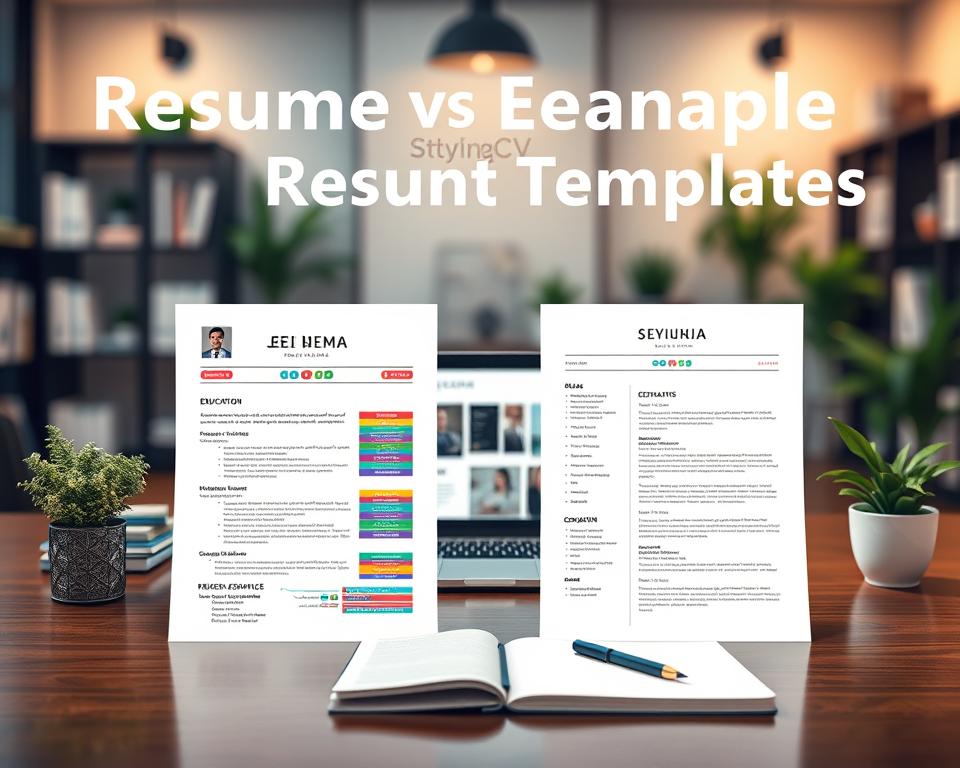
Starting a new job search can feel overwhelming. You know you need a powerful application document, but the terminology can be confusing. You’ve likely seen both “resume examples” and “resume templates” recommended, but understanding their distinct roles is the first step to career success.
This guide will clarify the fundamental difference. Think of examples as inspiration for your content and structure. Templates are the pre-formatted shells you fill with your unique information. Knowing which tool to use and when is a game-changer for any job seeker.
We will break down each concept with clear, actionable insights. You’ll learn how to leverage real-world samples and structured formats to create a document that truly stands out. This knowledge empowers you to build a professional summary that effectively advances your career goals.
Principaux enseignements
- Examples provide inspiration for content, while templates offer a ready-made structure.
- Understanding the difference helps you choose the right tool for your specific needs.
- Both are essential for creating a professional and effective application.
- The right choice can significantly impact your job application success rate.
- This guide will show you how to use each one for maximum impact.
Understanding the Basics of Resume Examples and Resume Templates
Before you can build a powerful career document, you must understand the building blocks. Let’s clarify the two main tools at your disposal.
Defining Key Terms and Concepts
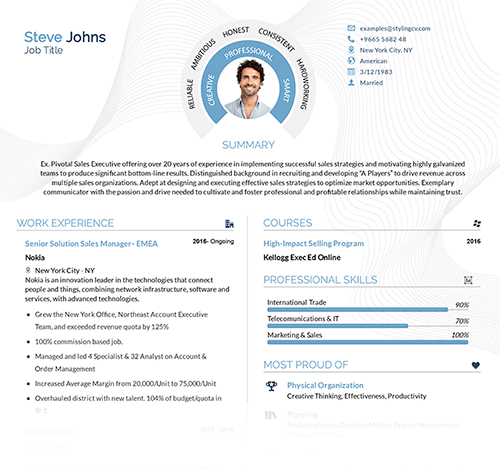
A resume example is a real, completed document from another professional. It shows you how someone structured their work history and achievements. You use it for inspiration on content and phrasing.
A resume template is a pre-formatted shell with placeholder text. It provides the design, layout, and section headers. You fill it with your unique information.
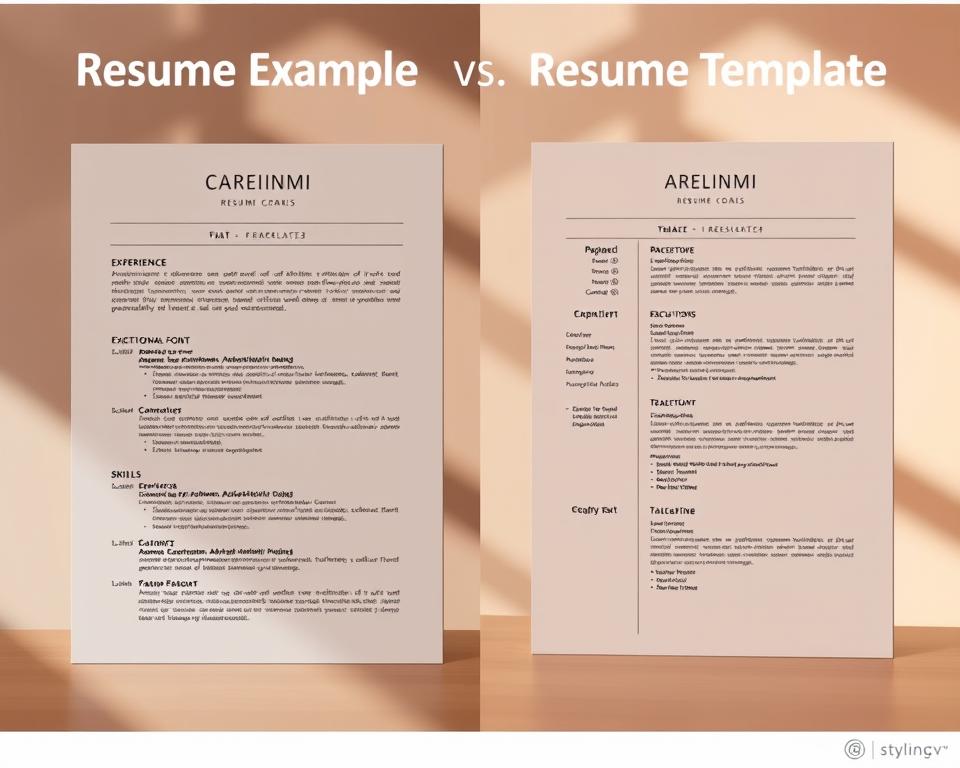
Think of an example as a finished painting you study for technique. The template is the blank canvas with a penciled outline, ready for your colors.
Why the Distinction Matters for Your Job Search
Knowing the difference prevents critical mistakes. Copying an example word-for-word lacks authenticity. Using a template without a content strategy creates a pretty but empty document.
The most effective approach combines both. Study examples to learn what content works. Then, use a template to present that content professionally. This ensures your application is both substantively strong and visually appealing.
| Fonctionnalité | Exemple de CV | Modèle de CV |
|---|---|---|
| Primary Purpose | Content Inspiration | Structural Framework |
| What You Get | Completed professional narrative | Pre-designed layout and formatting |
| Best Use | Learning industry norms and phrasing | Ensuring visual consistency and speed |
This foundational knowledge empowers you to make smart choices. Every application you submit will be tailored and professional, significantly boosting your chances for that next job.
Deep Dive into Resume Examples vs Resume Templates
Your career journey deserves a document that truly represents your potential. Understanding the distinct roles of these two resources will transform your application process.
What Sets Them Apart?
The fundamental difference lies in their core purpose. Completed samples show you what content works in real-world situations. They demonstrate how professionals describe their achievements and organize information.
Pre-formatted shells focus on professional presentation. They solve design challenges with consistent layouts and typography. This ensures your document looks polished without design expertise.
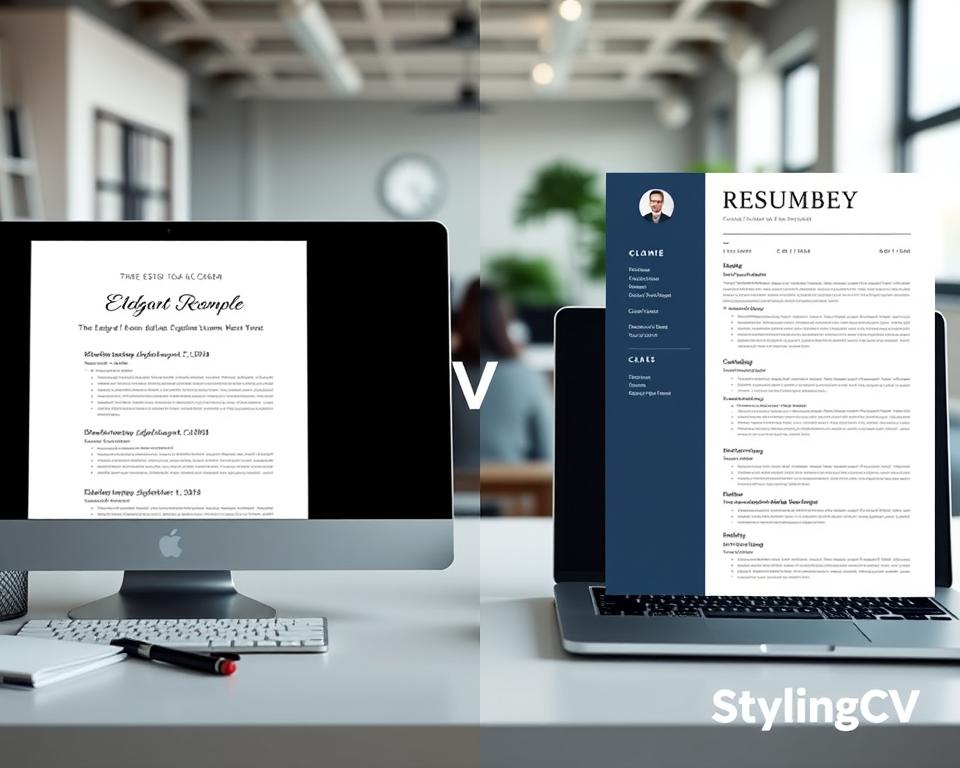
When studying samples, you analyze content strategy. You see how others highlight relevant skills and quantify results. This helps you understand what hiring managers value in your field.
Templates address different concerns. They provide a proven framework that guarantees your document includes essential sections. This saves time while maintaining visual consistency.
| Aspect | Completed Samples | Pre-formatted Shells |
|---|---|---|
| Primary Focus | Content Strategy & Phrasing | Layout & Visual Design |
| Key Benefit | Industry-specific language | Professional appearance |
| Meilleur pour | Learning effective communication | Ensuring structural completeness |
The most effective approach combines both resources. Study samples to understand content expectations. Then apply those insights using a quality template. This creates a document that’s both substantive and visually appealing.
Exploring the Anatomy of a Resume Example
Effective career summaries follow a proven anatomical blueprint that communicates value efficiently. When you examine professional application documents, you’ll discover consistent patterns that make them successful.
Essential Elements and Structure
Quality career documents share common structural elements. They typically begin with clear contact information at the top. This includes your name, phone, email, and professional profile links.
The professional profile section immediately follows. It serves as your elevator pitch, highlighting key strengths relevant to the target position. This section should capture the employer‘s attention within seconds.
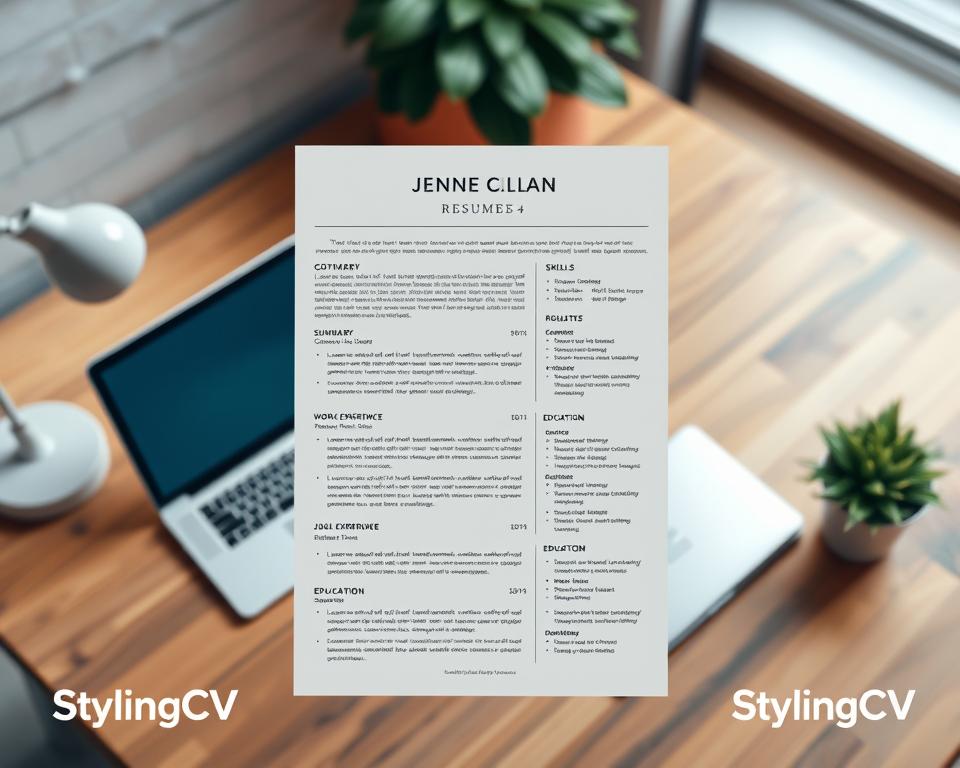
The work experience section forms the core of your document. It showcases your career progression and achievements in reverse chronological order. Each job entry should demonstrate measurable impact.
Strategic skills listings and education details complete the essential sections. These components work together to present a comprehensive picture of your qualifications.
When to Use a Resume Example
Reference professional samples when you’re uncertain about describing specific experience. They’re particularly helpful during career transitions or when entering new industries.
Use them to understand current formatting conventions in your field. Study how others quantify achievements and prioritize accomplishments. The key is extraction, not replication—analyze strategies and apply principles to your unique story.
Unpacking the Components of a Resume Template
When you open a quality template, you’ll discover a thoughtfully organized framework ready for your content. This pre-designed structure eliminates guesswork and ensures professional presentation from the start.
Core Sections to Include
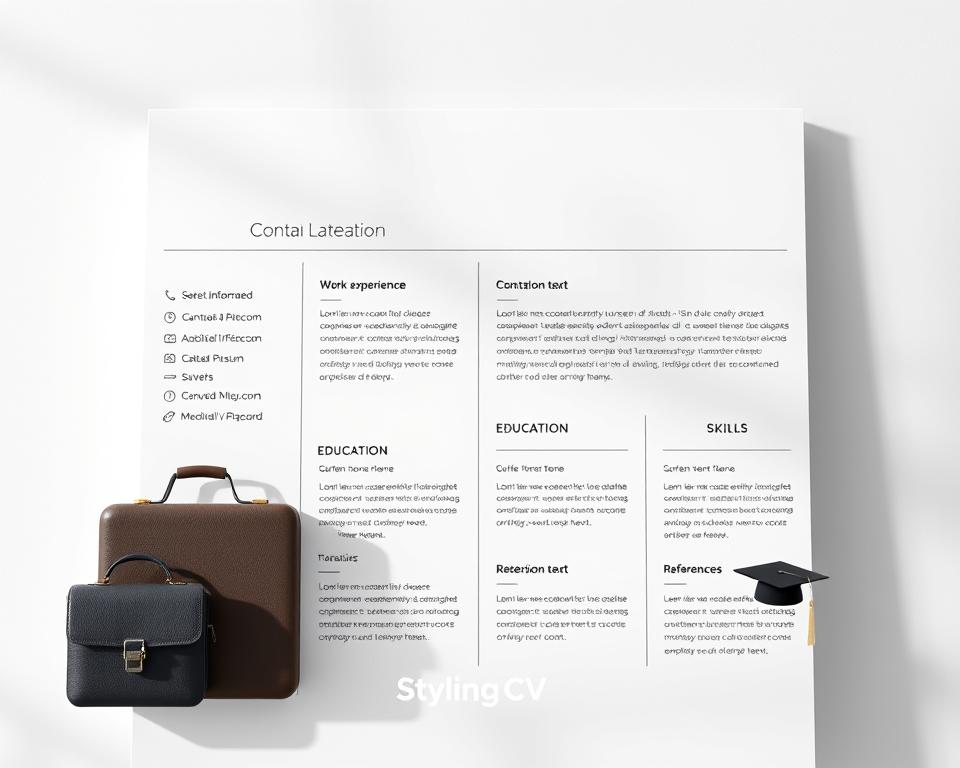
Every effective template contains essential components positioned for maximum impact. Your contact information appears prominently at the top for immediate visibility. The professional summary section follows, highlighting your key qualifications.
The work experience area provides clear formatting for multiple positions. You’ll find dedicated spaces for your skills and education details. These core sections work together to create a comprehensive career document.
Customization and Design Benefits
Many people worry templates look generic. However, modern designs offer extensive customization options. You can adjust section order to emphasize your strongest qualifications.
Quality templates span one to two pages with efficient formatting. They maintain visual consistency while allowing personal touches. Our resume builder tool makes customization simple and intuitive.
| Template Feature | Professional Benefit | Customization Option |
|---|---|---|
| Section Headers | Clear organization | Reorder based on priority |
| Typography | L'attrait visuel | Font style adjustments |
| Layout Structure | Reader-friendly flow | Expand/contract sections |
| Color Scheme | Brand consistency | Industry-appropriate colors |
This flexible approach ensures your final document stands out while maintaining professional standards. You focus on content while the template handles design challenges.
Side-by-Side Comparison: Content, Length, and Detail
Understanding how these resources manage length and detail will transform your application strategy. Each tool serves a distinct purpose in crafting your career narrative.
Differences in Detail and Formatting
Professional samples demonstrate effective content density. You’ll see how experts condense years of experience into concise bullet points. They focus on measurable achievements rather than duty lists.
Pre-designed frameworks handle detail through structural constraints. They allocate specific space for each section, preventing over-expansion of less important areas. This ensures critical sections like work experience receive adequate attention.
When considering document length, both tools guide you differently. Samples prove the one-page ideal is achievable by showing real professionals who’ve condensed substantial experience. Frameworks provide the constraints that make this goal manageable.
| Aspect | Professional Samples | Pre-designed Frameworks |
|---|---|---|
| Content Approach | Shows industry-specific language | Provides organizational structure |
| Length Management | Demonstrates condensation techniques | Enforces space limitations |
| Detail Level | Reveals optimal information density | Controls section expansion |
| Formatting Role | Displays final design results | Embeds consistent formatting |
Your career document benefits most when you understand these complementary roles. Use samples to learn what content works, then apply those insights within a structured framework.
Best Practices for Tailoring Resumes for Job Applications
Customizing your application for each opportunity is the single most effective strategy in modern job hunting. When you’re applying for multiple positions, creating targeted versions demonstrates genuine interest and strategic thinking.
Matching Your Resume to Specific Roles
Start by thoroughly analyzing each job description. Identify the required skills and key responsibilities the employer emphasizes. Your resume should directly address these elements.
Study professional examples in your target field to understand which experiences employers value most. This helps you determine what to highlight from your own background. Templates then make it efficient to create multiple tailored versions.
Incorporating Relevant Keywords Naturally
Use the exact terminology from the job description when describing your experience and skills. This helps your application pass tracking systems while showing you understand the role’s requirements.
The key is authenticity. Where your work experience genuinely aligns with job requirements, use the employer’s language to describe your accomplishments. Strategic tailoring means adjusting your profile summary and reordering your skills list based on each position’s priorities.
International vs. American Perspectives on CVs and Resumes
Navigating international job applications requires understanding key terminology differences. What you call your professional document can vary significantly across regions.
In most countries, the terms curriculum vitae and resume are used interchangeably. When you’re applying in Europe, Asia, or Australia, a CV typically means a concise one to two-page summary. This matches what Americans consider a standard resume.
Regional Variations in Resume Usage
The American perspective creates a clear distinction. In the United States, CVs serve academic and research purposes exclusively. They document your complete career history, including publications and presentations.
American resumes focus on relevance rather than completeness. They highlight skills and experiences specific to each job application. This targeted approach keeps documents concise and impactful.
When you’re applying internationally, research local expectations. European employers requesting a curriculum vitae expect a resume-style document. Academic positions worldwide typically require comprehensive American-style CVs.
This understanding prevents confusion during your global job search. You can confidently submit the appropriate document based on both position requirements and regional conventions.
Design, Visual Elements, and Mobile-Friendly Formatting
Your document’s visual presentation creates the first impression before a single word is read. Professional design ensures your qualifications stand out immediately. It also guarantees readability across all devices.
Modern hiring managers frequently review applications on smartphones. Your document must display perfectly on smaller screens. Clear section breaks and appropriate font sizes prevent frustrating zooming or scrolling.
Tips for Using Screenshots and Templates Effectively
When studying screenshot examples, focus on visual hierarchy. Notice how key information like your name and current title stands out. Strategic font choices and positioning guide the reader’s eye naturally.
Our professional resume builder incorporates these principles automatically. It provides templates with optimal margins and font pairings. This saves you from design guesswork while ensuring ATS compatibility.
Every visual element should enhance rather than distract from your content. Bold text highlights section headers effectively. Bullet points make your work achievements easily scannable for busy recruiters.
| Design Element | Professional Benefit | Mobile Consideration |
|---|---|---|
| Section Headers | Clear organization | Must be prominent on small screens |
| Font Size | Readability | Minimum 11pt for mobile viewing |
| Marges | Visual breathing room | Prevent content from feeling cramped |
| Points à puce | Scannability | Break up text blocks effectively |
Your final document should maintain clean, minimalist principles. Avoid excessive graphics that may not translate well across platforms. For more guidance on proper structure, explore our comprehensive resume format recommendations.
Conclusion
You now possess the key to transforming your job search strategy. Understanding the distinct roles of professional samples and pre-formatted frameworks empowers you to build a document that truly represents your potential.
Use samples to learn effective content strategies from others in your field. Then, apply those insights using a professional framework to ensure visual polish. This powerful combination is your greatest asset.
Your unique work experiences, education, and achievements deserve a presentation that opens doors. Don’t let formatting challenges delay your career progress.
Take the next step today. Our intelligent resume builder simplifies the process, merging inspirational guidance with professional design. Create a document that gets you the job you’re targeting and advance your professional life.
FAQ
What is the main difference between a resume example and a resume template?
When should I use a resume example versus a template?
Can I copy content directly from a resume example?
How do I choose the right template for my career level?
Are CVs and resumes the same thing?
What essential sections must my resume include?
How important is design and mobile-friendly formatting?
Sources et références
- ✓ Les meilleures pratiques en matière de développement de carrière des principales associations de RH
- ✓ Recherches et enquêtes sur l'industrie
- ✓ Entretiens avec des experts et études de cas
- ✓ Vérifié par des conseillers d'orientation professionnelle
Last updated: December 15, 2025
⚡ Créez votre CV en seulement 5 minutes
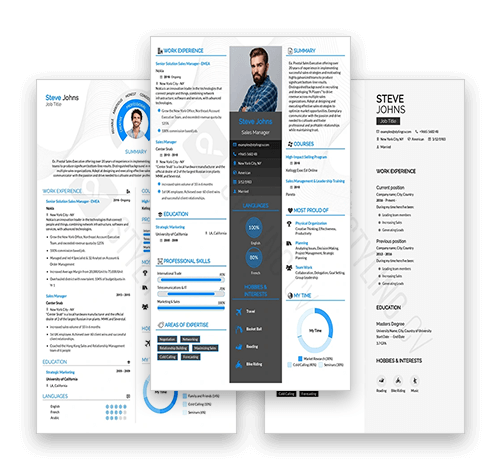
Modèles conçus par des experts en recrutement. Aucune compétence en matière de conception n'est nécessaire.
 Construire votre CV maintenant
⭐ 4.8/5 Evaluation
Construire votre CV maintenant
⭐ 4.8/5 Evaluation
Plus de 3 000 histoires à succès