UX Designer Resume 2026: How to Write One That Lands Product Design Interviews

Why a UX Designer Resume Is Different From Every Other Resume
Product design is one of the rare fields where your work speaks before your words can. Recruiters open your portfolio first, judge your taste in two seconds, and only then read your resume to check whether you can articulate the thinking behind the pixels. That means your UX resume must do two jobs at once: pass the applicant tracking system with the right keywords, and prove to a human that you connect design decisions to measurable business outcomes.
In 2026 the bar has risen on both fronts. Recruiters report spending less time per resume, AI screening tools are filtering for outcome language, and a growing share of design hiring uses skills-first evaluation over credential-checking. If your resume reads like a list of job duties instead of a portfolio of results, you will be passed over even with strong case studies. This guide shows you exactly how to structure, write, and keyword a UX designer resume that survives the ATS and earns interviews at product-driven companies.
What Recruiters Look For in a UX Designer Resume in 2026
Before writing a single bullet, know what the reader is scanning for. Design recruiters and hiring managers in 2026 evaluate your resume on four signals, in order of weight:
- Business impact. Did your work move a metric? Conversion, activation, retention, task success rate — if it is not quantifiable or directional, it reads as busywork.
- Process and craft. Can you name your tools (Figma, FigJam, Maze, UserTesting) and a repeatable process (discover, define, prototype, test, iterate)?
- Collaboration. Design is a cross-functional sport. Recruiters look for evidence you shipped with product managers and engineers, not just that you made mockups.
- Fit with the company’s product type. B2B SaaS teams want enterprise flows, consumer apps want onboarding and engagement work, and agencies want breadth. Mirror the vocabulary of the specific job description.
If your resume does not surface these four signals in the first third of the page, it gets skimmed and discarded. Get the structure right using an ATS-friendly professional resume builder so your layout stays parseable while you focus on the content.
The Exact Sections Your UX Designer Resume Needs (In Order)
- Contact header — name, city, email, phone, and your portfolio URL in the same visual line, with the portfolio first.
- Professional summary — 2-3 lines naming your speciality and your headline outcome. See how to write a resume summary.
- Core skills — a tight grid of 6-10 tools and methods, keyword-matched to the JD.
- Experience (reverse-chronological) — your main section; every bullet ties to a metric.
- Case-study highlights or selected projects — 1-3 compact lines linking to full portfolio cases.
- Education and certifications — keep compact; a UX bootcamp or Google UX cert is fine if relevant.
Order the document for scannability. Most strong UX resumes stay on one page and let the portfolio carry the depth.
How to Write a UX Designer Resume Summary
Your summary is the single highest-leverage line on the resume — it is often the only part a recruiter fully reads. A weak summary says “UX designer with 5 years of experience looking for new opportunities.” A strong one says:
Product designer with 6 years in B2B SaaS. Improved onboarding activation 34% and cut support tickets 27% by leading discovery, prototyping, and usability testing for a 40k-MAU web app. Skilled in Figma, journey mapping, and A/B testing.
The formula is: speciality + years + one quantified headline outcome + tools. Write your own using the AI resume builder, which drafts and scores your summary against outcome language.
UX Designer Resume Bullet Examples (Quantified)
Use the strongest resume action verbs and lead every bullet with the result. Weak bullets describe duties; strong bullets describe outcomes.
- Weak: “Designed the mobile onboarding flow using Figma.”
- Strong: “Redesigned the mobile onboarding flow, raising activation from 41% to 55% in two quarters.”
- Weak: “Ran usability tests on the checkout flow.”
- Strong: “Led 12 usability test sessions on checkout and reduced task abandonment 22% to 11% via 3 design iterations.”
- Weak: “Created wireframes for the dashboard.”
- Strong: “Shipped a dashboard redesign used by 15k weekly active customers, lifting feature adoption 18%.”
If you are early-career and lack big numbers, see the no-experience resume guide and use case-study project work to demonstrate process.
The Best Skills to Put on a UX Designer Resume
Mirror the job description’s exact terms. A strong 2026 UX skill set spans three groups:
- Tools: Figma, FigJam, Sketch, Adobe XD, Protopie, Maze, UserTesting, Miro, Framer.
- Methods: user research, usability testing, wireframing, prototyping, A/B testing, journey mapping, information architecture, heuristics.
- Soft skills: cross-functional collaboration, stakeholder management, design critique, rapid iteration, design systems.
For more on selecting and formatting skills, read how to list skills on your resume. Avoid stuffing so many that the section looks cluttered — keep it scannable and relevant to the role.
UX Designer Resume Template (2026)
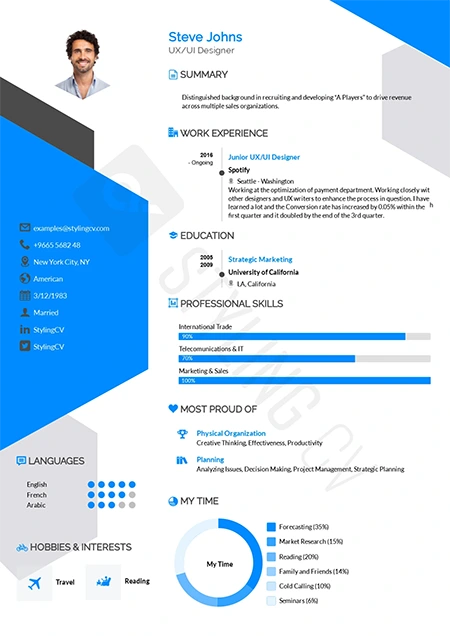
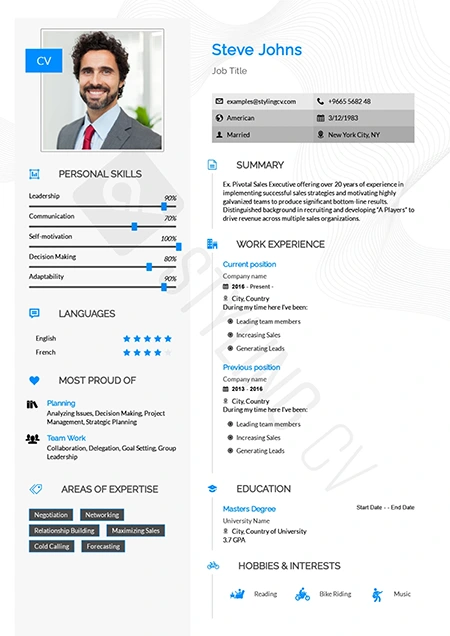
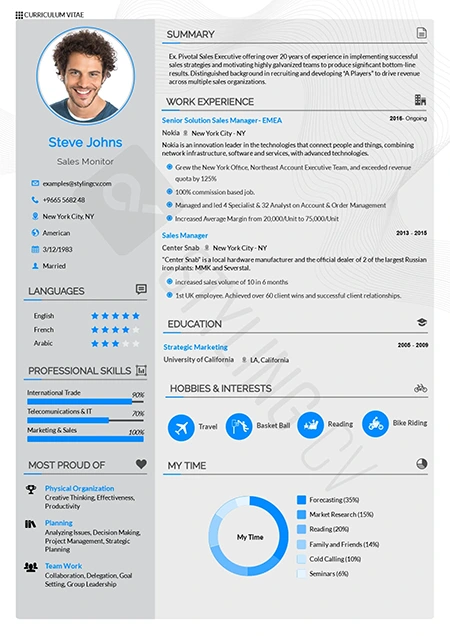
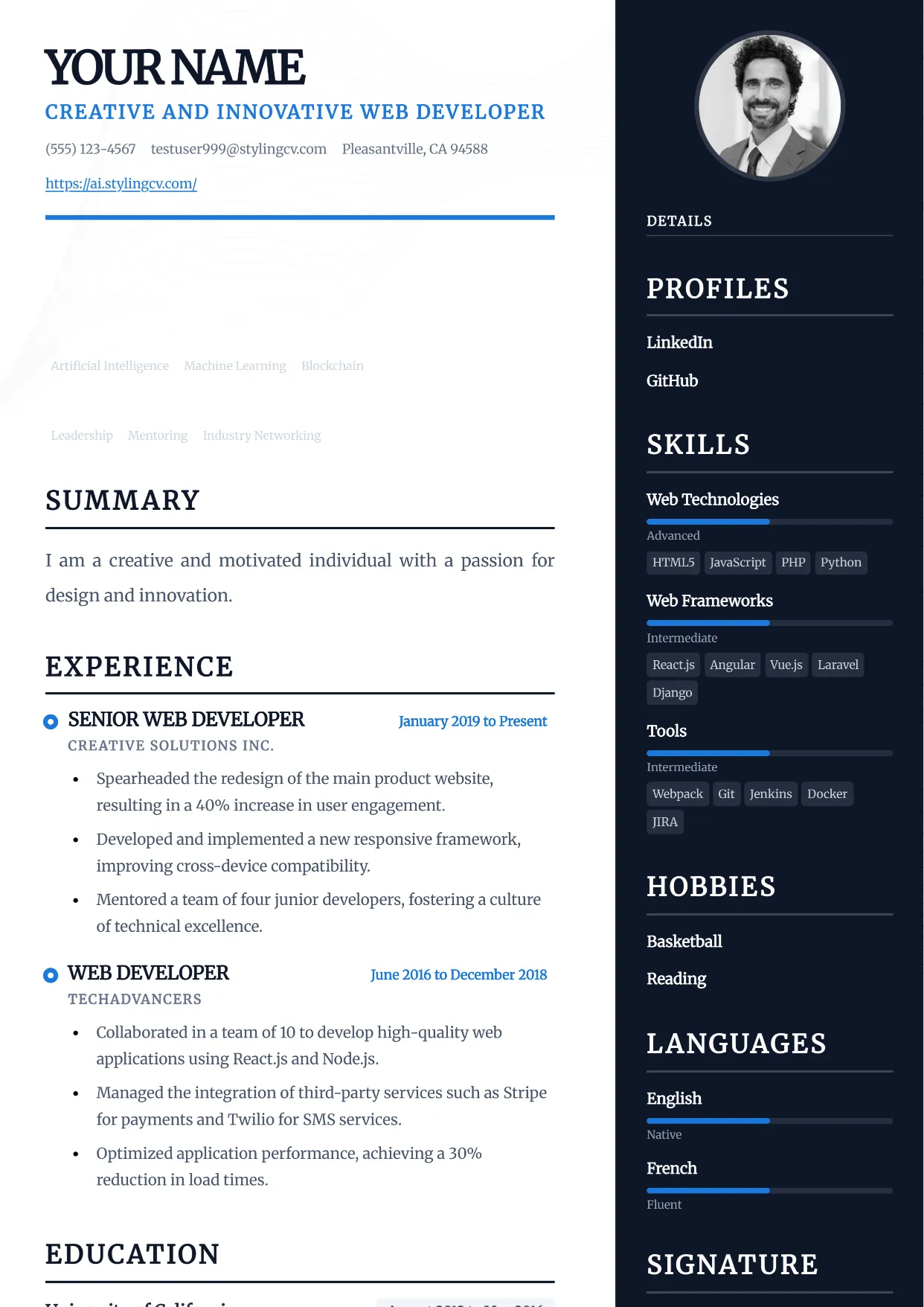
Your template must balance visual polish (designers are judged on it) with ATS compatibility. The safest approach is a clean, single-column layout with generous white space and a restrained typographic accent. Build one in minutes with the free StylingCV resume templates, then drop in your summary, skills, and quantified bullets.
UX Designer Resume Mistakes That Kill Your Application
- Portfolio link buried or broken. Make it prominent and test every link before applying; a 404 kills a design application instantly.
- No metrics. Duties without outcomes signal “junior or coasting.” Replace “designed screens” with “improved X by Y.”
- Over-designed layout that breaks the ATS. Two-column or graphic-heavy resumes often parse badly. See whether two-column resumes break ATS.
- Generic summary. A summary that could belong to any applicant gets skipped. Be specific about your product type and outcomes.
- Dense walls of text. Recruiters scan, so use short bullets, strong verbs, and clear section breaks.
Frequently Asked Questions
Is a design degree required to become a UX designer?
No. The field is skills-and-portfolio driven: hiring managers weigh shipped work, case studies, and tool fluency over credentials. A related degree helps, but a strong portfolio with documented outcomes beats a degree alone in most 2026 interviews.
Should I include every project I have ever worked on?
No. Include only your strongest 1-3 projects with real metrics and clear process. Recruiters would rather see three deep, well-written cases than ten shallow bullet lists.
How are UX designer resumes different from graphic designer resumes?
Graphic designer resumes emphasize visual identity and branding work, while UX resumes emphasize process, research, and business metrics. For the visual track, check the graphic designer resume guide.
How do I make my UX resume survive the ATS?
Use a clean single-column layout, standard section headings, the JD’s exact keywords, and simple fonts. Run your draft through this ATS optimization walkthrough before submitting.
Build Your UX Designer Resume in Minutes
You have the structure, the bullets, and the keywords. Now turn them into a polished, ATS-friendly, portfolio-linked resume with the StylingCV AI Resume Builder — trusted by over 6 million job seekers for its 11 specialist AI agents, one-page-optimized templates, and instant keyword scoring. When the application asks for a cover letter, pair it with the AI Cover Letter Builder so your story stays consistent from first click to interview.