How to Write a Resume Without a Degree in 2026 (Template + Examples)

Here’s a number that might surprise you: 62% of American workers don’t have a bachelor’s degree, according to the Bureau of Labor Statistics. Yet most resume advice online assumes you graduated from a four-year university. That’s a problem when you’re staring at a blank “Education” section wondering what to write.
The good news? Companies are dropping degree requirements fast. A 2024 SHRM report found 45% of employers removed degree requirements for certain roles since 2022. Google, Apple, IBM, and Bank of America now hire for many positions based on skills and experience alone.
I’ve helped thousands of StylingCV users build resumes that land interviews without a college degree. This guide walks you through exactly how to do it — with real templates and examples you can use today.
Why Most Resume Advice Fails When You Don’t Have a Degree
Ready to Build Your Resume?
Use StylingCV’s AI Resume Builder to create a professional, ATS-optimized resume in minutes. Our 11 specialized AI agents analyze job descriptions, optimize keywords, and format everything for you — no design skills needed.
Generic resume templates treat education as a checkbox. “Put your degree here.” But what if you don’t have one? You end up with either an awkward gap or — worse — a resume that looks incomplete next to candidates who list universities.
The real fix isn’t hiding the missing degree. It’s restructuring your resume so education isn’t the star of the show. Your skills, certifications, and track record of results need to carry the weight.
Key insight: Hiring managers spend an average of 7.4 seconds on initial resume scans (EyeTracking Inc., 2024). They’re looking for relevant skills and accomplishments first — education is usually checked later, if at all.
Step 1: Pick the Right Resume Format
Three resume formats exist. Two of them work really well without a degree.
| Format | Best For | Without a Degree? |
|---|---|---|
| Chronological | Steady career progression | ⚠️ Draws attention to education gaps |
| Functional | Career changers, gaps, no degree | ✅ Leads with skills |
| Combination | Some experience + strong skills | ✅ Best overall choice |
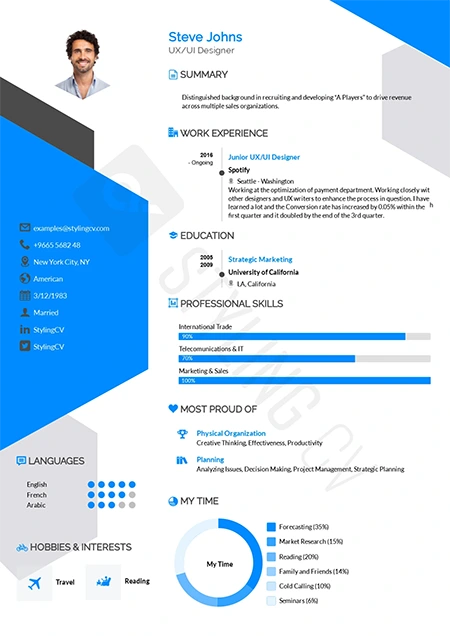
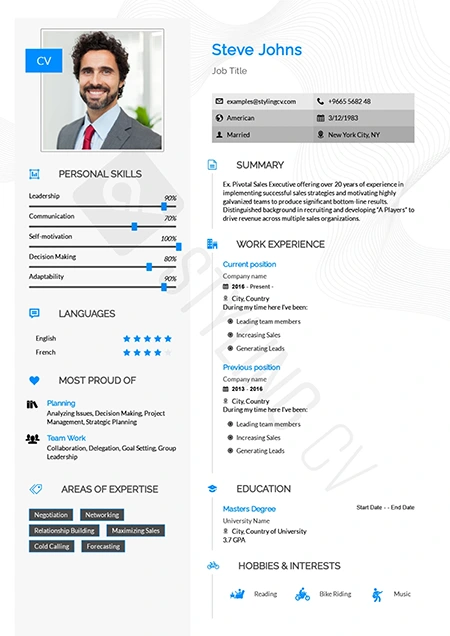
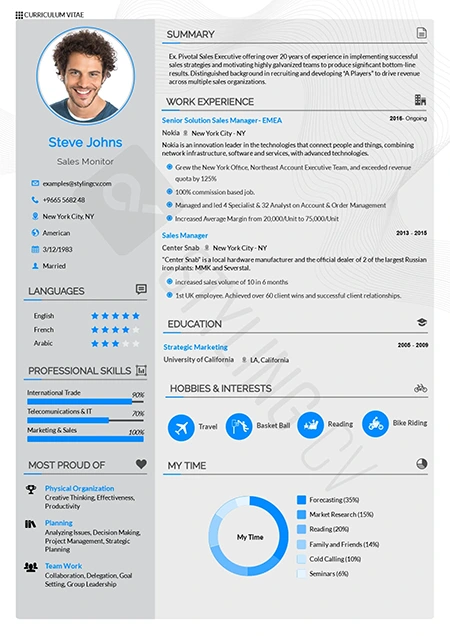
The combination (hybrid) format is usually your best bet. It puts a skills summary up top, followed by your work experience. Education goes at the bottom where it gets less scrutiny.
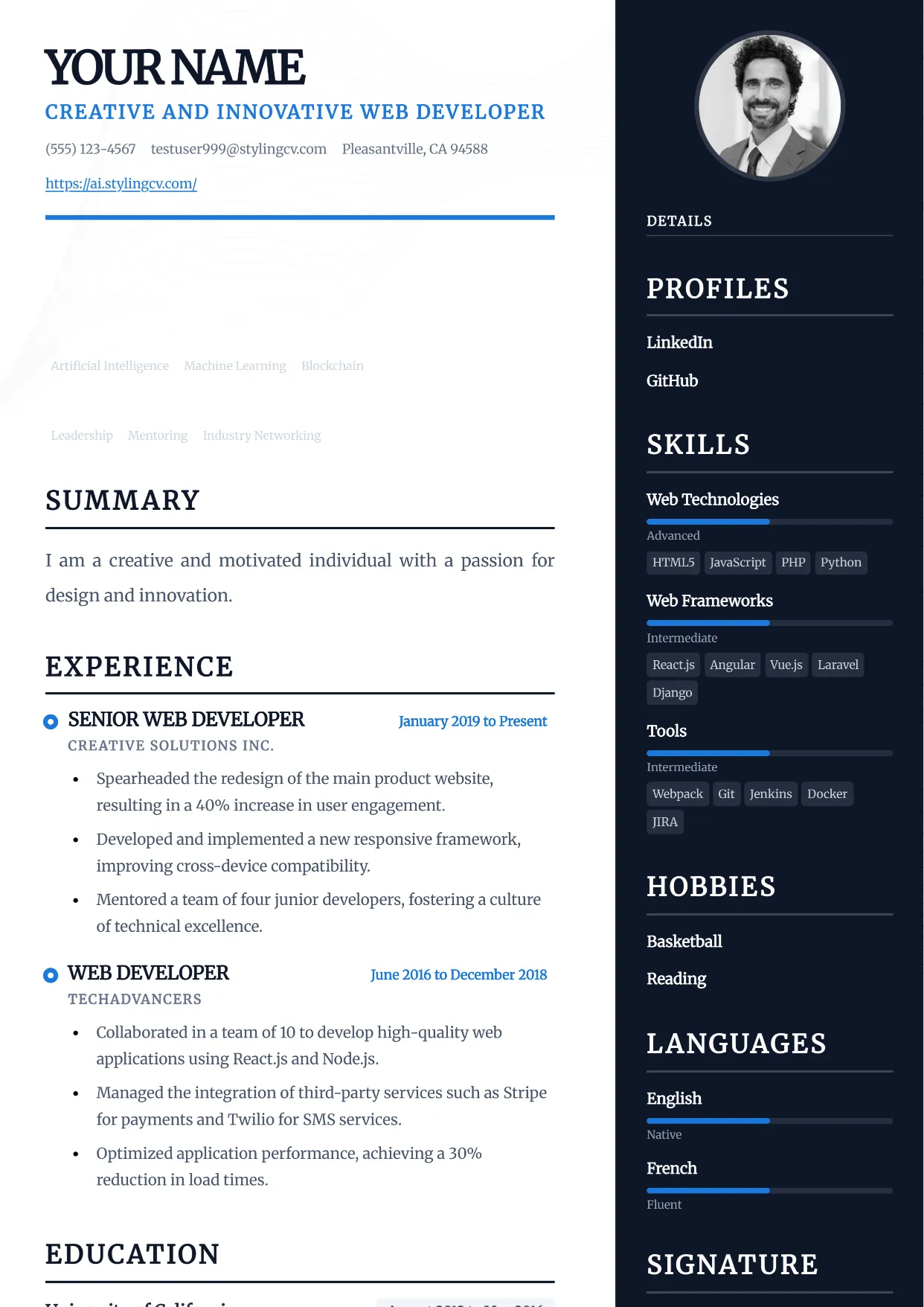
Browse StylingCV’s ATS-friendly resume templates — most support combination formatting out of the box.
Step 2: Write a Professional Summary That Leads with Experience
Your summary sits at the top of your resume. It’s prime real estate — use it to front-load what you do have, not what you don’t.
❌ What not to write:
“Motivated individual seeking an opportunity to grow and develop skills in a challenging environment.”
That says nothing. It’s filler, and every recruiter has seen it a thousand times.
✅ What to write instead:
“Warehouse operations professional with 5+ years of experience managing inventory systems and leading teams of 12+. Cut shipping errors by 30% at XYZ Logistics through process redesign. OSHA 30 certified, forklift licensed, experienced with SAP and NetSuite.”
See the difference? Specific, measurable, and packed with relevant credentials. No degree mentioned — and nothing feels missing.
More summary examples by industry:
IT/Tech Support: “CompTIA A+ and Network+ certified IT support specialist with 4 years of hands-on experience resolving 50+ tickets daily across Windows, macOS, and Linux environments. Maintained 98.5% customer satisfaction rating at Managed Solutions Inc.”
Sales: “B2B sales representative who exceeded quota for 8 consecutive quarters, closing $2.4M in annual recurring revenue. Proficient in Salesforce, HubSpot, and cold outreach at scale. Google Digital Marketing Certificate holder.”
Skilled Trades: “Licensed electrician with 7 years of residential and commercial experience. Completed 200+ projects on time and under budget. Master Electrician License (State of Texas), OSHA 10, and certified in solar panel installation.”
Step 3: Build a Skills Section That Does the Heavy Lifting
When you don’t have a degree, your skills section becomes the most important part of your resume. This is where you prove you can do the job — right now, on day one.
Hard skills to include:
- Software and tools you’re proficient in (be specific: “Salesforce CRM” not just “CRM software”)
- Technical certifications (AWS, Google, CompTIA, HubSpot, etc.)
- Industry-specific tools and equipment
- Languages spoken (specify fluency level)
Soft skills — include sparingly and back them up:
Don’t just list “team player” or “detail-oriented.” Instead, weave soft skills into your experience bullets: “Led cross-functional team of 8 to deliver product launch 2 weeks ahead of schedule.” That proves leadership without ever saying “leadership skills.”
Pro tip: Use StylingCV’s resume keyword tool to match your skills to what’s in the job description. ATS systems rank resumes partly on keyword matches — if the posting says “project management” and your resume says “project management,” you score higher.
Step 4: Turn Your Work Experience Into Quantified Achievements
This is where most resumes fall flat — degree or no degree. People list duties when they should be listing results.
Before and after examples:
| ❌ Duty-based | ✅ Achievement-based |
|---|---|
| Responsible for managing social media accounts | Grew Instagram following from 2K to 45K in 14 months, driving 23% increase in website traffic |
| Handled customer complaints | Resolved 95% of customer escalations within 4 hours, earning “Employee of the Quarter” 3 times |
| Worked on warehouse operations | Redesigned pick-and-pack workflow, reducing order fulfillment time from 48 hours to 18 hours |
| Assisted with bookkeeping | Managed accounts receivable for 200+ clients, reducing outstanding invoices by $47K in 6 months |
Use this formula: Action verb + What you did + Measurable result.
Step 5: Handle the Education Section (Yes, Still Include One)
Don’t skip the education section entirely — that looks like you’re hiding something. Instead, keep it short and put it at the bottom of your resume.
What to list based on your situation:
Some college, no degree:
University of Arizona — Coursework in Business Administration (2019–2021)
Completed 48 credit hours. Include this if the coursework is relevant to the job.
High school diploma only:
Lincoln High School, Denver, CO — High School Diploma (2018)
One line. That’s all you need. Then fill the space with certifications.
GED:
GED Certificate (2020)
Treated equivalently to a high diploma by most employers.
No diploma, no GED:
Leave education off entirely and use that space for an expanded certifications or portfolio section. Most employers won’t ask about high school if you’ve strong work experience and credentials.
Step 6: Stack Certifications to Replace the Degree Gap
Professional certifications have become the degree alternative. A 2024 Coursera Global Skills Report found that 90% of employers now view professional certificates as credible alternatives to degrees.
High-value certifications by field:
Tech:
- Google IT Support Professional Certificate
- AWS Certified Cloud Practitioner
- CompTIA A+, Network+, Security+
- Meta Front-End/Back-End Developer Certificate
Business/Marketing:
- Google Digital Marketing Certificate
- HubSpot Inbound Marketing Certification
- Salesforce Administrator
- PMP (Project Management Professional)
Skilled Trades:
- OSHA 10/30 Safety Certification
- EPA 608 Certification (HVAC)
- Forklift Operator License
- CDL (Commercial Driver’s License)
Healthcare:
- Certified Nursing Assistant (CNA)
- Phlebotomy Technician (CPT)
- Medical Assistant (CCMA)
- CPR/BLS Certification
Real Example: Resume Without a Degree That Got Interviews
Here’s a stripped-down version of a resume that one StylingCV user built — and used to land a $68K operations coordinator role at a logistics company:
JORDAN MITCHELL
Operations Professional | Lean Six Sigma Green Belt
Houston, TX | jordan.m@email.com | (555) 234-5678PROFESSIONAL SUMMARY
Operations coordinator with 6 years of experience in logistics and supply chain management. Reduced warehouse operating costs by 18% ($230K annually) through process optimization. Lean Six Sigma Green Belt certified. Proficient in SAP, WMS, and advanced Excel.KEY SKILLS
Inventory Management | SAP ERP | Lean Six Sigma | Warehouse Management Systems | Vendor Negotiation | Process Improvement | Advanced Excel (VLOOKUP, Pivot Tables, Macros) | OSHA ComplianceEXPERIENCE
Operations Coordinator — FastShip Logistics, Houston, TX (2021–Present)
• Managed inventory for 15,000+ SKUs across 3 distribution centers
• Cut picking errors by 34% by implementing barcode scanning verification
• Negotiated carrier contracts saving $85K annually in shipping costs
• Trained and supervised team of 14 warehouse associatesWarehouse Associate — Amazon Fulfillment, Houston, TX (2018–2021)
• Consistently ranked top 5% in pick rate among 200+ associates
• Promoted to Process Guide within 8 months
• Identified packaging inefficiency that saved 12 minutes per palletCERTIFICATIONS
Lean Six Sigma Green Belt | OSHA 30-Hour General Industry | Forklift Operator (Sit-down & Stand-up) | SAP MM Module CertifiedEDUCATION
Houston Community College — Coursework in Supply Chain Management (2017–2018)
No bachelor’s degree. Two certifications front and center. Every bullet has a number. Education buried at the bottom with relevant coursework listed. That’s the template.
Common Mistakes to Avoid
- Don’t apologize for not having a degree. Never write “Although I don’t have a degree…” in your cover letter or summary. You’re selling what you’ve, not explaining what you lack.
- Don’t lie about education. 75% of hiring managers say they’ve caught candidates lying about degrees (HR Digest, 2024). Background checks can verify enrollment and graduation. Getting caught means immediate disqualification — or termination if you’re already hired.
- Don’t use a purely chronological format if you’ve employment gaps or limited experience. The combination format gives you more control over the narrative.
- Don’t skip keywords. ATS systems don’t care about your degree — they care about keyword matches. Use the exact phrases from the job posting.
- Don’t list high school if you’ve any college or professional experience. It adds nothing once you’ve more relevant credentials to show.
FAQ
Can I get a good job without a college degree?
Absolutely. The Bureau of Labor Statistics reports that 62% of U.S. workers don’t hold a bachelor’s degree. Major employers like Google, Apple, IBM, and Bank of America have removed degree requirements for many roles. In tech, skilled trades, sales, and healthcare support, skills and certifications matter more than diplomas.
Should I include education on my resume if I didn’t finish college?
Yes — but frame it carefully. List it as “Coursework toward [Degree Name]” with the school and dates. If you completed relevant courses, mention them. Place the education section at the bottom of your resume and let your experience and certifications do the talking.
What certifications replace a college degree on a resume?
High-impact certifications include Google Career Certificates, AWS certifications, CompTIA (A+, Network+, Security+), HubSpot Marketing, Salesforce Administrator, PMP, and trade-specific credentials like OSHA, CDL, or CNA. A 2024 Coursera report found 90% of employers view these as credible degree alternatives.
How do I beat ATS screening without a degree?
Most ATS systems rank resumes by keyword match, not by education. Mirror the exact language from the job description in your skills and experience sections. Use an ATS-friendly resume template with clean formatting — no tables, graphics, or headers that confuse parsing software. StylingCV’s AI resume builder automatically optimizes your resume for ATS systems with a 95% pass rate.
Do employers actually check if you’ve a degree?
Some do, especially in regulated industries like finance, healthcare, and government. A 2023 ResumeBuilder survey found 36% of Americans have exaggerated education on their resumes. The risk of getting caught is real — employers use services like the National Student Clearinghouse to verify degrees in seconds. Always be honest about your credentials.
Ready to Build Your Resume?
You don’t need a degree to build a resume that gets interviews. You need the right format, quantified achievements, and certifications that prove you can do the job.
Try StylingCV’s AI Resume Builder free — it automatically formats your resume for ATS systems, suggests achievement-focused bullet points, and lets you choose from 89+ professional templates. Over 6 million people have used it to land jobs at companies like Amazon, Google, and Microsoft.
No degree? No problem. Build your resume in 10 minutes → Start free