Resume Help 2026: Expert Advice & Resources
Resume Help 2026: Everything You Need to Get Hired
You sent 50 resumes. Zero callbacks.
That sentence — or some version of it — lands in my inbox every single week. Accomplished professionals. Fifteen years of experience. Impressive credentials. And a response rate that wouldn’t fill a single interview calendar.
They don’t have a competence problem. They have a presentation problem. And in 2026, presentation problems are amplified by a hiring system that’s more automated, more filtered, and more competitive than at any point in modern history.
This is resume help 2026 — not generic advice, not rehashed blog post tips. Real solutions from someone who’s been on both sides of the hiring desk.
The Root Cause: Why Your Resume Isn’t Working
Before we fix anything, we need to diagnose the problem. Most resume failures fall into one of five categories. Yours is probably in at least two.
Problem 1: The ATS Is Rejecting You Before a Human Sees Your Application
This is the most common issue — and the most invisible. You never know it happened. You just get silence. Or a generic rejection 48 hours later.
ATS rejection happens when your resume’s formatting or keyword profile doesn’t match what the system expects. Common triggers: non-standard section headers, graphics, tables, missing keywords from the job description, or file formats the parser can’t process.
Fix: Rebuild your resume in a single-column layout with standard headers. Extract the exact keywords from the job posting and integrate them naturally. Export as PDF. Test it through an ATS simulator before submitting. StylingCV’s ATS Inspector does exactly this — it reads the parsing rules used by Workday and Greenhouse, then scores your document before it ever reaches a real system.
Problem 2: Your Bullets Describe Duties, Not Outcomes
I see this everywhere. “Responsible for managing a team of five.” “Duties included monthly reporting.” “Assisted with project coordination.”
These phrases tell me what you were supposed to do. They tell me nothing about whether you did it well.
Fix: Rewrite every bullet as: Action Verb + What You Did + Measurable Result. “Managed a team of five” becomes “Led a five-person customer success team to 96% retention rate across 240 enterprise accounts, up from 88%.”
If you don’t have the numbers, find them. Ask your old manager. Check your performance reviews. Dig through old dashboards. If you genuinely can’t find a number, describe scope instead: “Led customer success for a $14M book of business across 240 enterprise accounts.”
Problem 3: Your Resume Reads Like Everyone Else’s
Recruiters see the same phrases hundreds of times. “Team player.” “Detail-oriented.” “Results-driven.” “Excellent communication skills.” These are empty calories — they fill space without adding value.
Fix: Strip every adjective that isn’t backed by evidence. Instead of “excellent communication skills,” show it: “Presented quarterly business reviews to C-suite stakeholders at Fortune 500 clients, securing $2.8M in annual contract renewals.”
The resume help rule I live by: “If you can delete a word without losing information, delete it. If you can replace five words with one that’s more specific, do it. Your resume is real estate — every square inch costs you the reader’s attention.”
Problem 4: You’re Using the Same Resume for Every Application
This was viable in 2015. It’s career suicide in 2026. When an ATS is scoring keyword matches, a generic resume gets a generic score. And generic scores don’t lead to interviews.
Fix: Create a master resume with everything you’ve ever done — every role, every achievement, every skill. Then, for each application, trim and tailor. Swap in relevant bullets. Match keywords. Adjust your summary to speak to the specific role.
Yes, this takes time. StylingCV automates it through a Market Scout agent that reads each job posting and tailors your resume accordingly. Manual tailoring takes 30-45 minutes per application. Automated tailoring takes seconds.
Problem 5: Your Resume Format Looks Dated
I recently reviewed a resume that used Times New Roman, 1.5 line spacing, and an objective statement that began “To obtain a challenging position…” It looked like it was written in 2008. It probably was. The content had been updated, but the frame hadn’t.
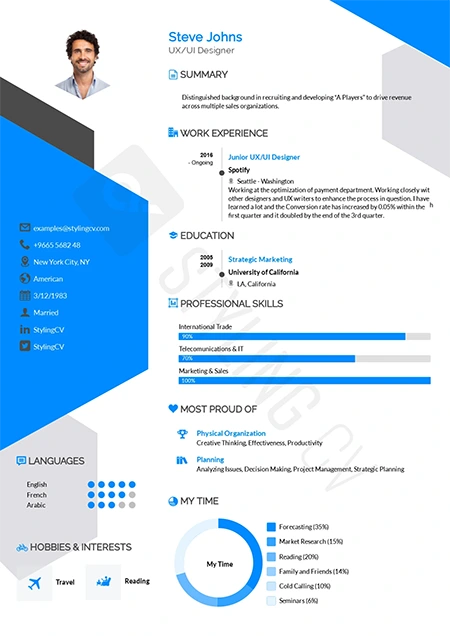
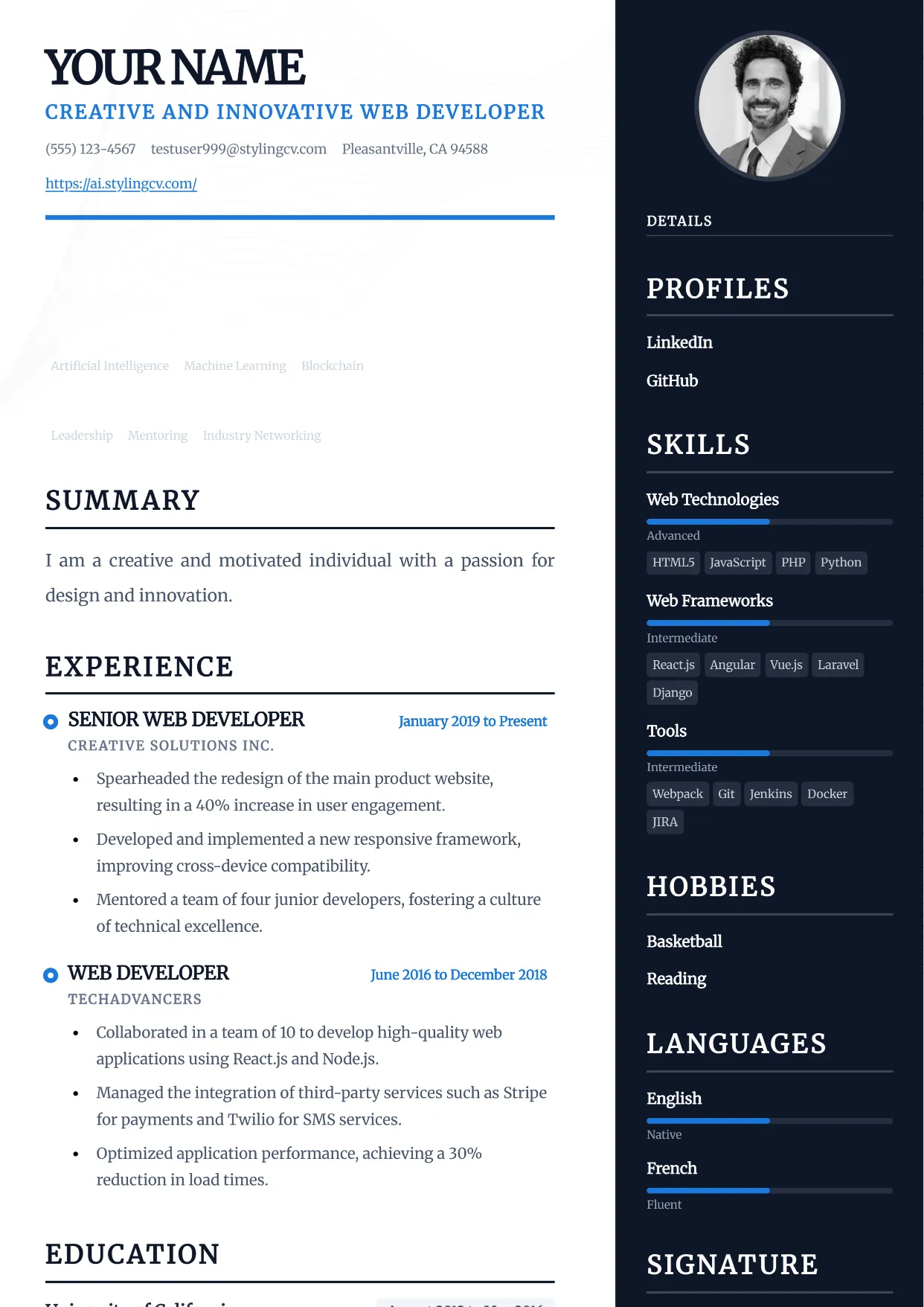
Fix: Modern fonts (Calibri, Inter, Helvetica). Clean spacing. One accent color used minimally — Teal (#268599) for section headers creates an immediate modern impression. Remove your full street address (city and state only). Replace the objective with a professional summary. Shorten line length to improve scanability.
For a complete walkthrough of modern formatting rules, see our resume format guide.
Common Resume Problems — Solved
| Symptom | Diagnosis | Solution |
|---|---|---|
| Zero responses after 50+ applications | ATS rejection or format incompatibility | Rebuild in single-column PDF, add job-specific keywords |
| Interviews for junior roles only | Your resume undersells your experience | Rewrite bullets with scope, scale, and impact metrics |
| Recruiters ask about things already on your resume | Key information is buried or unclear | Move critical achievements to top; shorten overall |
| Good response rate from small companies, zero from large | Large companies use ATS; your resume fails parsing | Strip all formatting complexity; test on ATS simulator |
| Long employment gaps are generating questions | Unexplained gaps invite negative assumptions | Add one-line gap entries; be transparent, not apologetic |
When to Use an AI Resume Builder (And When Not To)
Let’s address the elephant in the room. AI resume builders have exploded in the last three years. Are they worth it? When should you use one?
Use an AI resume builder when:
- You’re starting from scratch and the blank page is paralyzing
- You need an ATS-optimized format but don’t know the rules
- You’re applying to multiple roles and need quick tailoring per application
- Your existing resume isn’t generating responses and you can’t diagnose why
- You want professional-quality writing but can’t afford a human resume writer ($400-$1200+)
Don’t use an AI resume builder when:
- You have a working resume and just need minor updates (DIY is faster)
- You’re applying for a role so niche that no AI understands the terminology
- You have complex career situations that require narrative judgment — multiple company acquisitions, title inconsistencies, or significant career pivots
The distinction matters. Not all AI resume tools are equal. Generic ChatGPT prompts produce generic results — resumes that sound like they were written by a template because they were. StylingCV uses 11 specialized AI agents, each focused on a specific function: one agent researches the market, another writes content, a third inspects ATS compatibility, a fourth verifies facts. The output is fundamentally different from a one-shot prompt.
Learn more about what makes ATS software tick in our deep dive on ATS-compatible resume writing.
Step-by-Step: Fix Your Resume Today
Here’s the rescue framework I give every professional who reaches out for resume help. It takes about 90 minutes if you’re doing it manually. It takes about 10 minutes with StylingCV.
Step 1: Collect your raw material. Open your current resume. Open your last two performance reviews. Open your LinkedIn profile. These three documents contain everything you need.
Step 2: Identify your top 10 achievements. Not responsibilities. Achievements. Things you did that had measurable impact. If you struggle to find 10, start keeping a “wins document” — a running list of accomplishments you update monthly. Your future self will thank you.
Step 3: Extract keywords from 3 job descriptions in your target role. Copy each JD into a word cloud tool or simply scan for repeated terms. These are your target keywords for the resume.
Step 4: Write bullets using the formula. Action verb + specific action + measurable result. No bullet should exceed two lines. If you need three lines, you’re describing two achievements that should be separate bullets.
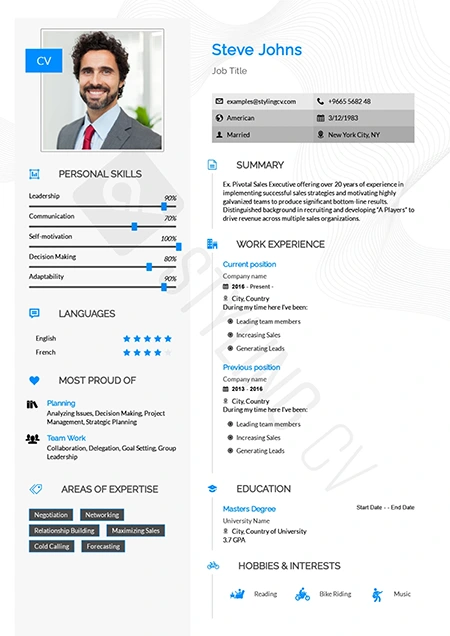
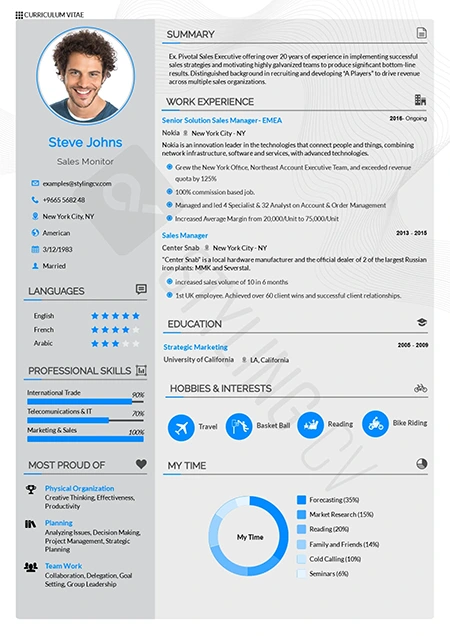
Step 5: Format in a single-column layout. Remove graphics. Remove tables. Remove columns. Clean, scannable, ATS-friendly. Save as PDF.
Step 6: Test. Run your resume through an ATS checker. Have a friend in recruiting read it for 8 seconds, then ask them what they remember. If they can’t tell you your top two achievements from that scan, your resume needs work.
FAQ: Resume Help 2026
How long should my resume be in 2026?
One page for professionals with less than 10 years of experience. Two pages for 10+ years or executive roles. The rule isn’t about years — it’s about density. If every line on page one is strong, adding a second page is fine. If page two is filler, cut everything and stick to one. Quality over quantity. Always.
Should I pay for professional resume help?
It depends on your situation. If you’re targeting executive roles ($150K+), a human resume writer ($500-$1200) who specializes in your industry can be worth the investment — a single salary negotiation improvement covers the cost. For mid-career and entry-level roles, an AI resume builder like StylingCV delivers comparable quality at a fraction of the cost, plus ongoing tailoring for multiple applications. See how we compare in our resume writing services review.
What’s the most common resume mistake in 2026?
Using a format that fails ATS parsing. Not bad writing. Not typos. Formatting. I estimate that 40-50% of qualified candidates I never see are eliminated by formatting errors before any human reads a word. The fix is mechanical, not creative: single column, standard headers, no tables, PDF output.
How do I explain a career gap on my resume?
Add a one-line entry for the gap period: “Career Break — Full-time caregiving (2023-2024)” or “Sabbatical — Global travel and language study” or “Career Transition — Completed data science certification program.” Be matter-of-fact. Don’t apologize. Gaps are common. In 2026, they’re rarely a dealbreaker when addressed transparently.
Should my resume include a photo or personal details?
In North America, UK, and Australia: no photo, no date of birth, no marital status. These invite bias and waste space. In some European and Asian markets, a professional photo is standard. Research your target region. For U.S. and global roles, omit the photo entirely. More advice in our complete resume writing guide.
Get the Resume Help You Deserve
Here’s what I know after years in this industry: most people don’t need a better career. They need a better way to present the career they already have.
Your experience is real. Your skills are legitimate. The problem is translating them into a document that navigates modern hiring systems — the machines, the 7-second human scan, the keyword expectations, the achievement-driven language.
StylingCV solves this with 11 AI agents working in parallel. Each one handles a piece of the puzzle that used to require a human expert — and the result is a resume that’s formatted correctly, written professionally, keyword-optimized for ATS, and verified for accuracy. In minutes. For a fraction of what a human writer charges.
4.8⭐ Trustpilot · 6M+ users worldwide · 95% ATS pass rate