Resume Header 2026: What to Include, How to Format It & Common Mistakes
Learn exactly what belongs in your resume header in 2026, how to format it for ATS and recruiters, and the common mistakes that cost you interviews. Includes examples and a checklist.

Your resume header sits at the very top of the page, and it’s the first thing every recruiter, hiring manager, and ATS system reads. Get it wrong, and you might never get a callback — even if the rest of your resume is perfect.
This guide covers exactly what belongs in a resume header in 2026, how to format it for both human readers and applicant tracking systems, and the mistakes that cost candidates interviews every day.
what’s a Resume Header?
A resume header is the top section of your resume that displays your name, contact details, and professional identity. It serves two purposes: telling employers who you’re and giving them a way to reach you.
Most recruiters spend about 6 to 7 seconds on their first scan of a resume. Your header is the first thing their eyes land on. A clean, well-organized header sets the tone for the entire document.
What to Include in Your Resume Header
Required Elements
Every resume header needs these four items — no exceptions:
- Full Name — Use your legal name or the professional name you go by. Make it the largest text on the page (18–24 pt font). Skip nicknames.
- Phone Number — One reliable number with a professional voicemail. Include your country code if applying internationally.
- Professional Email — Use a format like firstname.lastname@gmail.com. Avoid old providers like Yahoo or AOL, and never use casual handles like “partyguy99@email.com.”
- Location — City and state (or city and country for international applications). You don’t need your full street address. For remote roles, write “Remote” or your time zone.
Optional Elements (When They Help)
- LinkedIn Profile URL — If your profile is complete and updated, include it. Customize your URL (linkedin.com/in/yourname) instead of the default string of numbers.
- Portfolio or Personal Website — must-have for designers, developers, writers, and marketers. Make sure the link works.
- Professional Title or Headline — A short phrase like “Senior Data Analyst” or “Certified Project Manager” tells recruiters your target role immediately.
- Relevant Certifications — CPA, PMP, AWS Solutions Architect — add these after your name if they’re directly relevant to the role.
Resume Header Format: 4 Layout Styles That Work
| Layout Style | Best For | Key Feature |
|---|---|---|
| Centered | Traditional industries (finance, law, government) | Clean symmetry, formal look |
| Left-Aligned | Most industries, ATS-friendly | Easy to scan, modern feel |
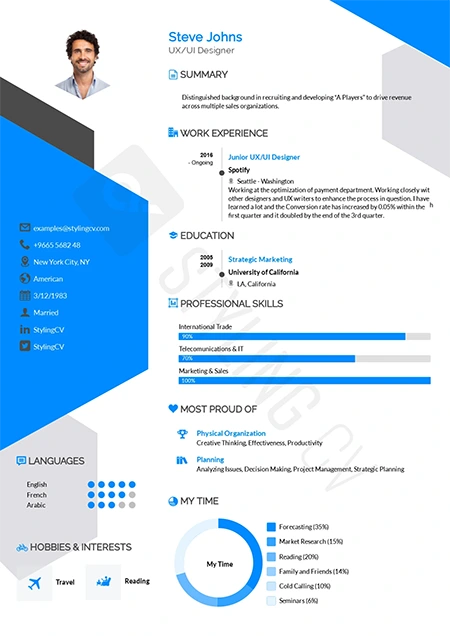
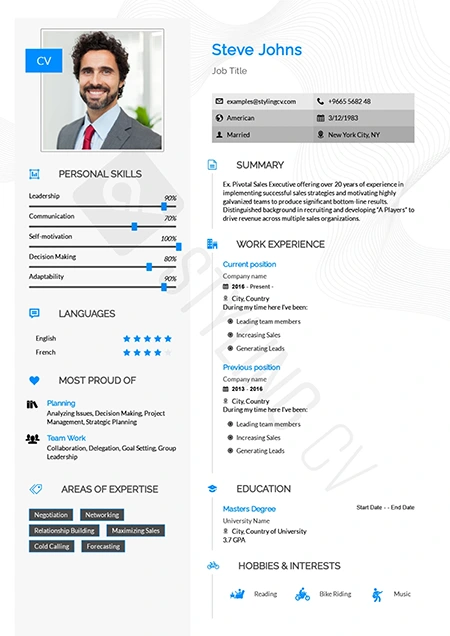
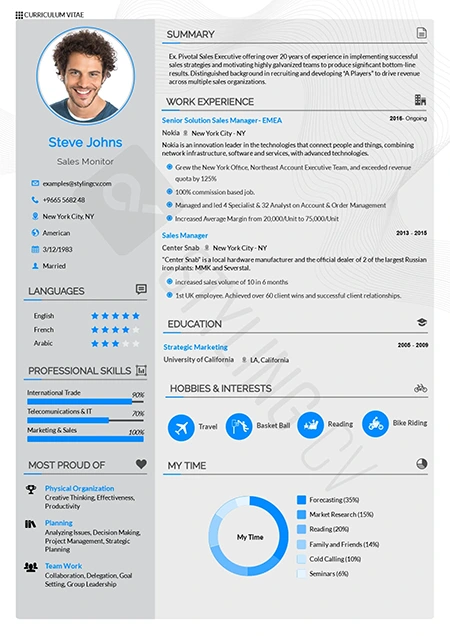
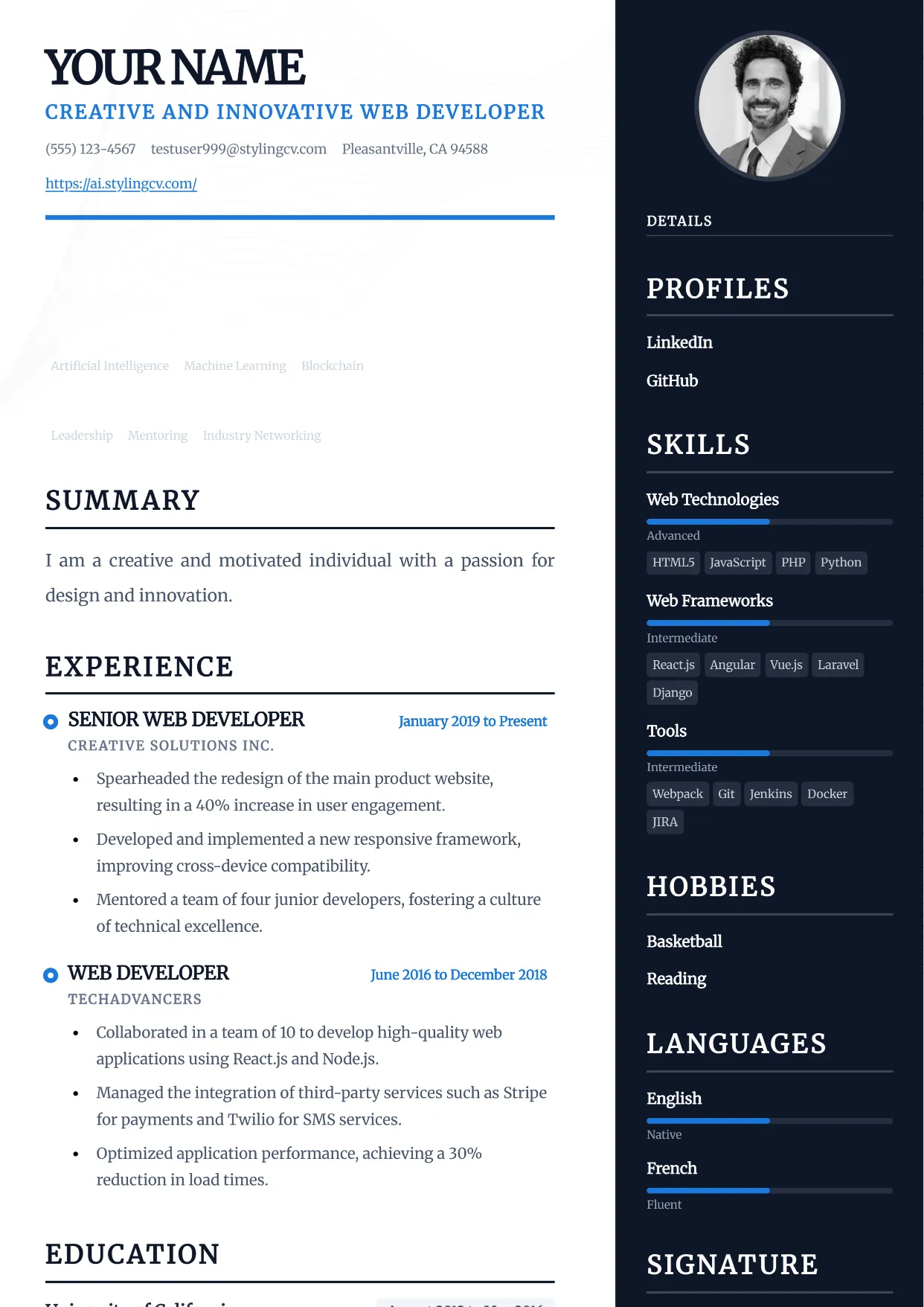
| Two-Column | Creative fields, tech | Saves space, visually balanced |
| Banner/Header Bar | Branding-focused roles, startups | Bold visual break, stands out |
Regardless of the layout you choose, keep these formatting rules in mind:
- Name: 18–24 pt, bold
- Contact details: 10–12 pt, consistent font
- Spacing: Leave 1–1.5 lines of white space above and below the header
- Font: Use a professional, ATS-safe font like Calibri, Arial, Garamond, or Helvetica
How ATS Reads Your Resume Header
Applicant tracking systems parse your header first. If the software can’t extract your name, phone number, or email, your application might get flagged as incomplete or discarded entirely.
Follow these ATS-specific rules:
- Don’t put contact info in the header/footer area — Some older ATS versions skip these sections. Place your details in the main body of the document.
- Avoid tables for contact info — Some ATS platforms struggle to read text inside table cells. Use a simple layout with line breaks instead.
- Skip images and icons for critical info — A phone icon next to your number looks nice, but make sure the actual number is readable text, not part of an image.
- Use standard labels — ATS systems recognize patterns like “Phone:” and “Email:” more reliably than creative labels like “Reach me at.”
Resume Header Examples by Industry
Corporate / Finance
Ahmed Al-Rashid, CFA
Chicago, IL | (312) 555-0198 | ahmed.alrashid@gmail.com
linkedin.com/in/ahmedalrashid
Creative / Design
SARAH CHEN
UX Designer | Human-Centered Design
Portland, OR | sarah@designportfolio.com | sarahchen.design
Tech / Engineering
James Park
Senior Backend Engineer | Distributed Systems
San Francisco, CA | james.park@protonmail.com | github.com/jamespark
Healthcare
Dr. Fatima Hassan, MD
Board-Certified Internal Medicine
Houston, TX | (713) 555-0241 | fatima.hassan.md@gmail.com
7 Resume Header Mistakes That Cost You Interviews
- Using an unprofessional email — “sk8rboi@hotmail.com” is an instant rejection for many recruiters. Create a clean Gmail address.
- Including your full street address — This is outdated and a privacy risk. City and state are enough.
- Making your name too small — Your name should be the most prominent text in the header. If it blends in, recruiters might lose track of whose resume they’re reading.
- Listing multiple phone numbers — One number is enough. More than that creates confusion.
- Forgetting to update your LinkedIn URL — If you include a LinkedIn link, make sure it’s customized and the profile matches your resume.
- Over-designing the header — Fancy graphics, colors, and fonts might look appealing on screen but break in ATS. Keep it clean.
- Leaving out the job title — Without a title or headline, recruiters have to read further to understand what you’re targeting. Save them the effort.
Should You Add a Resume Headline?
A resume headline is a one-line statement right below your name that summarizes your professional identity. It’s optional but highly effective.
Without a headline:
Sarah Johnson
sarah.johnson@email.com | Austin, TX
With a headline:
Sarah Johnson
Product Manager | 8 Years in SaaS | B2B Growth & Retention
sarah.johnson@email.com | Austin, TX
The headline version immediately tells the recruiter what Sarah does and what she brings to the table. That small addition can make the difference between a 5-second scan and a full read-through.
Resume Header Checklist for 2026
Before you submit your next application, run through this checklist:
- ✅ Full name is prominent (18–24 pt, bold)
- ✅ Professional email address (Gmail or Outlook)
- ✅ One working phone number with professional voicemail
- ✅ City and state (no full street address)
- ✅ LinkedIn URL is customized and up to date
- ✅ Job title or headline matches the role you’re applying for
- ✅ No images, icons, or graphics in critical contact fields
- ✅ Header is readable by ATS (test with a free scanner)
- ✅ If multi-page: name and page number appear on page 2
Build Your Resume Header the Right Way
Writing a resume header sounds simple, but small details make a big difference. The right header gets you past ATS screening, makes a strong first impression, and ensures recruiters can reach you without hunting for your contact info.
StylingCV’s AI resume builder handles header formatting automatically — your name, contact details, and headline are placed in ATS-optimized positions with professional layouts. You focus on the content; the tool handles the structure. Try it free.
Frequently Asked Questions
What should a resume header include?
A resume header should include your full name, phone number, professional email address, and city/state location. Optionally, add your LinkedIn profile, portfolio URL, job title or headline, and relevant certifications.
How big should my name be in the resume header?
Your name should be 18 to 24 points in font size, making it the largest text on the page. The rest of your contact details should be 10 to 12 points.
Should I put my address on my resume header in 2026?
No. Full street addresses are outdated and unnecessary. Include your city and state (or city and country for international applications). For remote positions, you can write “Remote” or list your time zone.
Can I use icons in my resume header?
Yes, but with caution. Simple text-based or SVG icons for phone and email are generally ATS-safe. However, always ensure the actual text content (your phone number and email) is readable as plain text, not embedded in an image.
What’s the best email format for a resume header?
The best format is firstname.lastname@gmail.com or a close variation. Use Gmail or Outlook. Avoid outdated providers, numbers that look random, or casual handles.
Do I need a LinkedIn URL in my resume header?
It’s optional but recommended. If you include it, make sure your LinkedIn profile is complete, up to date, and consistent with your resume. Customize the URL to something like linkedin.com/in/yourname.
How do I format a resume header for ATS?
Place your contact details in the main body of the document (not in header/footer fields that some ATS skip). Use plain text, avoid tables for contact info, and stick to standard labels like “Phone” and “Email.”
Should I include a photo in my resume header in 2026?
In the US, UK, and Canada, skip the photo — it can trigger unconscious bias and ATS systems don’t process images. In the Middle East, Europe, and some Asian countries, a professional headshot is expected. Always research your target market’s norms.
Is an objective statement still needed in 2026?
No — replace it with a targeted professional summary (2–3 lines). Objectives focus on what you want; summaries show what you offer. In 2026, recruiters spend 6–7 seconds scanning — lead with value, not intentions.
What contact information belongs in a resume header?
Include: full name, professional email, phone number, city/state (no full address), LinkedIn URL, and relevant portfolio or GitHub links. Skip date of birth, marital status, and social security numbers — these are outdated and risky.
How should I format my name in the resume header?
Use your full professional name in a larger, bold font. If you go by a nickname or shortened version, use the name you’re known by professionally. Include professional credentials after your name only if directly relevant (e.g., CPA, PhD, PMP).