One-Page Resume Guide 2026: When and How to Keep It Short

one-page resume guide 2026: when and how to keep it short
In a world where recruiters spend an average of 7.4 seconds reviewing a resume before deciding whether to continue, every line matters. The debate over resume length has evolved significantly. While the one-page resume dominates early-career advice, modern hiring practices and Applicant Tracking Systems (ATS) have changed how we think about length. This guide covers exactly when a single-page CV works best, when two pages are justified, and the practical techniques for condensing your experience without sacrificing impact.
When a One-Page Resume Works Best
A one-page resume is ideal in several specific scenarios. Understanding these helps you decide whether the single-page format fits your career stage and goals.
✅ Early-Career Professionals (0–5 Years)
If you’re a recent graduate, entry-level candidate, or junior professional, one page is expected. Recruiters anticipate concise documents that highlight education, internships, core skills, and 1–2 relevant roles without fluff.
✅ Career Changers
Switching industries? A one-page CV keeps the focus on transferable skills and recent relevant training rather than unrelated job history that dilutes your narrative.
✅ Freelancers and Contractors
Gig workers and consultants benefit from brevity. Clients and agencies reviewing multiple candidates prefer a scannable one-pager that showcases recent projects and measurable outcomes.
The key advantage of the one-page format is cognitive load reduction. Studies from recruiting firms consistently show that shorter, well-organized resumes receive higher quality scores during initial screening phases. When a recruiter must evaluate 200+ applications for a single role, a dense two-page document from a mid-level candidate can feel like unnecessary work.
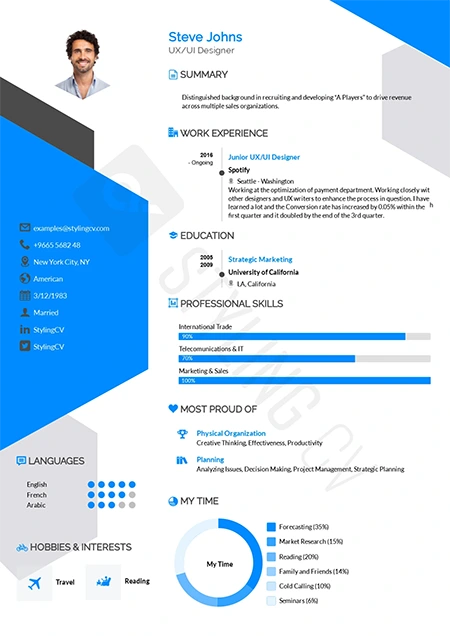
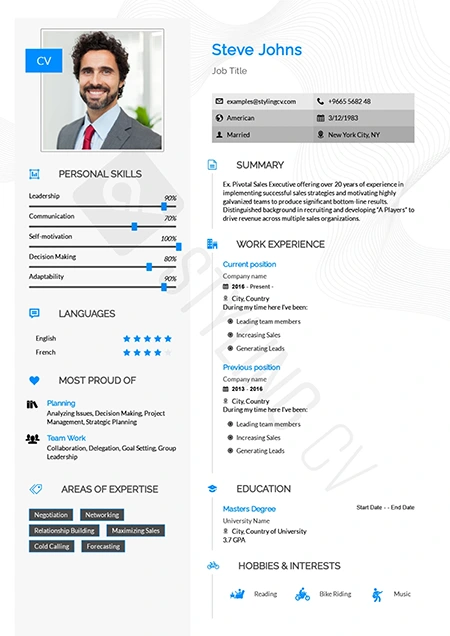
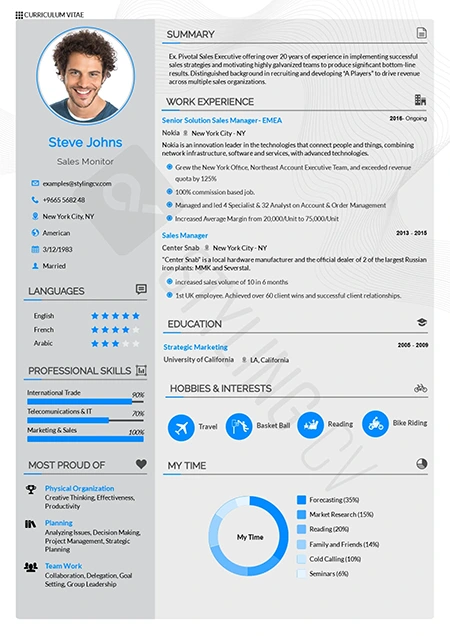
💡 Need a resume that fits? Browse ATS-friendly resume templates designed specifically for clean, scannable single-page layouts.
When a Two-Page Resume Is the Smarter Choice
Here’s a reality check that too many generic resume guides ignore: a one-page resume is NOT always better. For experienced professionals, forcing everything onto one page can do more harm than good.
Senior Executives and Directors
If you’re applying for C-suite, VP, or director-level roles with 15+ years of progressively responsible experience, a two-page resume isn’t only acceptable—it’s often expected. Search committees and executive recruiters want to see evidence of strategic leadership, P&L ownership, board experience, and transformational projects. These achievements can’t be credibly summarized in three bullet points.
Academics, Researchers, and Scientists
Publications, grants, patents, and conference presentations are part of your professional identity. A CV in these fields routinely extends beyond two pages. Attempting to compress this into one page signals inexperience with academic hiring norms.
Technical Specialists with Deep Project Portfolios
Senior software architects, data scientists, and engineers with extensive project histories often need space to describe complex systems they have built. When the role specifically asks for demonstrated expertise in niche technologies, a second page can be the difference between getting shortlisted and being passed over.
| Career Stage | Recommended Length | Why |
|---|---|---|
| Student / Graduate | 1 page | Limited experience; focus on education and potential |
| Early Career (1–5 years) | 1 page | Concise storytelling beats exhaustive duty lists |
| Mid-Career (6–12 years) | 1–2 pages | Depends on role complexity and industry norms |
| Senior / Executive (13+ years) | 2 pages | Depth of leadership and strategic impact requires space |
| Academic / Research | 2+ pages | Publications, grants, and academic service are standard |
Research from resume screening platforms in 2026–2026 confirms that experienced candidates with two-page resumes received 23% more callbacks than their one-page counterparts when applying to senior roles. The key caveat: the second page must be as strong as the first. Recruiters will skim page two, but they won’t ignore a second page filled with filler content.
📊 Not sure which format fits you? Read our complete resume length guide for industry-specific recommendations.
How to Condense Your Resume to One Page
If you have decided that a one-page CV is right for your situation, the next challenge is condensation. Most candidates struggle because they treat their resume as a career history rather than a marketing document. Here’s the systematic approach.
1. Remove Outdated Experience
Positions from more than 10–15 years ago should be summarized or removed entirely. Hiring managers care about what you have accomplished recently, especially in fast-evolving fields like technology, marketing, and finance. Create a brief “Earlier Career” line if you must acknowledge long tenure, but eliminate bullet points for roles that no longer reflect your current capabilities.
2. Tighten Every Bullet Point
Achievement-oriented bullet points should be 1–2 lines maximum. Use the Action-Result formula: start with a strong verb, describe what you did, and quantify the outcome.
Before: “Responsible for managing the social media accounts and creating content calendars for the marketing team on a weekly basis.”
After: “Grew Instagram engagement 47% in 6 months by implementing a data-driven content calendar.”
Words like “responsible for,” “assisted with,” and “helped to” waste space. Replace them with direct action verbs: “delivered,” “designed,” “launched,” “optimized.”
3. Combine Related Sections
Instead of separate blocks for Skills, Tools, and Certifications, combine them into a single “Core Competencies” section using a multi-column layout or comma-separated list. Merge Volunteer Work with Professional Experience if the skills overlap. Eliminate standalone sections that add little unique value.
4. Use a Modern, Space-Efficient Template
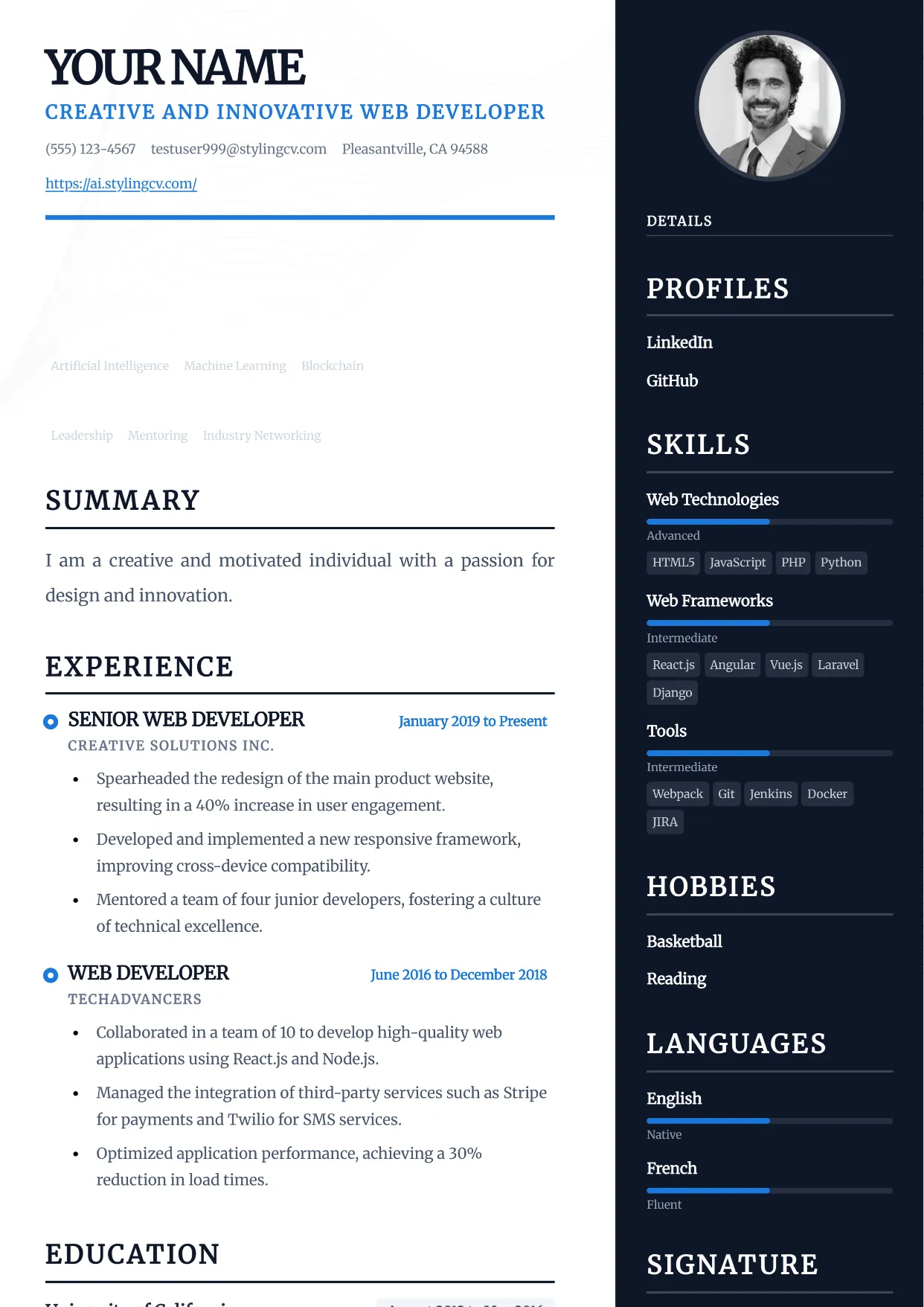
Older free resume templates with excessive margins, large headers, and double-spacing consume precious real estate. Modern single-column and two-column layouts designed for 2026 hiring standards maximize content density while preserving readability. The right template can easily reclaim 20–30% of your page space without feeling cramped.
🎨 Optimize your layout: Explore resume formatting best practices to make every inch count.
What to Cut vs. What to Keep
Deciding what stays and what goes is the hardest part of building a one-page resume. Here’s a practical breakdown:
✂️ Cut These
- Jobs older than 10–15 years
- “References available upon request”
- Full mailing address (city/state is enough)
- Hobbies unrelated to the role
- Redundant skills already implied by job titles
- Outdated certifications or software
- High school education (if you have a degree)
- Generic soft skills without proof
✅ Keep These
- Professional summary (2–3 lines)
- Core skills matching the job description
- Recent roles with quantified achievements
- Education and relevant certifications
- Technical skills the role specifically requests
- Notable awards or recognition
- Side projects relevant to the target role
- Volunteer work demonstrating leadership
The Role of ATS in Resume Length Decisions
A common misconception is that Applicant Tracking Systems penalize two-page resumes. In reality, ATS software scans and parses text regardless of page count. What actually causes problems is poor formatting: text boxes, tables, headers/footers, and complex columns that confuse parsing algorithms.
A cleanly formatted two-page resume with standard section headings and bullet-pointed achievements will outperform a cramped one-page resume with tiny fonts and narrow margins. The real priority is keyword optimization and machine-readable structure. If you’re forcing a second page of content into one page by shrinking fonts below 10pt or eliminating white space, you’re hurting both human and algorithmic reviewers.
When in doubt, test your resume with an ATS scanner to verify that all content is parsed correctly before submitting applications.
Related Guides:
- Two-Column Resume and ATS in 2026
- Marketing Manager Cover Letter Examples for 2026
- Software Engineer Resume 2026
Try StylingCV’s AI Resume Builder free — 11 specialized AI agents create ATS-optimized resumes in under 60 seconds.
FAQ: One-Page Resume Questions Answered
Should a resume really be only one page?
A one-page resume works best for early-career professionals, recent graduates, and anyone with under 10 years of experience. It forces focus and respects the recruiter’s time. However, senior executives, academics, and professionals with 15+ years of relevant experience often need two pages to showcase depth without omitting key achievements.
How do I condense my resume to one page without losing impact?
Remove outdated experience older than 10–15 years, tighten bullet points to 1–2 lines using action-result format, eliminate filler words, combine overlapping sections, and use a clean modern template with efficient spacing. Focus on achievements that match the job description rather than listing every duty.
Can I use a two-page resume for a senior-level position?
Yes. Senior executives, directors, and experienced professionals with 15+ years of relevant accomplishments should use two pages. Research shows that recruiters accept two pages for senior roles because the depth of experience justifies the extra space. The key is ensuring every line adds value.
What sections should I cut first when trimming to a one-page resume?
Start by removing outdated experience (older than 10–15 years), redundant skills already implied by your job titles, hobbies unrelated to the role, full mailing addresses, references available upon request, and outdated certifications. Keep your summary, core skills, recent experience, and education.
Does ATS software prefer one-page resumes?
ATS (Applicant Tracking Systems) scan content, not page count. A well-formatted two-page resume with relevant keywords will perform better than a cramped one-page resume missing critical terms. Focus on keyword optimization and clean formatting rather than artificially squeezing everything onto one page.
What is the best font size for a one-page resume?
Use 10.5–12pt for body text and 14–16pt for headings. Going below 10pt sacrifices readability. Efficient spacing, consistent margins (0.5–0.75 inches), and a clean modern template do more for fitting content than shrinking font size. StylingCV offers ATS-friendly templates optimized for single-page layouts.
Should I include all my jobs on a one-page resume?
No. Include only the last 10–15 years of relevant experience. Older positions can be summarized in a brief “Earlier Career” section without bullet points. Tailor which roles you highlight based on the target job description to maximize relevance within limited space.
Build Your Perfect One-Page Resume Today
Stop guessing about length, formatting, and what to include. StylingCV gives you ATS-tested templates, real-time content suggestions, and recruiter-approved designs—so your one-page resume gets results.
About this guide: Updated August 2026 with the latest recruiter behavior research and ATS best practices. For more career resources, visit StylingCV Blog.
Related reading: How to Name Your Resume File in 2026: The Recruiter-Appro…
Related reading: ATS-Friendly Resume Guide 2026: How to Pass Applicant Tra…