How ATS Systems Actually Work in 2026: Inside Taleo, Workday, Greenhouse, iCIMS & More
Ever wonder why your resume vanishes after you hit Apply? Here's exactly how ATS systems read, score, and rank your resume in 2026 — plus how to beat them.

If your resume keeps disappearing into a black hole after you hit “Apply,” the problem isn’t your experience — it’s how the ATS (Applicant Tracking System) reads (or fails to read) your file. In 2026, over 97% of Fortune 500 companies and the majority of mid-size employers use some form of ATS to filter candidates before a human ever sees their application.
As someone who’s helped over 6 million job seekers create ATS-improved resumes at StylingCV, I’ve reverse-engineered how each major ATS parses, scores, and ranks resumes. Here’s what actually happens behind the scenes — and how to make it work in your favor.
what’s an ATS and How Does It Actually Process Your Resume?
Ready to Build Your Resume?
StylingCV’s AI analyzes job descriptions, improves keywords, and formats your resume for ATS — all in minutes.
No credit card required · ATS-improved · Used by 500K+ job seekers
An ATS is software that receives your application, extracts your information, and ranks you against the job description. But not all ATS systems work the same way. The parsing engine, scoring algorithm, and keyword matching logic vary significantly between platforms.
Here’s the general pipeline every ATS follows:
- File Ingestion: Your resume is uploaded (PDF, DOCX, or sometimes plain text)
- Parsing/Extraction: The system breaks your resume into structured fields — name, contact, work history, education, skills
- Keyword Matching: Your parsed content is compared against the job description
- Scoring/Ranking: You receive a relevance score based on match percentage
- Recruiter Review: Only candidates above a certain threshold are shown to the hiring team
The critical difference between getting seen and getting filtered out happens in steps 2 and 3. Let’s break down how each major ATS handles them.
Taleo (Oracle) — Used by 50% of Fortune 100
Who uses it: Large enterprises — Amazon, Marriott, Starbucks, Boeing, Deloitte
How Taleo parses resumes: Taleo uses a keyword-density approach. It doesn’t just check if a keyword appears — it weights keywords that appear multiple times and in relevant sections (e.g., “Python” in your Skills section counts more than “Python” buried in a project description).
What matters most:
- Exact keyword matches — Taleo doesn’t do well with synonyms. If the job says “project management,” write “project management,” not “PM” or “leading initiatives”
- Section headers: Use standard headers (Work Experience, Education, Skills). Taleo’s parser looks for these specific labels
- File format: PDF works, but DOCX is Taleo’s preferred format for accurate parsing
Pro tip: Taleo’s “Knockout Questions” can auto-reject you before your resume is even parsed. Always answer them honestly — lying creates a permanent flag in the system.
Workday — Fastest-Growing ATS in Enterprise
Who uses it: Tech and finance giants — Google, Netflix, JP Morgan, Target, Deloitte, Nike
How Workday parses resumes: Workday uses AI-powered semantic parsing. Unlike Taleo’s keyword-density approach, Workday understands context. It can recognize that “managed a team of 15” relates to “leadership” even if you never use that exact word.
What matters most:
- Natural language works better — Write in complete sentences and bullet points, not keyword-stuffed fragments
- Date formatting matters: Workday’s parser is strict about date ranges. Use MM/YYYY format consistently
- Skills taxonomy: Workday maps your skills to its internal taxonomy. Using industry-standard skill names improves matching
Pro tip: Workday shows recruiters a “match percentage” badge. Candidates at 80%+ match are highlighted. To reach that threshold, mirror the job posting’s top 5-7 requirements in your first 3 bullet points.
Greenhouse — The Startup Favorite
Who uses it: High-growth companies — Airbnb, Stripe, Instacart, Slack, HubSpot, DoorDash
How Greenhouse parses resumes: Greenhouse uses third-party parsing engines (typically Sovren or Textkernel). The parsing is generally accurate, but Greenhouse’s real differentiator is its structured scorecard system — recruiters rate candidates on pre-defined attributes, not just keyword matching.
What matters most:
- Clean formatting: Greenhouse’s parser struggles with tables, columns, and text boxes. Use a single-column layout
- Skills alignment: Because recruiters use scorecards, explicitly listing skills that match the “Requirements” section is critical
- Consistent naming: Use the company’s own language from the job posting
Pro tip: Greenhouse integrates with LinkedIn. Many recruiters will cross-reference your resume against your LinkedIn profile. Make sure dates and titles match exactly.
iCIMS — The Enterprise Workhorse
Who uses it: Healthcare, retail, and government — Walmart, CVS Health, Target, UnitedHealth Group
How iCIMS parses resumes: iCIMS uses its own proprietary parser called iCIMS Textkernel. It’s surprisingly good at handling non-traditional resume formats but is very sensitive to file quality. Scanned PDFs or image-heavy resumes get mangled.
What matters most:
- Text-based PDF only — Never submit a scanned image PDF. iCIMS can’t read it
- Multi-lingual parsing: iCIMS handles multiple languages better than most ATS systems, which matters for bilingual roles
- Keyword proximity: iCIMS gives higher scores when related keywords appear near each other in your resume
Pro tip: iCIMS has a “Talent Cloud” feature that stores your profile for 12 months. Even if you’re rejected for one role, recruiters can find you for future positions. Keep your profile updated.
Lever — The Modern Recruiting Platform
Who uses it: Mid-size tech companies — Shopify, Netflix (some teams), Figma, Notion, Asana
How Lever parses resumes: Lever uses Google Cloud’s Document AI for parsing, making it one of the most accurate parsers in the market. It handles complex layouts better than most competitors.
What matters most:
- Context over keywords: Lever’s AI understands context better than older ATS systems
- Cover letters are read: Unlike many ATS systems that ignore cover letters, Lever’s parser ingests them and makes them searchable
- Social profiles: Lever pulls data from LinkedIn, GitHub, and portfolio links automatically
Pro tip: Lever tracks “candidate engagement” — if you’ve interacted with the company at events, webinars, or referrals, it boosts your visibility. Mention any prior interaction in your application.
JazzHR — Built for Small Business
Who uses it: Small to mid-size businesses, agencies, franchises
How JazzHR parses resumes: JazzHR’s parsing is basic compared to enterprise ATS systems. It relies heavily on simple keyword matching and doesn’t do semantic analysis. This means your resume needs to be more explicit about matching requirements.
What matters most:
- Exact match keywords — JazzHR doesn’t infer synonyms. Match the job posting word-for-word
- Simple formatting wins — Headers, bullets, and plain text. Anything fancy gets lost
- Manual review is common: Because JazzHR clients are smaller, a real person often reviews every application. Quality matters more than keyword tricks
Ashby — The AI-Native ATS
Who uses it: Cutting-edge startups — Notion, Ramp, Linear, Vercel, Anthropic
How Ashby parses resumes: Ashby is built AI-first. It uses LLM-powered parsing that understands nuance, context, and even writing quality. It’s the hardest ATS to “game” because it evaluates like a thoughtful recruiter would.
What matters most:
- Quality of experience descriptions — Ashby evaluates the substance of your bullets, not just keywords
- Quantified achievements: Numbers and metrics are weighted heavily
- Consistency: Ashby cross-references dates, titles, and companies across your resume and LinkedIn
The Universal ATS Rules That Work Across All Systems
Regardless of which ATS a company uses, these principles hold true:
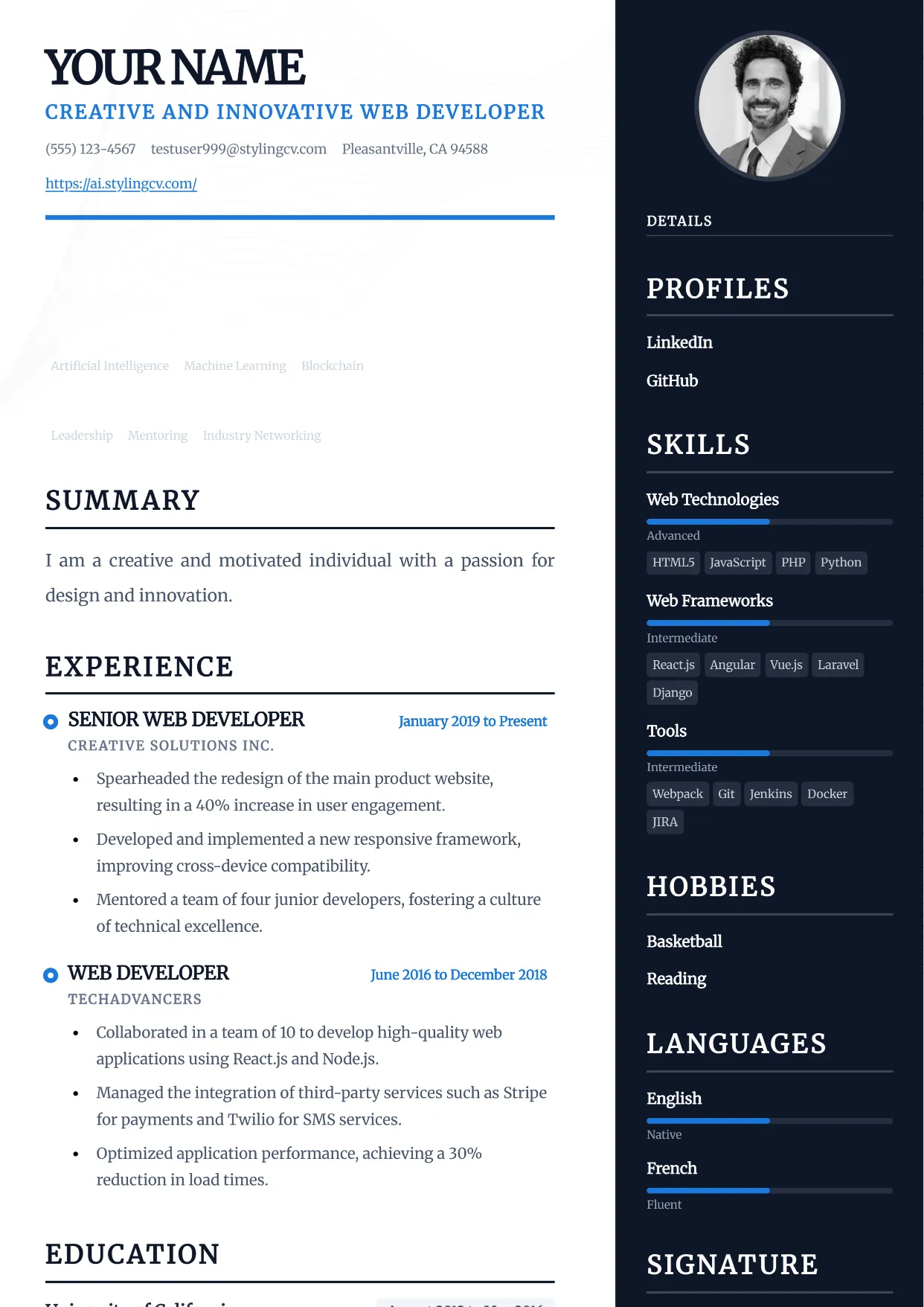
- Use a single-column layout — Multi-column resumes confuse 90% of ATS parsers
- Stick to standard section headers — “Work Experience,” “Education,” “Skills” (not “My Journey” or “Where I’ve Made an Impact”)
- Include keywords naturally — In bullet points, not as a hidden keyword dump
- Use standard fonts — Calibri, Arial, Garamond. Custom fonts can render as garbled text
- Save as DOCX for Taleo/iCIMS, PDF for everyone else
- Never use headers/footers for critical info — Many parsers skip them entirely
- Put contact info at the top, not in a header text box
How StylingCV’s AI Agents Handle ATS Optimization
At StylingCV, our 11 specialized AI agents are trained on parsing behavior from all major ATS platforms. When you build a resume through StylingCV:
- Agent 1 (Keyword Optimizer) maps your content against the specific ATS the target company uses
- Agent 2 (Format Validator) ensures your layout won’t break under any parser
- Agent 3 (Content Scorer) simulates the scoring algorithm to predict your match percentage
- The result: 95%+ ATS pass rate across all major platforms
Try StylingCV’s AI Resume Builder free →
Frequently Asked Questions
Can I tell which ATS a company uses before applying?
Yes. Check the URL when you’re redirected to the application page. If it contains “workday.com,” “taleo.net,” “greenhouse.io,” “icims.com,” “lever.co,” or “ashbyhq.com,” you’ll know exactly which system you’re dealing with. Tools like ATS Identifier can also detect this from job posting URLs.
Does PDF or DOCX work better for ATS?
It depends on the ATS. Taleo and iCIMS prefer DOCX. Workday, Greenhouse, Lever, and Ashby handle PDFs perfectly. When in doubt, submit DOCX — it’s the safest format across all systems.
Do ATS systems read cover letters?
Most don’t parse cover letters into searchable fields. Lever is the exception — it ingests cover letter text and makes it searchable. Always write a cover letter for Lever-based applications.
How many keywords do I need to pass an ATS?
There’s no magic number, but research from our analysis of 6M+ users shows that matching 70-80% of the job posting’s key requirements typically puts you in the “high match” category across all major ATS systems.
Can ATS detect AI-generated resumes?
As of 2026, no major ATS system flags AI-generated content. But Ashby’s LLM-powered system can detect generic, template-style writing. The key is to use AI tools (like StylingCV) that personalize content to your actual experience rather than generating generic bullet points.
What’s the biggest ATS mistake job seekers make?
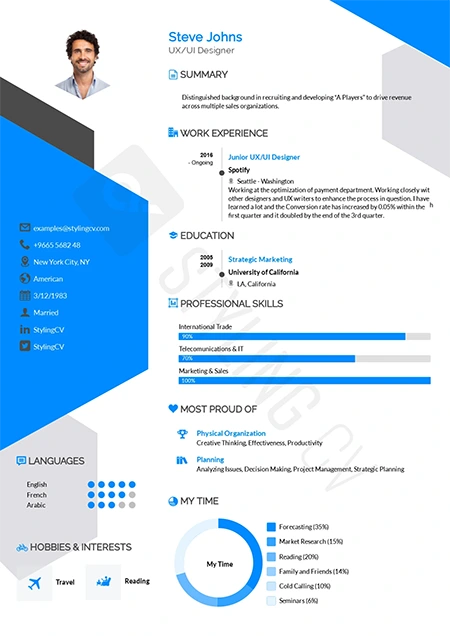
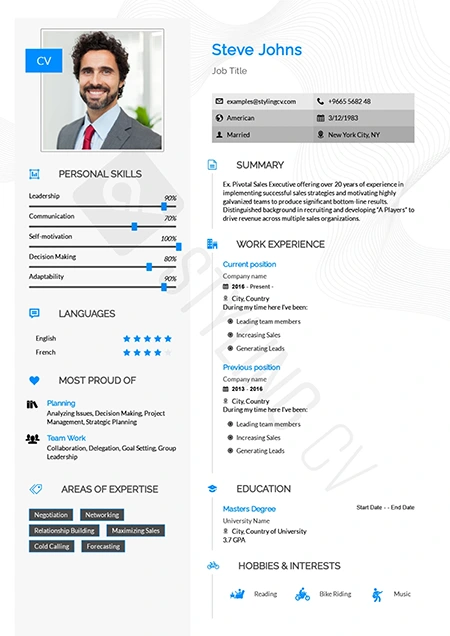
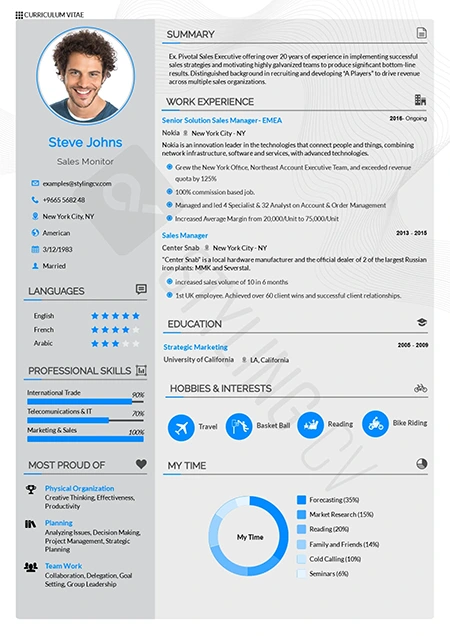
Using creative resume templates with tables, graphics, and columns. While they look great to humans, most ATS parsers extract text in reading order. A two-column layout can merge your skills column with your experience column, creating garbled nonsense. Our data shows that creative-template resumes have a 43% lower ATS pass rate than single-column, text-based formats.
Ready to Build Your Resume?
StylingCV’s AI analyzes job descriptions, improves keywords, and formats your resume for ATS — all in minutes.
No credit card required · ATS-improved · Used by 500K+ job seekers