ATS Resume Formatting Mistakes 2026: 7 Errors That Get Your Resume Rejected (And How to Fix Each One)

Here’s the uncomfortable truth: 75% of resumes get rejected by ATS before a human ever sees them. The formatting mistakes below aren’t minor — they’re the reason qualified candidates never get callbacks.
Over 97% of Fortune 500 companies use Applicant Tracking Systems to filter resumes before a human ever sees them. Most candidates focus on keywords and ignore formatting. That’s a costly mistake. In 2026, the ATS parsing errors that reject resumes aren’t what most career blogs tell you.
This guide breaks down the seven formatting mistakes that actually cost interviews — based on how modern ATS platforms like Taleo, Workday, Greenhouse, and iCIMS process resumes today.
| # | Mistake | Why It Kills Your Resume | Quick Fix |
|---|---|---|---|
| 1 | Using tables and columns | ATS reads left-to-right, top-to-bottom — columns scramble your content | Use a single-column layout |
| 2 | Missing keywords from the job posting | ATS scores resumes by keyword match — low match = auto-reject | Mirror the job posting’s exact wording |
| 3 | Using headers/footers for contact info | Many ATS parsers skip headers and footers entirely | Put contact info in the main body |
| 4 | Submitting as .docx when PDF is requested (or vice versa) | Some ATS handle one format better than the other | Follow the posting’s instructions exactly |
| 5 | Creative section headings | “My Journey” instead of “Work Experience” confuses ATS parsing | Use standard headings: Work Experience, Education, Skills |
| 6 | Images, graphics, or icons | ATS can’t read images — text inside graphics is invisible | Replace graphics with plain text |
| 7 | Uncommon fonts | Specialty fonts may not render correctly in ATS | Stick to Arial, Calibri, or Times New Roman |
The Two-Column Resume Myth (Debunked)
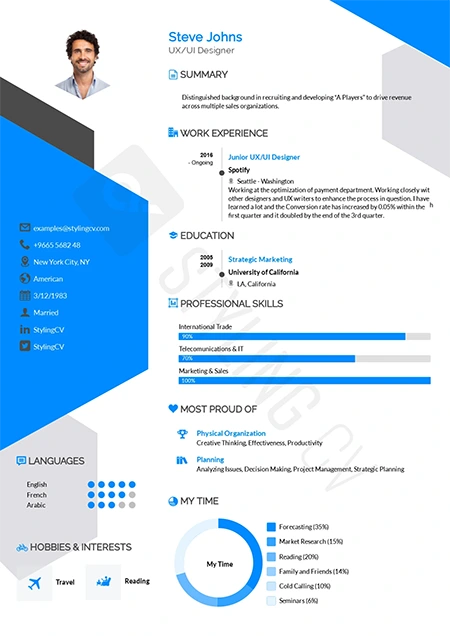
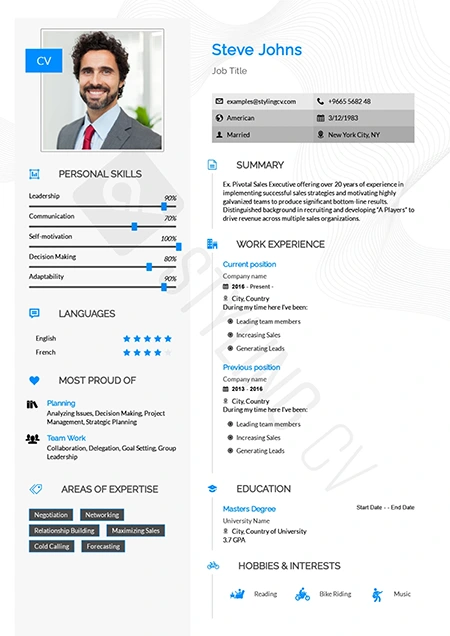
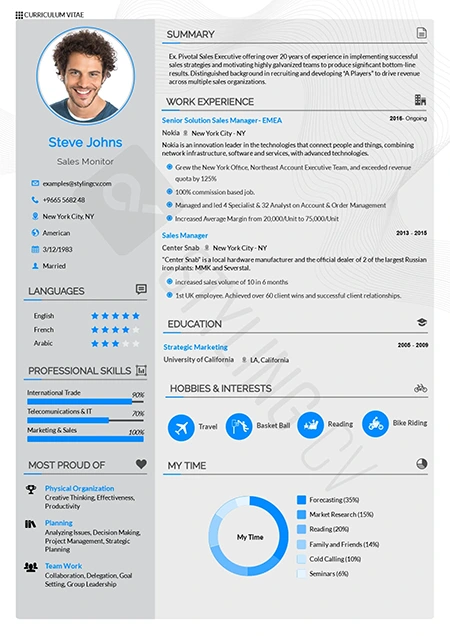
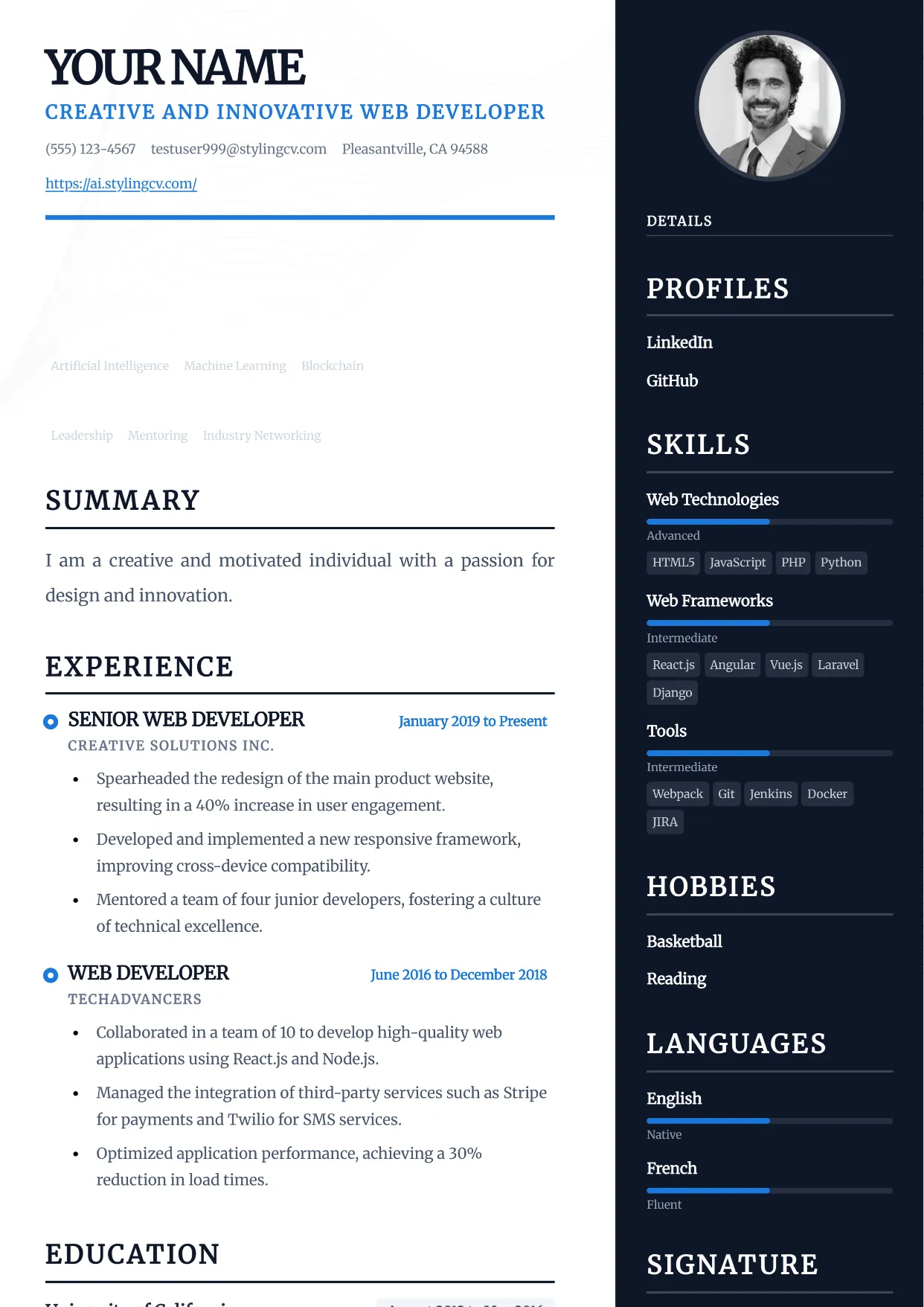
Before covering real mistakes, let’s kill the biggest myth: two-column resumes don’t get automatically rejected by ATS.
Modern ATS parsers handle multi-column layouts, colored headers, and visual templates correctly. This myth comes from older systems from the early 2010s. If you’re avoiding clean, professional two-column designs because of ATS fear, you’re making your cover letter or interview. On the resume, clarity wins.
Mistake 3: Inconsistent Date Formats
The Problem: Mixing date formats across entries confuses the parser. Writing “Jan 2022” in one role, “01/22” in another, and “2022-present” in a third can cause the ATS to miscalculate your employment duration or create false gaps in your work history.
The Fix: Pick one format and use it everywhere:
- Safest: “Month Year” format (Jan 2022 – Present)
- Also safe: “MM/YYYY” format (01/2022 – Present)
- Always spell out “Present” for current roles — don’t use “Current” or “Now”
For international applications, spell out the month to avoid ambiguity between MM/DD and DD/MM formats.
Mistake 4: Not Matching the Job Ad’s Exact Language
The Problem: ATS matching is often literal. If the job ad says “Customer Service Representative” and your resume says “Client Support Specialist,” the system may not connect them — even though the roles are identical. Synonyms aren’t always recognized.
The Fix: Mirror the job ad’s exact language for job titles and key skills. If your official title differs, use the industry-standard title first with your actual title in parentheses:
Customer Service Representative (Client Support Specialist) — Company Name
This isn’t keyword stuffing. This is precision matching. The ATS is looking for specific terms, and giving it exactly what it expects is the fastest path to the recruiter’s desk.
Mistake 5: Text Locked in Images
The Problem: If your resume contains a headshot, infographic, or any text that’s part of an image file, the ATS text extraction layer can’t read it. Submitting a resume as a flattened image PDF makes the entire document invisible to the system.
The Fix:
- Export your resume as a text-based PDF, not an image-based one
- Check your PDF: try to select and copy text from it. If you can, the ATS can too
- Avoid screenshots, scanned documents, or image-heavy templates
- Icons and symbols are usually fine — they’re font glyphs, not images — but make sure any data they represent also exists as plain text
Mistake 6: Skills and Certifications Buried in Paragraphs
The Problem: When your technical skills, certifications, and tools are hidden inside dense paragraph text, the ATS keyword scanner has a harder time matching them against the job requirements. Structured lists are parsed more reliably than flowing sentences.
The Fix: Create dedicated sections for:
- Technical Skills: List tools, software, and platforms as a clean, scannable list
- Certifications: Separate section with full certification names and dates
- Industry Keywords: Use the exact terms from the job description in your skills section
You can still mention skills in your experience bullets for context, but the primary keyword matching happens in dedicated list sections.
Mistake 7: Using Tables for Layout (Not Data)
The Problem: Some resume templates use invisible tables to control layout positioning (columns, sidebars, spacing). While modern ATS handles simple tables, complex nested table structures can cause text to be read in the wrong order — your job title from one role might get merged with the description of another.
The Fix: Use tables only for actual data tables (skills matrices, language proficiency grids). For layout structure, use columns or text boxes in modern resume builders that generate ATS-compatible HTML-based PDFs.
How to Test If Your Resume Is ATS-Friendly
Before submitting to any job, run these checks:
- Copy-paste test: Open your PDF, select all text (Ctrl+A), and paste it into a plain text editor. If the text flows in the correct order and nothing is missing, your formatting is ATS-safe
- Section header test: Verify that each section has a standard, recognizable heading
- Date consistency test: Scan all dates — are they in the same format?
- Keyword match test: Compare your resume against the job description — do your skills and job titles use the same language?
- ATS score scan: Use an ATS resume checker to get a compatibility score before applying
StylingCV’s built-in ATS scanner checks all seven of these issues automatically and gives you a score above 95% when your resume passes.
Frequently Asked Questions
Do ATS systems reject resumes automatically?
Most ATS platforms filter and rank resumes rather than auto-rejecting them. The goal of fixing formatting mistakes is to improve your visibility in a ranked list. A poorly formatted resume might still be in the system — it just sits at the bottom where no recruiter looks.
Can I use a creative resume template and still pass ATS?
Yes, in 2026 modern ATS handles visual templates well. The issue isn’t colors, columns, or design — it’s content structure. Avoid headers/footers for contact info, use standard section titles, and ensure text is selectable in your PDF.
Should I submit a PDF or Word file?
PDF is safer in almost all cases. It preserves your formatting exactly as designed. The exception: if the job application specifically requests a .docx file, follow their instructions. Some older ATS parse Word files more reliably.
How do I know if my contact info is in the header?
Open your resume in Word. Press Ctrl+A to select all. If your name, email, and phone number aren’t highlighted in the selection, they’re in the header or footer field and need to be moved to the main body.
What if my official job title is unusual?
Put the standard industry title first, then your actual title in parentheses. For example: “Marketing Manager (Growth Ninja)” — this way the ATS matches on the standard term while the recruiter sees your real title.
What file format should I use for ATS submissions?
PDF is the safest bet in 2026. It locks your formatting so nothing shifts during upload. The only exception: if the application portal specifically asks for .docx, give them what they want. Some legacy ATS parse Word files more reliably. When in doubt, submit both.
Can ATS read bullet points and special characters?
Standard bullets (•, ▪) work fine — they’re font glyphs, not images. Where people get into trouble is with custom symbols, emoji, or decorative characters. Stick to standard Unicode bullets and you’ll be fine. Avoid using Wingdings or Zapf Dingbats.
How long does it take for ATS formatting fixes to show results?
Immediately. Unlike SEO changes that take weeks, formatting fixes affect your next submission. If you fix your header/footer issue today and apply tomorrow, the ATS will read your contact info correctly on that very next application.
Should I create a different resume version for each job application?
For formatting, no — your ATS-safe format should work across all applications. For content, yes. Tailor your skills section and keyword matching to each specific job description. It takes 10 extra minutes and dramatically improves your match score.
Key Takeaways
- Two-column layouts are fine. The real ATS mistakes are about content structure, not visual design
- Move contact info out of headers/footers — this is the #1 reason candidates never get responses
- Use standard section headers — save personality for the interview
- Keep date formats consistent across every entry
- Mirror the job ad’s exact language for titles and key skills
- Export as text-based PDF — verify text is selectable
- Use dedicated skill lists — don’t bury keywords in paragraphs
Fix these seven mistakes and your resume will rank higher in every ATS it enters. If you’re also working on length, our one-page resume guide helps you trim without losing substance. The difference between being seen and being filtered out is often just formatting.
Build Your Resume With AI in Minutes
StylingCV’s AI resume builder creates ATS-optimized, recruiter-approved resumes tailored to your target role.